
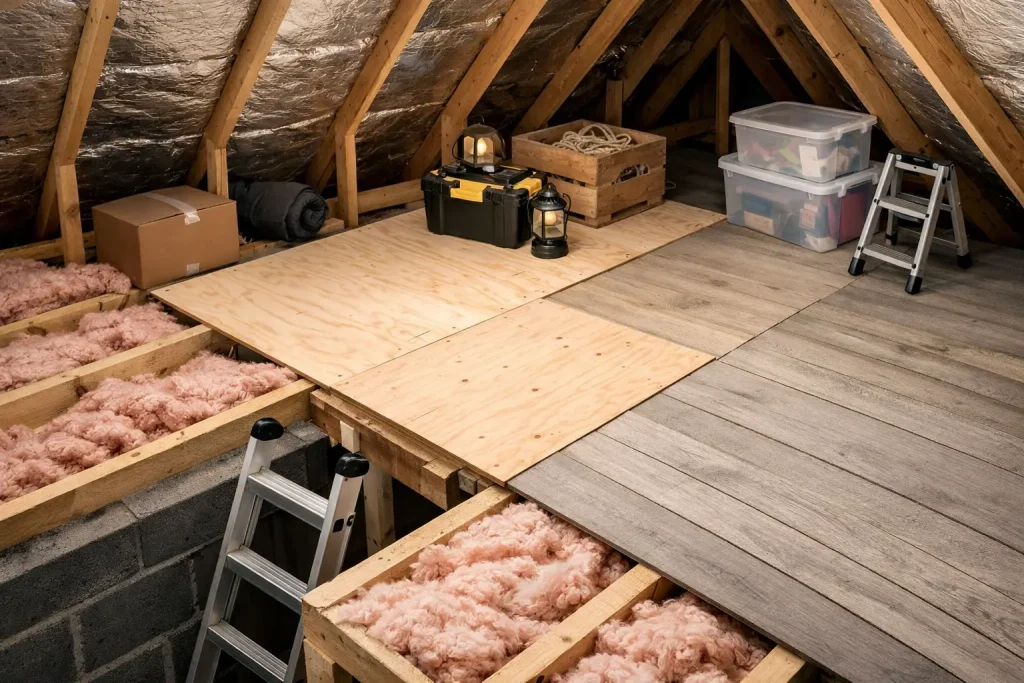
A lot of lofts look useful from the hatch and disappointing once you are up there. You can see the space, but the insulation is deep, the joists are not designed for regular storage use, and there is nowhere safe to place boxes without creating problems. That is why understanding your loft storage boarding options matters before any work starts.
The right boarding system can give you clean, usable storage and help protect thermal performance at the same time. The wrong one can compress insulation, reduce energy efficiency and leave you with a loft that is awkward to use properly. For most homeowners, the best answer is not simply more boards. It is choosing a system that suits the age of the property, the amount of insulation already in place and how you actually want to use the space.
What makes one loft boarding option better than another?
Not all lofts are built the same, so there is no single answer that suits every house. Older homes may have shallower insulation and different joist spacing. Newer homes often have much thicker insulation, which is good for heat retention but creates a challenge for storage. If boards are fixed directly on top of that insulation, the material gets squashed and loses much of its effectiveness.
A good loft boarding system needs to do three things well. It should create a stable platform for storage, preserve ventilation and insulation performance, and make the space easier and safer to access. If one of those is missing, the result tends to be a compromise that homeowners notice later through draughts, clutter or wasted space.
The main loft storage boarding options
Raised loft boarding
For many modern homes, raised loft boarding is the strongest option. This system lifts the boarding above the insulation rather than pressing it flat. It allows the insulation to remain at the correct depth while creating a proper decked area above.
This matters more than many people realise. Modern insulation standards usually require a greater depth than the height of the ceiling joists alone. Raised systems solve that problem neatly. They give you practical storage space without undermining the very insulation that helps keep heating bills down.
For newer properties, this approach can be especially important. Using NHBC approved loft legs helps ensure the boarding is raised correctly and that the home’s 10-year guarantee is not put at risk. If you own a newer build, that is not a detail to overlook.
Partial loft boarding
Not every homeowner needs the whole loft boarded. In many cases, a partial boarded area is the most sensible choice. If you mainly need room for seasonal items, suitcases, decorations or archived paperwork, a well-planned storage platform around the hatch or along a central section may be more than enough.
This option keeps costs more controlled and avoids turning the loft into a space that is harder to ventilate or navigate. It also works well where the roof structure limits how much of the loft can be used comfortably. A smaller boarded area, installed in the right place, often proves far more useful than covering every possible inch.
Full loft boarding
Full loft boarding can make sense where the loft structure, insulation levels and access arrangement all support it. It gives you maximum usable floor area and can be a very tidy long-term storage solution for busy households.
That said, full boarding is not automatically the best option just because it sounds more complete. In some lofts, there are practical limits around head height, roof trusses, water tanks, pipework or ventilation. A trustworthy specialist should explain whether full coverage is genuinely useful or whether part-boarding would deliver better value.
Walkway boarding and access zones
Sometimes the priority is not broad storage but safe movement. A boarded walkway from the hatch to a boiler, tank or key storage area can be the most practical solution. This is especially helpful when the loft needs occasional access for maintenance rather than everyday use.
It is a simple idea, but a very effective one. A clear, stable route reduces the chance of missteps and damage to insulation, while keeping the installation focused on how the loft is really used.
Why raised boarding is often the best long-term choice
If you are weighing up loft storage boarding options, raised boarding is usually the one that balances storage and energy efficiency most effectively. The reason is straightforward. Insulation needs loft space too.
When insulation is compressed, it cannot trap heat as intended. That can lead to higher heat loss through the ceiling and gradually reduce the benefit of having decent insulation in the first place. Homeowners often think of boarding and insulation as separate jobs, but they are closely linked. One can help or harm the other.
Raised systems deal with that conflict by giving each element its proper place. You keep the thermal performance, gain a solid platform for storage and avoid the false economy of a cheaper setup that creates issues later.
Loft access matters just as much as the boards
A well-boarded loft is only really useful if you can get into it safely and comfortably. This is where many storage projects fall short. The boarding may be sound, but if the hatch is too small or the ladder feels unsteady, the loft still ends up underused.
That is why boarding should be considered alongside access. A larger hatch, a reliable loft ladder and proper lighting can make the difference between theoretical storage and storage that genuinely works for a busy home. Families tend to notice this quickly. If getting into the loft is awkward, people avoid using it until clutter builds up elsewhere in the house.
When all the elements are planned together, the result feels much more practical. You are not just adding boards. You are making the loft part of the home’s working storage.
How to choose between loft storage boarding options
The best choice depends on a few practical questions. How much insulation is already there? Is the property a newer build? Do you need occasional storage or regular access? Is there enough height to move around safely? And will the loft benefit from better access at the same time?
For some households, a modest raised platform near the hatch is ideal. For others, a larger boarded area makes sense because storage pressure elsewhere in the house is constant. What matters is that the recommendation fits the home rather than forcing the home to fit a standard package.
This is where a proper survey earns its keep. Looking into a loft from the hatch is not enough to decide the right system. A specialist should assess the structure, insulation depth, ventilation and access arrangement before recommending anything. Clear written quotes also help, because you can see exactly what is included and compare options properly.
Common mistakes homeowners want to avoid
One of the most common issues is boarding directly over insulation without raising the deck. It can look tidy on day one, but it often stores up problems with heat loss and reduced performance.
Another is assuming more boarding is always better. In reality, badly planned full boarding can leave awkward dead space, limit ventilation or make the loft harder to use safely. There is also the access question. Storage area alone does not solve the problem if the hatch, ladder or lighting are still poor.
A final point is peace of mind. Loft work should be properly insured and carried out cleanly, especially in occupied family homes. Most homeowners are not looking for disruption. They want a straightforward job, done properly, with the loft left safer, tidier and more useful than before.
When professional advice adds real value
Loft spaces can be deceptive. What seems like a simple boarding job may involve insulation upgrades, access improvements or a raised system to protect the home’s performance. That is why specialist advice tends to save money in the long run. It helps avoid paying for a solution that needs correcting later.
A local family-run specialist such as Loft Accessories will usually approach this in the way homeowners prefer – by explaining the options clearly, recommending only what the loft needs and setting it out in a written quote without pressure. That sort of clarity matters when you are making changes to your home.
Good loft boarding should make life easier. It should give you usable storage, help the house stay warmer and turn wasted space into something practical without fuss. If a loft has been ignored for years because it felt awkward or risky to use, the right boarding option can change that far more than most people expect.
The best place to start is not with the biggest package, but with an honest look at how your loft needs to work for your home.