
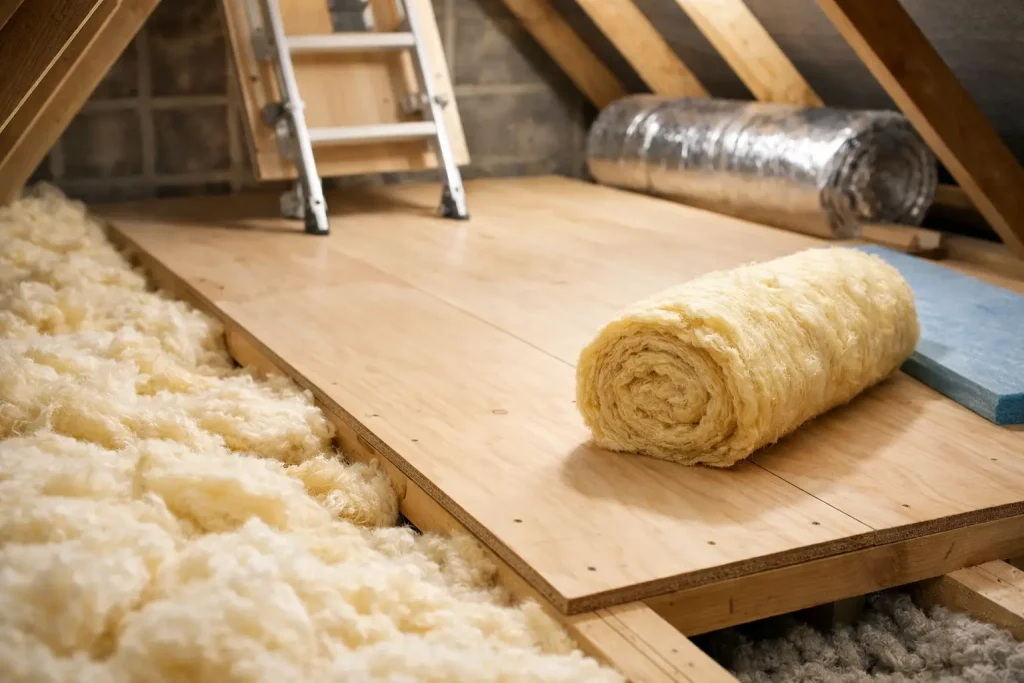
If you have ever pushed aside loft insulation to make room for storage, you have already seen the problem. The loft can either work as a thermal barrier or a practical storage area, but if the job is handled badly, one can compromise the other. That is why homeowners often ask, does loft boarding affect insulation? The honest answer is yes – but not always in a negative way.
Done properly, loft boarding and insulation should work together. Done poorly, boarding can squash insulation, reduce its performance and lead to a colder home with higher heating bills. The difference comes down to how the boarding is installed, how much insulation is already in place, and whether the raised platform has been designed to protect airflow and thermal performance.
Does loft boarding affect insulation in every home?
Not in the same way. Every loft is slightly different, and the age of the property matters.
In many older homes, the insulation sits between the joists and is often thinner than current recommendations. In that case, boarding directly onto the joists may feel convenient, but it usually limits how much insulation can be installed. In newer homes, insulation is often much deeper, which is better for energy efficiency, but it also means standard boarding laid straight over the joists will compress it.
That compression is the main issue. Loft insulation works by trapping air within its fibres. When it is flattened, it loses some of that insulating ability. So the question is not simply whether boarding affects insulation, but whether the boarding system allows the insulation to remain at the correct depth and perform as it should.
Why compressed insulation causes problems
When insulation is squashed beneath loft boards, it cannot hold heat in the home as effectively. Warm air from the rooms below escapes more easily, which means your heating system has to work harder to maintain a comfortable temperature.
The effect is not always obvious straight away. You will not usually step into the loft and notice a dramatic change. Instead, it tends to show up over time through colder rooms, rising energy costs and a loft space that is not performing as it should.
There can be other issues as well. A badly boarded loft may restrict ventilation around the roof structure. That can increase the risk of condensation, especially during colder months when warm air from the house meets colder surfaces above. Good loft design needs to think about storage, insulation and airflow together, not as separate jobs.
The right way to board over insulation
The safest approach is raised loft boarding. This creates a platform above the insulation rather than pressing down into it.
A raised system uses specialist supports fixed to the joists, allowing the boards to sit higher up. That extra clearance means insulation can remain at the proper depth underneath, while the loft still becomes safe and usable for storage. It is a straightforward idea, but it makes a significant difference to both thermal efficiency and the lifespan of the installation.
For homeowners, the benefit is practical as much as technical. You gain a solid storage area without undoing the value of your insulation. That means less wasted space, fewer worries about heat loss and a much better long-term result.
Why raised boarding matters in newer homes
This matters even more in modern properties. New-build homes often have deep insulation levels in the loft to meet current energy standards. If that insulation is compressed by standard boarding, its performance can be reduced and, in some cases, warranty requirements may be affected.
Using NHBC approved loft legs in suitable installations helps avoid that issue by lifting the boarding above the insulation. It keeps the storage deck separate from the thermal layer below. For homeowners who want to protect both energy efficiency and their property paperwork, that is a sensible detail to get right from the start.
Can loft boarding improve energy efficiency?
Boarding itself does not add insulation, so it is not an insulation upgrade on its own. But it can support energy efficiency when designed properly.
A well-planned installation often starts with checking the current insulation level. If the existing insulation is patchy, outdated or below the recommended depth, it makes sense to address that before the boards go down. Once the insulation is brought up to standard and the boarding is raised above it, the loft becomes both more useful and more thermally efficient.
This is where specialist advice matters. The goal is not simply to cover the loft floor with boards. The goal is to create storage without sacrificing the energy performance of the home. That balance is what gives homeowners real value.
Signs your current loft boarding may be affecting insulation
Many people only realise there is a problem when they look under the boards or have the loft assessed properly.
If the loft was boarded years ago, especially before insulation standards increased, there is a fair chance the boards sit directly on the joists. That does not automatically mean there is a serious issue, but it is worth checking. Warning signs include insulation that looks flattened, boards that rest tightly on top of the insulation, cold spots in upstairs rooms, or heating bills that feel higher than they should for the season.
Another clue is a loft that feels awkwardly installed, with insulation pushed aside at the edges or missing entirely in places. Gaps and compression both reduce performance. A loft should not force you to choose between storing boxes and keeping heat in the house.
Why professional assessment makes a difference
Lofts can look simple from the hatch, but the details matter. Joist height, insulation depth, ventilation paths and access all affect what type of boarding system is suitable.
That is why a proper survey is worthwhile. A specialist can check how the loft is currently insulated, measure the available depth, spot signs of compression or poor airflow, and recommend a solution that fits the property rather than forcing a one-size-fits-all approach. For homeowners, that means clear advice, written pricing and reassurance that the work is being carried out correctly.
At Loft Accessories, this is exactly how we approach it. As a family-run loft specialist, we focus on safe access, practical storage and energy-efficient results, with honest recommendations based on what your loft actually needs.
Does loft boarding affect insulation enough to change your bills?
It certainly can. Heat loss through the roof is a well-known issue, and loft insulation is one of the main barriers against it. If that barrier is weakened by compression, the loss may be enough to affect comfort and running costs.
How much depends on the condition of the loft before boarding, the depth of insulation, and the size of the affected area. In some homes, the difference will be modest. In others, particularly where insulation has been heavily flattened or interrupted, the effect can be more noticeable.
What matters most is that the loft performs consistently. If you are paying to heat your home, you want the insulation to do its job. Proper raised boarding helps protect that investment while making the loft more usable.
The balance between storage and insulation
Most homeowners are not looking for technical perfection. They want a loft that is safe to access, sensible to use and not costing them extra money through avoidable heat loss. That is a reasonable expectation.
The good news is that storage and insulation do not have to compete. With the right system, you can have boarded storage space and maintain the effectiveness of the insulation beneath it. It is simply a matter of planning the loft as a whole rather than treating boarding as an afterthought.
If you are wondering whether your current loft setup is helping or hindering your home, it is worth having it looked at before adding more weight, more boxes or more boarding. A properly boarded loft should feel like a practical improvement, not a compromise you discover on your heating bill months later.
A good loft should keep your belongings safe, your home warmer and your options open for years to come.