
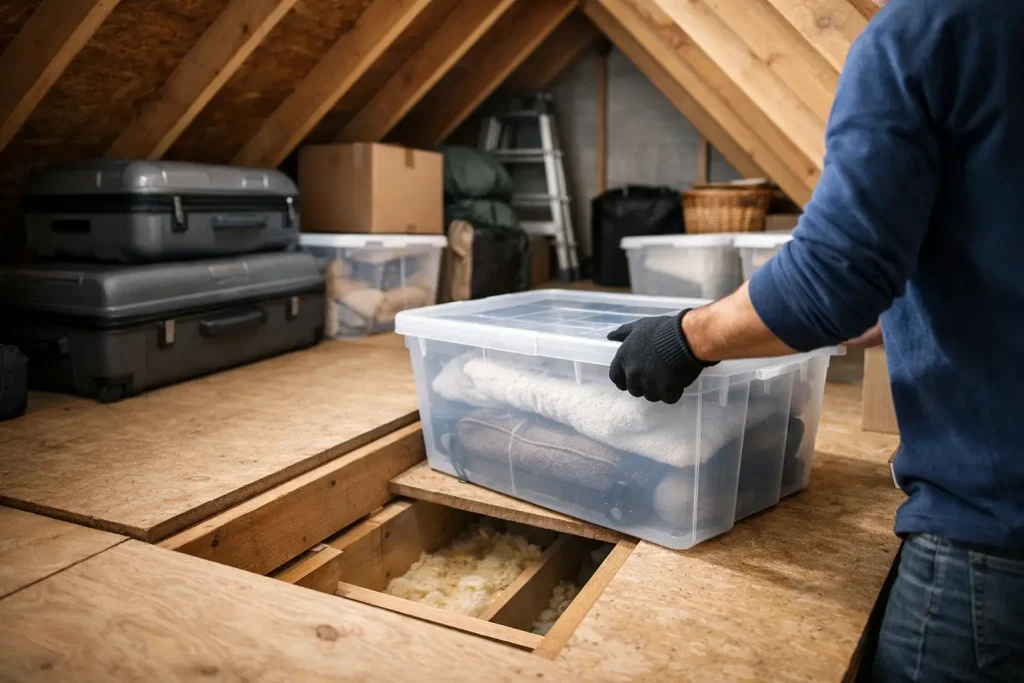
A loft can quickly become the place where suitcases, Christmas decorations, paperwork and children’s keepsakes disappear from view. That is useful only when the space can carry those belongings safely. This loft loading guide explains what homeowners should consider before filling a loft, from the strength of the floor beneath your feet to the protection of your insulation.
The aim is not to pack every available corner. A well-planned loft storage area should be stable, easy to reach and sized for the items you genuinely need to keep. It should also allow your home to retain warmth, rather than creating cold spots or flattening insulation that is there to reduce heat loss.
What does loft loading mean?
Loft loading is the weight placed on a boarded storage area, including the boards themselves, stored belongings and the person moving around the space. The key question is whether the existing structure has been designed to support that weight safely.
Many lofts have ceiling joists intended to support the ceiling below, not a heavily loaded storage floor. That does not mean a loft cannot be used for storage, but it does mean the amount stored and the way the area is boarded both matter. A small, properly raised storage platform for lighter household items is a very different proposition from covering the whole loft and filling it with dense boxes.
There is no single weight limit that applies to every property. Age, construction, joist size, span and the condition of the timbers all affect what is sensible. This is why a proper survey is more valuable than a guess based on what another house can accommodate.
Start with the belongings, not the empty space
Before deciding how much boarding is needed, take a realistic look at what will go into the loft. Light, occasional-use items are generally most suitable: empty luggage, seasonal decorations, soft furnishings, toys, documents stored in suitable containers and similar household belongings.
Some items take up little room but add considerable weight. Books, tiles, tools, filing boxes, gym equipment and large collections can become heavy surprisingly quickly. A row of small boxes may look modest from the hatch, yet place a concentrated load on one section of the floor.
It is also worth considering whether an item belongs in a loft at all. Temperature changes and condensation can damage photographs, fabrics, electronics, natural wood and important papers. If an item is valuable, irreplaceable or sensitive to damp, a more controlled storage location may be the better choice.
Why raised boarding protects insulation
Modern insulation is designed to hold pockets of air, helping to slow the escape of heat through the ceiling. When boards or stored items press directly onto mineral wool insulation, they can compress it. That reduces its effectiveness and can leave your home harder and more expensive to heat.
Raised boarding creates a firm platform above the insulation, leaving it at its intended depth. It provides a clear walking and storage surface without squashing the material below. For homeowners facing higher energy bills, this is one of the most practical reasons to avoid laying boards straight across the joists.
The right raised system also makes the loft easier to use. Rather than balancing across uneven insulation or trying to locate a joist under a loose board, you have a defined, secure area for moving items in and out.
New-build homes need particular care
In newer properties, the method used for loft boarding matters not only for warmth but also for the home’s warranty protection. NHBC approved loft legs are designed to raise the boarding above the insulation while helping to preserve the terms of the NHBC 10-year guarantee.
This is not a detail to overlook. Installing boards directly over insulation in a new home may cause problems with thermal performance and could affect warranty arrangements. A loft specialist can assess the layout, explain the appropriate system and ensure the storage area is installed with care.
A practical loft loading guide for safer storage
Once there is a suitable boarded area, the way you load it makes a real difference. Keep heavier boxes close to supporting points where possible, rather than collecting them in the middle of a long span. Spread weight across the platform and avoid creating one dense pile in a single corner.
Choose sturdy, stackable containers with lids where appropriate. Clear labels save time later and prevent unnecessary searching, which often leads to boxes being moved, dragged or piled awkwardly. Leave a sensible route from the hatch to the storage area so you can walk safely without stepping on insulation or unsupported surfaces.
A useful approach is to organise stored items by how often they are needed. Put holiday decorations, spare bedding or archived paperwork further back, while keeping items used more regularly nearer the hatch. This reduces unnecessary movement in the loft and helps keep the area tidy.
Avoid over-stacking. Even a strong platform can become awkward and unsafe if boxes are stacked too high, particularly near sloping rafters where headroom is limited. You should be able to lift and carry each container without twisting, overreaching or losing sight of where you are stepping.
Access is part of safe loading
A safe storage floor is only one part of the picture. If the hatch is too small, the ladder is unstable or the route into the loft is difficult, even light boxes can be hard to handle safely.
An enlarged loft hatch can make a noticeable difference when moving luggage or plastic storage boxes. A properly fitted loft ladder offers stable access and gives you the confidence to use the space when needed. Good lighting is equally worthwhile, especially in darker corners where cables, joists and stored items can be difficult to see.
It is tempting to treat access as an afterthought, but it affects how the loft is used every time. When getting in and out is straightforward, homeowners are more likely to keep the area organised rather than leaving items near the hatch or on unsuitable surfaces.
Do not ignore ventilation, wiring or pipework
Boarding and storage should never block eaves ventilation. Airflow in the roof space helps manage moisture, and obstructing vents can contribute to condensation problems over time. A good installation accounts for these details rather than simply covering every visible gap.
Take care around electrical cables, pipes, tanks and other services. Cables should not be buried under insulation or trapped beneath boards in a way that could lead to overheating or make future access difficult. Water pipes may need suitable protection from cold conditions, and any signs of leaks, staining or damaged timbers should be investigated before a storage area is installed.
If your loft contains a water tank or equipment that needs servicing, it must remain accessible. Storage should make the space more useful, not prevent essential maintenance.
When a professional assessment is the sensible option
A survey is particularly worthwhile if you are unsure about the age or construction of your home, plan to store heavier belongings, have uneven joists, or can see signs of damp or damage. It is also useful where insulation needs upgrading at the same time as boarding.
A specialist can measure the space, inspect access, identify obstructions and recommend a storage area that fits how your household lives. Sometimes the best answer is a generous boarded section. In other homes, a smaller platform paired with improved insulation and safer access offers better long-term value.
For homeowners in Milton Keynes and the surrounding areas, Loft Accessories provides free home surveys and written quotes, so the options and costs are clear before work begins. The focus should always be on a tidy, safe installation that protects the comfort of your home as well as the belongings you store.
A loft should make everyday life easier, not become another concern above your ceiling. Choose a sensible amount of storage, keep insulation working properly and make access safe, and the space can serve your household well for years.