
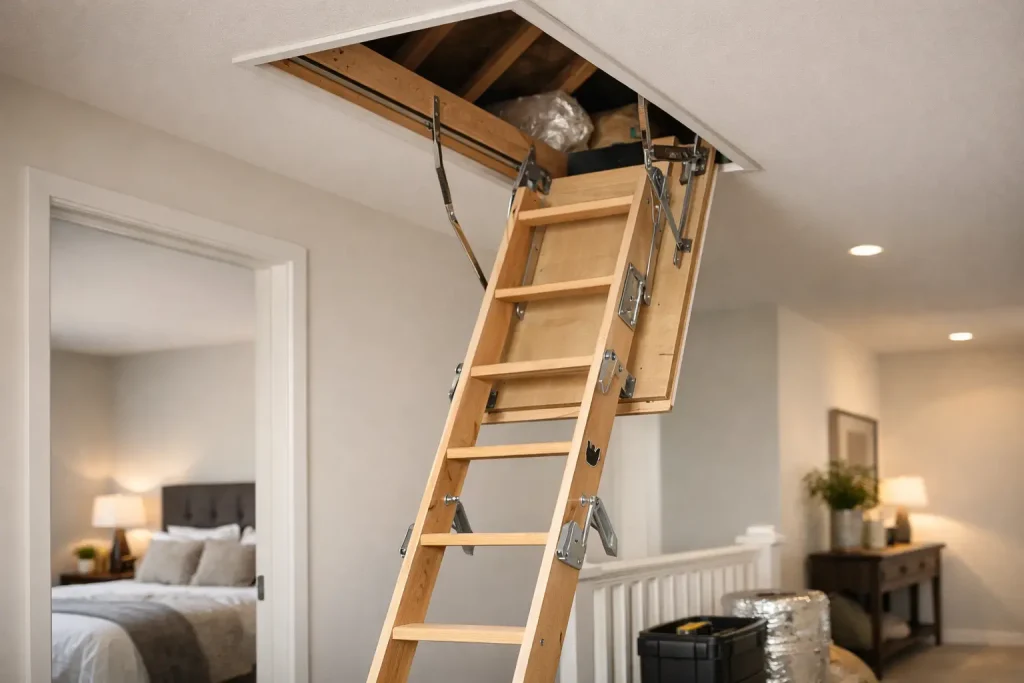
A box of Christmas decorations, a spare suitcase or children’s clothes kept for later should not require balancing on a chair beneath a small hatch. For homeowners considering loft ladders Bedford services, the aim is simple: safe, reliable access to useful storage, without compromising comfort, insulation or the condition of the property.
A professionally fitted loft ladder makes an immediate difference to how a home works. Instead of treating the loft as an awkward, hard-to-reach space, you can use it for the belongings that matter but do not need to be downstairs every day. The right installation also gives you confidence that access is stable, the hatch is properly finished and the surrounding ceiling has been treated with care.
Why a Proper Loft Ladder Installation Matters
Loft access is often overlooked until it becomes inconvenient. Many homes have a basic hatch with no fixed ladder, limited clearance or an old fitting that feels unsteady. That can make sensible storage feel out of reach, particularly for busy families who need to move items in and out safely.
A suitable ladder should feel secure underfoot, open smoothly and fit the available space without creating an obstruction below. It also needs to work with the height of the ceiling, the position of doors and furniture, and the room where the hatch sits. A ladder that is technically functional but difficult to open around a landing light or bedroom door will soon become frustrating.
There is also a safety point that should not be ignored. Carrying boxes while climbing with an unsuitable access arrangement increases the risk of slips, falls and damage to walls or ceilings. A fixed, professionally selected ladder provides a far safer route into the loft, particularly when paired with a correctly sized hatch and a clear area at the foot of the ladder.
Choosing Loft Ladders in Bedford Homes
There is no single ladder that suits every property. Bedford has a wide mix of older homes, family houses and newer developments, and each can present different ceiling heights, loft openings and storage needs. A survey is valuable because it replaces guesswork with a recommendation based on your actual home.
Folding ladders for everyday convenience
Folding timber or aluminium ladders are a popular choice where regular access is needed. They are stored neatly above the hatch, generally offer a comfortable angle for climbing and can provide a solid feel when used correctly. For homeowners using their loft for seasonal storage, luggage or household overflow, this is often the most practical option.
The available loft space matters here. Folding sections need sufficient room above the hatch when stowed, so the installer should check for pipes, cables, roof timbers and other obstructions before recommending a model.
Sliding ladders where space is tighter
Sliding ladders can suit properties where the loft has less headroom above the hatch. They extend in sections, allowing the ladder to be stored compactly while still providing a stable means of access. The trade-off is that they may need a little more care when operating, and the position of the extended ladder must be considered carefully in the room below.
Compact options for occasional access
Some homes need a more space-conscious solution, particularly where the hatch is in a narrow hallway or small bedroom. Compact ladder designs may be appropriate for occasional use, but they should never be chosen purely because they are smaller. Comfort, load capacity, grip and ease of operation still matter. A professional survey helps establish whether a compact option is genuinely suitable or whether alterations to the hatch would provide a better long-term result.
The Hatch Is Part of the Job
A ladder is only as useful as the hatch it works with. Older loft hatches can be too small for safe access, poorly positioned or uninsulated. In some cases, enlarging or relocating the opening can make entering the loft much easier and improve the finished appearance of the ceiling below.
An insulated hatch is particularly worthwhile in homes where heat loss is a concern. Warm air naturally rises, and a poorly fitting hatch can become a weak point in an otherwise well-insulated ceiling. A properly fitted, insulated loft hatch helps reduce draughts and supports the performance of the insulation above.
This is why ladder installation should be considered alongside the wider loft setup, rather than as an isolated job. If the loft is intended for storage, safe access, raised boarding and effective insulation need to work together. The result is a space that is easier to use and kinder to your heating bills.
Protecting Insulation While Creating Storage
Many homeowners understandably want more storage but are concerned about losing insulation performance. This is a sensible concern. Compressing mineral wool insulation beneath boards can reduce its effectiveness, allowing more heat to escape through the roof space.
The practical answer is to raise boarding above the insulation using suitable loft legs, rather than flattening it. This creates a stable storage platform while allowing the insulation to retain the depth it needs to perform properly. It also provides a safer, more defined area for moving around once you have accessed the loft by ladder.
For newer properties, the choice of materials and method is especially important. NHBC approved loft legs can help protect the terms of a new-build warranty while creating useful raised storage. An experienced specialist will explain what is appropriate for the property rather than applying the same solution to every home.
Not every loft needs full boarding. Sometimes a carefully planned central walkway and a dedicated storage area are the better choice, especially where access is limited or services run through the space. Honest advice should focus on what will be useful, safe and proportionate for your household.
What a Good Home Survey Should Check
Before any work is booked, a proper survey should look beyond the size of the hatch. The ceiling height and room layout need to be assessed, as do the loft’s internal dimensions and any obstacles around the proposed ladder position. The survey should also identify the current depth and condition of insulation, the structural layout of the loft and the amount of storage you realistically need.
It is also the right time to discuss how often the ladder will be used. Someone accessing holiday items a few times a year may have different requirements from a family regularly storing prams, school items and seasonal clothing. Clear answers at this stage help avoid paying for a solution that is either inadequate or more elaborate than necessary.
You should expect straightforward advice, a detailed written quotation and an explanation of the work involved. This includes whether the hatch will be altered, what finish will be provided, how insulation will be protected and how the home will be kept tidy during installation. Being fully insured is another useful reassurance when work is taking place around ceilings, loft spaces and finished rooms.
A Tidy Installation Makes the Difference
Loft access work affects a visible part of the home, often a hallway, landing or bedroom. Good workmanship is not only about the ladder working correctly. It is also about clean edges around the hatch, careful protection of the room, controlled dust and a tidy finish once the work is complete.
At Loft Accessories, homeowners receive a free home survey and written quotation before work begins, so the recommended option is clear from the start. As local loft specialists, the focus is on practical access, effective insulation and storage that fits the way a household actually lives.
After installation, use the ladder as intended and keep the area below it clear before opening. Store heavier items close to the supported boarding area rather than on unsupported sections of the loft, and avoid overloading any storage platform. These simple habits help preserve safe access for years to come.
A well-chosen loft ladder should make the home feel less cluttered and more manageable, not add another compromise. When the hatch, ladder, insulation and storage area are planned together, the loft becomes a genuinely useful part of the house – ready when you need it, and out of the way when you do not.