
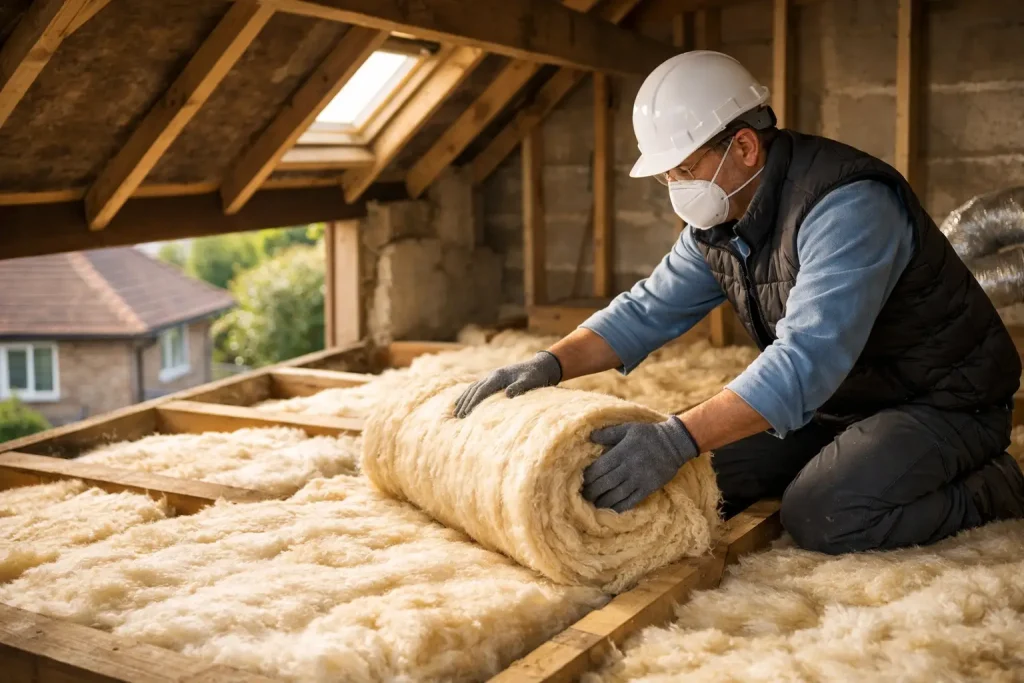
A cold bedroom on a Bedford morning, a boiler working harder than it should, and boxes balanced between rolls of insulation are all signs that the loft needs attention. Professional loft insulation Bedford homeowners choose can make a noticeable difference to how a property feels, while creating a safer and more useful place to store the things that do not belong in everyday living spaces.
The key is not simply adding more material. Insulation, boarding, access and ventilation need to work together. When they do, you protect the warmth in your home without sacrificing the storage space that makes a loft genuinely useful.
Why loft insulation matters in Bedford homes
Heat rises, and an uninsulated or poorly insulated loft gives it an easy route out of the house. That can leave rooms below feeling chilly, particularly early in the morning and during colder spells. It also means the heating system may need to run for longer to maintain a comfortable temperature.
Many Bedford homes have some insulation already, but its condition and depth can vary greatly. Older insulation may be thin, uneven, disturbed by stored belongings or compressed beneath boards. In each case, it cannot perform as well as it should. A professional assessment helps establish what is already in place and whether it is suitable to retain, top up or replace.
Improving loft insulation is a practical investment because it supports day-to-day comfort as well as lower heat loss. It may also contribute towards a stronger EPC rating, which can be useful for homeowners thinking about the long-term efficiency and appeal of their property.
More insulation is not always the full answer
It is tempting to think of insulation as a simple layer that can be covered with boards. In reality, placing standard loft boards directly on top of insulation causes a common problem: the insulation gets squashed.
Compressed insulation holds less air, and trapped air is what helps it slow the movement of heat. Flattening it can reduce its effectiveness just when you are trying to improve it. It can also leave a loft floor that is not designed to carry stored items safely.
The right approach is usually to raise the storage platform above the insulation. This leaves the insulation at its intended depth while providing a stable boarded area for boxes, suitcases and seasonal belongings. It is a better balance between energy efficiency and usable storage.
Raised loft boarding protects performance
A raised system uses purpose-made loft legs to support boards above the insulation. The result is a clear gap that prevents pressure on the insulation and allows the loft structure to function as intended.
This matters especially in newer homes. Where appropriate, NHBC approved loft legs can be used to provide a solid storage platform without compromising the insulation below. This careful method helps homeowners make practical use of the space while protecting the terms of their NHBC 10-year guarantee.
Not every loft needs the same amount of boarding. A compact raised platform can be ideal for a household that only needs space for luggage and decorations, while a larger area may suit a family that wants to free up cupboards and spare rooms. An honest survey should focus on what you will actually use, rather than recommending more work than necessary.
What a professional loft survey should look for
A good loft insulation survey is about more than measuring the floor area. It should consider the insulation already present, the condition of the joists, safe routes through the loft, the best location for storage and the access available from inside the home.
Ventilation also deserves careful attention. A loft needs to remain properly ventilated to help manage moisture. Blocking eaves ventilation or creating an overly enclosed space can lead to condensation concerns, so a specialist installation should respect the way the roof has been designed to breathe.
The hatch and ladder are equally important. There is little value in a well-insulated, neatly boarded loft if getting into it feels awkward or unsafe. A larger insulated hatch and a properly fitted loft ladder can make storage easier to reach, while helping to reduce draughts around the opening.
For homeowners, the benefit of a survey is clarity. You should come away knowing what work is recommended, why it is needed, how the storage area will be supported and what the price covers. A detailed written quote makes it easier to plan with confidence.
Choosing the right insulation for your property
There is no single answer for every Bedford property. The best choice depends on the existing insulation, available height, access arrangements and whether the loft will be used for storage. Mineral wool insulation remains a common and effective option because it can be laid between and across the loft joists to build up thermal performance.
Where space is limited, the design needs more thought. Adding insulation increases its depth, which is excellent for retaining heat but can make a direct-boarded floor even less practical. Raising the boarding becomes particularly valuable in these circumstances.
It is also worth considering the condition of what is already there. Clean, dry insulation that is still in good order may only need topping up. Insulation affected by damp, damage or significant disturbance may need a more thorough solution. A reliable installer will explain the difference plainly and recommend only what is appropriate.
The difference careful installation makes
Loft work can be disruptive if it is rushed. Insulation needs to be installed evenly, with attention around pipes, cables, tanks and access points. Boarding must be securely fixed and supported correctly, rather than laid across areas that cannot take the load.
A professional team should also leave the property tidy. Homeowners should not have to deal with loose materials, dust or uncertainty about how to use their new access safely. Clear communication before work begins and respectful workmanship throughout make a real difference to the experience.
Loft Accessories works with homeowners across Bedford and surrounding areas who want a straightforward, specialist service. With more than 10 years of experience focused on loft spaces, the aim is simple: give each customer honest advice, a clear written quote and an installation that improves comfort and storage without cutting corners.
When should you arrange loft insulation?
There is rarely a wrong time to check the condition of your loft insulation, but the need often becomes obvious when heating bills rise or rooms begin to feel harder to warm. It can also be sensible to review the loft before moving stored belongings up there, replacing a loft hatch or fitting a ladder.
If you have recently bought a property, a loft survey can reveal whether the insulation has been disturbed by previous occupants or whether boards have been laid directly over it. For long-term homeowners, it is a chance to bring an older loft arrangement up to a more useful standard without making unnecessary changes elsewhere in the home.
The best result is a loft that is warm below, orderly above and easy to access when you need it. Start with a free, no-pressure survey, ask questions about insulation depth and raised boarding, and choose a solution that suits your home rather than a one-size-fits-all package.