
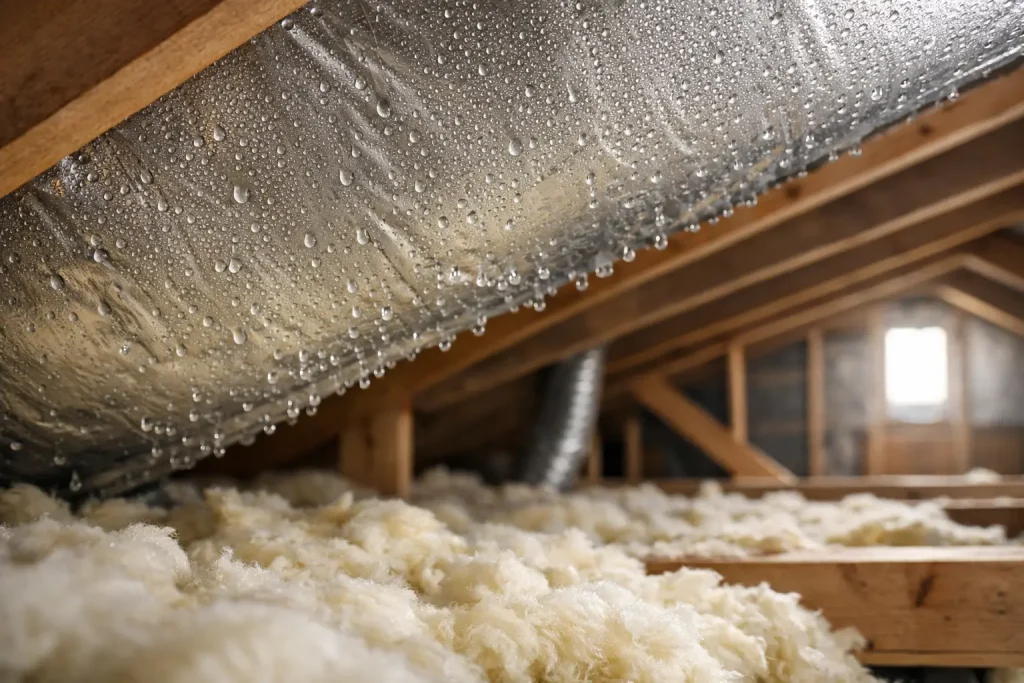
If you have started noticing damp timbers, water droplets on felt, or a musty smell in the roof space, loft condensation after insulation can feel like the insulation has caused a new problem. In many homes, though, the insulation is not the real fault. What usually changes is the balance between heat, moisture and airflow inside the loft.
That matters because a loft should be cold, dry and well ventilated unless it has been designed otherwise. Once warm air from the house below reaches a colder roof space and cannot escape properly, condensation forms on the coldest surfaces. It often shows up after insulation work because the loft environment has changed, and any existing ventilation weaknesses become more obvious.
Why loft condensation after insulation happens
Insulation slows heat escaping from the rooms below. That is exactly what it is meant to do, and it is one of the best ways to improve comfort and reduce energy bills. The trade-off is that the loft above can become colder than before, especially in winter.
A colder loft is not a problem on its own. The issue starts when warm, moist air from bathrooms, kitchens and everyday living drifts upward and becomes trapped. When that moisture hits cold roofing felt, rafters, nails or tiles, it turns back into water.
In older properties, a loft may have been losing so much heat that it masked poor ventilation. After insulation is topped up, that background warmth disappears. The result is not that the insulation is wrong, but that the loft now needs proper airflow and careful installation details to match.
The most common causes
Blocked or reduced ventilation
This is one of the biggest reasons for condensation. Insulation can sometimes be laid too tightly at the eaves, stopping air from moving in from the soffits. Even a well insulated loft still needs a route for fresh air to enter and stale, moist air to leave.
In some homes, the ventilation was never adequate to begin with. Once the loft gets colder after insulation, the weakness becomes much easier to spot.
Moist air leaking up from the house
Loft hatches, pipe openings, cable penetrations and gaps around fittings all allow warm, humid air into the loft. Recessed lights can also be a trouble spot if they are not properly sealed or protected.
This is why condensation is often worse in family homes during winter. More showers, more cooking, more drying clothes indoors and less window opening all increase indoor humidity.
Bathroom or extractor fans discharging into the loft
This is a surprisingly common issue. Extractor fans should vent outside, not into the loft space. If they discharge into the roof void, they are effectively pumping moisture exactly where you do not want it.
Compressed or poorly installed insulation
Insulation needs to perform properly without affecting airflow. If it has been squashed into the eaves, pushed hard against the roof covering where it should not be, or installed around boarding without the correct raised system, problems can follow.
This is one reason specialist installation matters. Lofts are not just empty spaces to fill. They need to remain usable, safe and able to breathe.
Signs to watch for in your loft
Condensation is not always dramatic. Sometimes it is only noticed when boxes feel damp or a survey picks up mould on timbers. Other times, it is more obvious, with beads of water on the underside of the roof felt.
Typical warning signs include a damp or stale smell, mould growth on timber, rusty nail heads, water droplets on the felt, and insulation that feels damp to the touch. In more advanced cases, stored items may show signs of moisture damage.
Timing also tells you a lot. Condensation is usually worse during cold weather, particularly after frosty nights. It may seem to improve in spring and summer, but that does not mean the underlying issue has gone away.
Is the insulation the problem?
Sometimes people assume the answer is to remove some insulation so the loft warms up again. That can reduce the symptoms, but it usually treats the wrong problem. If the home loses more heat simply to keep the loft drier, the householder ends up paying for it through higher energy bills.
The better approach is to look at the full loft set-up. Is there enough ventilation at the eaves or ridge? Are there gaps allowing household moisture into the loft? Has the insulation been fitted in a way that blocks airflow? Has any boarding been raised correctly above the insulation rather than compressing it?
It depends on the property, because newer homes, older roofs and different insulation types all behave a little differently. What works in one loft may not be right in another.
How the right fix is usually found
Start with ventilation
In many cases, improving ventilation is the key step. That may mean clearing blocked eaves, ensuring the insulation does not cover ventilation paths, or reviewing whether additional ventilation is needed.
The aim is simple. Fresh air needs to move through the loft so that moisture does not sit on cold surfaces. A dry, ventilated loft is far less likely to suffer long-term condensation issues.
Reduce air leakage from below
The ceiling line between the house and the loft matters more than many people realise. Sealing gaps around the loft hatch, pipes, cables and other penetrations can make a real difference. If warm, moist air is prevented from entering the loft in the first place, condensation risk drops.
This is especially important in homes where bathrooms are used heavily or where humidity levels are already high.
Check extractor fan routing
If a bathroom fan or kitchen extraction is venting into the loft, that should be corrected. Moisture needs to be taken outside the property, not into the roof space.
Make sure loft boarding has been installed properly
For homeowners who want storage as well as insulation, the method of boarding matters. Standard boarding laid directly on top of insulation can compress it, reducing thermal performance and interfering with ventilation patterns around the eaves.
A raised loft boarding system is usually the right answer because it allows the insulation to retain its depth while creating a stable platform above. In newer homes, using NHBC approved loft legs is particularly important where warranty protection needs to be maintained.
Why new-build homes need extra care
Newer properties are often built to tighter standards, which is good for energy efficiency but can make ventilation balance more sensitive. If moisture cannot escape easily and the loft has not been set up correctly for insulation and storage, condensation can appear quite quickly.
That does not mean new-build lofts are problematic by default. It simply means the details matter. Raised boarding, protected insulation depth, clear airflow at the eaves and proper attention to warranty requirements all need to work together.
For householders in places such as Milton Keynes, where many estates include relatively modern homes, this comes up regularly. A tidy, usable loft is absolutely possible, but it needs to be planned with the roof space in mind rather than treated as an afterthought.
What not to do when condensation appears
The wrong fix can create a second problem. Removing too much insulation, boarding directly over it, or ignoring dampness because it seems minor can all store up trouble for later.
Condensation left unresolved can affect timber, reduce insulation performance and damage belongings stored in the loft. Equally, overcorrecting without understanding the cause can leave the home colder and less efficient.
That is why a proper assessment matters. Good loft work is not just about fitting materials. It is about understanding how access, storage, insulation and ventilation all affect one another.
When to get the loft checked
If you have noticed repeated dampness through winter, musty smells, mould spots or signs of moisture after recent insulation work, it is worth having the loft looked at properly. The same applies if you are planning to improve insulation and add boarding at the same time.
A specialist will usually look at the depth and condition of the insulation, whether airflow is being blocked at the eaves, how the loft hatch and ceiling penetrations are performing, and whether any extraction is wrongly discharging into the roof void. That gives a much clearer picture than guessing from one symptom alone.
For many homeowners, the reassuring part is this: loft condensation after insulation is usually fixable without undoing the energy-saving benefits you were aiming for. In fact, once the loft is set up correctly, you should end up with a space that is drier, more efficient and more useful.
A loft should help the house work better, not create another worry. If condensation has appeared after insulation, the answer is usually not less insulation but a better-balanced loft.