
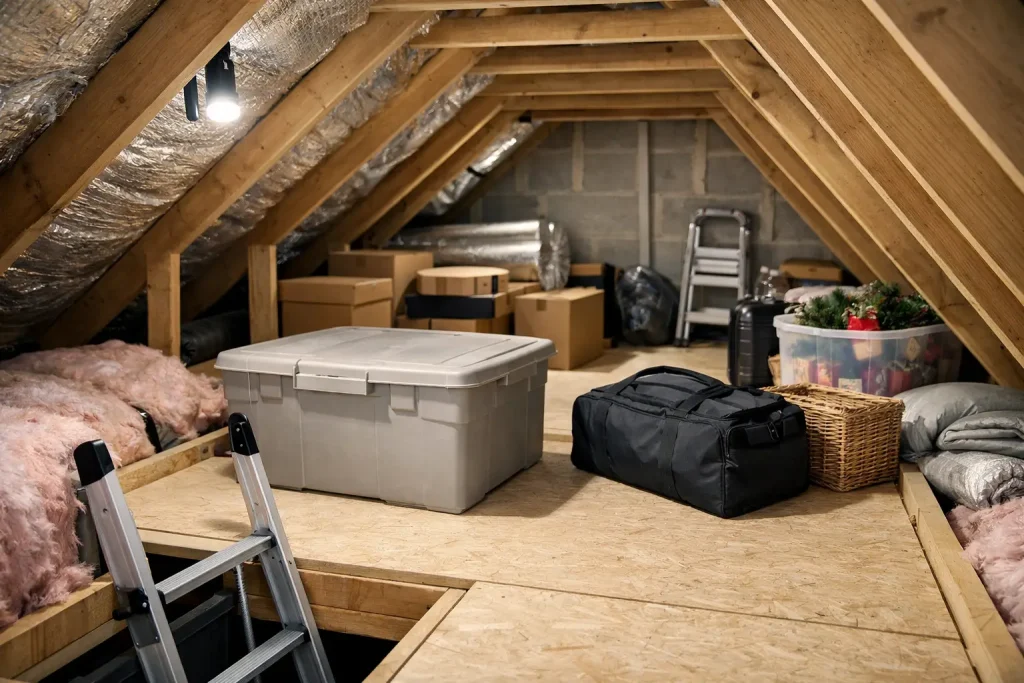
A loft can quickly become the place where Christmas decorations, suitcases, paperwork and children’s keepsakes disappear from view. But without proper loft boarding, Northampton homeowners can find that the space is awkward to reach, difficult to use and potentially costly to heat. A well-planned storage platform changes that. It gives belongings a safe home while helping to protect the insulation that keeps warmth in the rooms below.
The best result is not simply a few boards laid across the loft. It is a storage area designed around the condition of your property, the depth of its insulation and the way you need to use it. That is where specialist advice makes a real difference.
Why raised loft boarding matters
Many homes have insulation laid between and over the ceiling joists. This is good for reducing heat loss, but it can make traditional boarding unsuitable. If boards are placed directly on top of the insulation, the insulation can be compressed. Once squashed, it cannot trap air as effectively, reducing its thermal performance.
Raised loft boarding solves this problem. A purpose-built support system lifts the boarding above the insulation, creating a solid, level area for storage without flattening the material beneath. The insulation remains effective, the loft floor is safer to walk on and stored items are less likely to end up resting unevenly on soft insulation.
For many Northampton properties, especially newer homes, this detail is essential rather than optional. It is possible to gain useful storage space without compromising the energy-saving measures already in place.
A practical answer to a familiar lack of space
Most households do not need their whole loft boarded. In fact, trying to cover every inch is rarely the most sensible use of space or budget. A carefully sized central storage area, with a clear route from the hatch, is often enough for boxes, seasonal items and luggage.
The right layout depends on what you plan to store. Lightweight decorations and suitcases need less space than archive boxes or heavier household items. The shape of the roof, water tanks, pipework, cabling and roof supports also affect what can be safely boarded. A proper survey identifies these points before any work begins, so there are no assumptions made once installation is under way.
This is one reason professional loft boarding in Northampton is worth considering. The goal should be useful, safe storage that suits the building, rather than boarding added where it does not belong.
Insulation and storage should work together
A cold loft is normal. What matters is preventing warmth from the living areas below from escaping into it. If your insulation is thin, uneven or outdated, boarding alone will not address the bigger issue of heat loss.
Modern insulation can make a noticeable difference to comfort and heating costs, particularly in older properties where the loft has been overlooked for years. Before installing a raised platform, a specialist can assess whether insulation needs topping up and whether there are gaps around the edges that should be addressed.
There are sensible limits to what insulation can achieve. Draughts elsewhere in the house, old windows and an inefficient heating system all play a part in energy bills. Even so, improving the loft is often one of the most straightforward ways to reduce heat escaping through the roof.
The order of work matters. Insulation should be properly installed first, then the boards raised above it. This gives you the benefit of an organised storage space without sacrificing warmth for convenience.
Safe access is part of the job
A boarded loft is only genuinely useful if you can reach it comfortably and safely. Many homes still have small hatches, loose ladders or no practical lighting overhead. That makes retrieving a box feel like a balancing act, which is hardly ideal when carrying items up and down.
A larger insulated hatch, a fitted loft ladder and suitable lighting can make access much simpler. The best choice depends on the available space, ceiling height and how frequently you expect to use the loft. A compact ladder may suit occasional access, while a sturdier fitted option can be better for a family that uses the storage area regularly.
An insulated hatch also helps reduce heat loss through an area that is often neglected. Small improvements like this help create a loft space that feels considered from the bedroom ceiling to the boarded platform above.
What a professional survey should check
A survey is more than a quick look through the hatch. It should consider the existing insulation depth, the condition and spacing of the joists, available headroom, ventilation, access arrangements and any obstructions within the loft.
The surveyor should also ask what you want the space to do for your household. Are you clearing cupboards before a new baby arrives? Do you need somewhere dry and accessible for seasonal belongings? Are rising energy costs making insulation the main priority? Clear answers lead to a more appropriate recommendation.
You should receive a detailed written quote explaining what will be installed and why. Straightforward pricing is particularly valuable because every loft differs. A low figure that does not include raised supports, access improvements or insulation can become poor value if it fails to solve the real problem.
New-build homes need extra care
Newer properties often come with thick insulation that should not be compressed. They may also be covered by an NHBC warranty, so homeowners understandably want reassurance that work in the loft will not affect their protection.
NHBC approved loft legs are designed to raise the boarding above the insulation while supporting the storage deck properly. Used correctly, they help preserve ventilation and insulation performance while providing a secure platform. This approach is particularly relevant for homeowners who want extra storage but do not want to take risks with their new home’s warranty.
It is always worth checking the specifics of your property and warranty documents. A reputable specialist will explain the proposed system clearly and use suitable materials for the installation, rather than treating every loft in the same way.
Choosing a loft boarding specialist in Northampton
Trust matters when work is taking place above your ceilings, around insulation and near electrical cables. Look for a local specialist with clear experience in loft storage, insulation, ladders and hatch access rather than a business that treats this as an occasional add-on.
Good workmanship is often visible in the details: boards fitted securely, a sensible walking route, insulation left uncompressed, clean edges around the hatch and a tidy finish when the work is complete. It should also come with the reassurance of full insurance and a clear point of contact if you have questions.
At Loft Accessories, the focus is on practical recommendations, free home surveys and written quotes that make the scope of work easy to understand. For homeowners, that means fewer surprises and a loft that is designed for everyday life rather than simply made to look finished.
What to store once the work is complete
Even a professionally boarded loft has sensible limits. It is best used for dry, lighter household belongings such as decorations, luggage, clothing stored in sealed boxes and records you need to keep. Avoid placing very heavy items in the loft unless the storage plan has specifically allowed for them.
Use strong lidded boxes, label them clearly and leave the access route free. Keeping stored items away from eaves and allowing clear space around equipment, cables and ventilation points makes the loft easier to inspect and use over time. If you store belongings that are sensitive to temperature changes, remember that a loft will usually be colder in winter and warmer in summer than the rooms below.
A properly boarded loft does not need to be complicated. It simply needs to respect the structure of the home, protect the insulation and make daily life a little easier. When your cupboards are full and floor space is at a premium, a safe, accessible loft can give your home the breathing room it has been missing.