
A loft can quickly become the place where suitcases, seasonal decorations, baby equipment and paperwork disappear – until the day you need something at the very bottom. This homeowner guide to raised loft flooring explains how to turn that awkward space into practical storage without compromising the insulation that keeps your home warm.
The key point is simple: a boarded loft floor should not squash the insulation beneath it. Raised loft flooring creates a solid platform above the insulation, giving you accessible storage while allowing the insulation to work as intended. Done properly, it is a sensible improvement for homeowners who want a tidier home, safer access and better energy efficiency.
What raised loft flooring actually does
Traditional boarding is often laid directly across the ceiling joists. That may appear convenient, but it can compress modern insulation, particularly where the required depth is higher than the joists themselves. Compressed insulation holds less trapped air, which reduces its thermal performance. In practical terms, more warmth can escape through the roof and heating bills can rise.
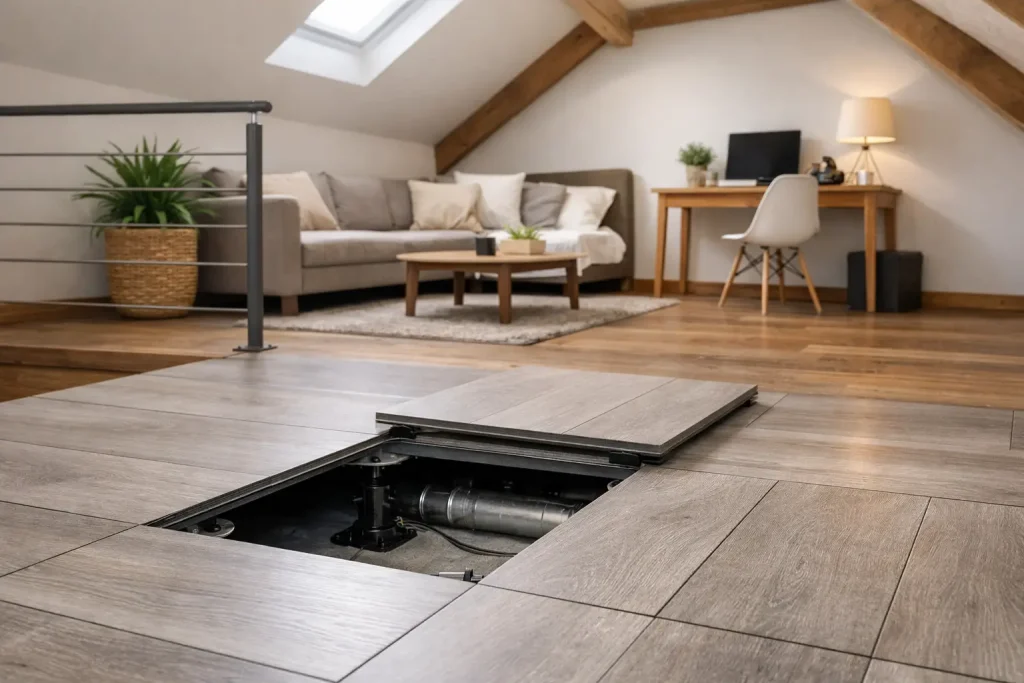
Raised loft flooring uses purpose-made supports, often called loft legs, fixed to the joists. Boards are then installed on top, creating a gap between the insulation and the storage deck. The insulation can remain at its correct depth, while the boarded area provides a stable surface for everyday household storage.
It is not about making every inch of the loft into a floor. A good installation creates the right amount of clear, usable storage for the household, while respecting the structure, ventilation and services already in the loft.
Why insulation needs protecting
Heat rises, and a poorly insulated loft is one of the most common sources of heat loss in a home. Insulation works best when it is laid evenly and left uncompressed. If boxes and boards press it down, the performance can be affected even when the loft looks neatly finished.
Raised flooring makes particular sense when insulation is being topped up or brought closer to current recommended depths. The extra material is valuable, but it needs room. Lifting the boarding above it means you do not have to choose between keeping your belongings and keeping warmth in the rooms below.
There is a wider comfort benefit too. Better loft insulation can help rooms feel less draughty and more consistent in temperature. The exact saving depends on the property, existing insulation, heating system and how the home is used, so it is best to view improved efficiency as a long-term household benefit rather than a guaranteed fixed figure.
Is your loft suitable for raised flooring?
Most homes have some potential for raised loft boarding, but the right design depends on the individual space. Joist layout, roof height, existing insulation, water tanks, pipes, cables and the location of the hatch all need to be considered before work begins.
The condition of the ceiling joists matters. They are designed to support the ceiling below, and they are not automatically suitable for heavy or excessive loading. A raised storage platform is intended for normal domestic items such as clothing, Christmas decorations, empty boxes and lighter household belongings. It is not the place for very heavy furniture, stacks of books or large quantities of building materials.
Ventilation also deserves attention. Lofts need airflow to manage moisture, so insulation and boarding should not block eaves ventilation or cover areas that need to remain clear. Pipes and water tanks may require insulation or protective measures too, particularly in colder weather.
A professional survey is useful because it replaces guesswork with a clear plan. You should be told what can be boarded, where the safest access route is, whether insulation needs improving and any limitations that affect the amount of storage available.
New-build homes and NHBC requirements
Newer homes often require extra care. If your property is still within its NHBC Buildmark warranty period, the installation should be planned with the warranty requirements in mind. NHBC-approved loft legs are designed to raise the boarding without compressing insulation, helping to preserve both the thermal performance of the loft and the validity of the 10-year guarantee.
That does not mean every new-build loft should be treated identically. The position of cables, trusses, services and insulation varies from property to property. A specialist should assess the loft before recommending the size and layout of the boarded area.
Access is part of the job
A well-boarded loft is only genuinely useful if it can be reached safely. Many households have an undersized hatch, an unsteady ladder or no safe way to carry a storage box into the loft. Improving the floor without looking at access can leave you with a better storage area that remains inconvenient to use.
A suitable loft ladder should feel secure underfoot, fit the available opening and be practical for the people using it. The loft hatch may also need enlarging or replacing to make access easier. Insulated hatch solutions can help reduce heat loss around an area that is sometimes overlooked.
Lighting is another straightforward improvement with a noticeable effect. A properly lit loft makes it far easier to see where you are stepping, identify stored items and avoid placing belongings on unboarded sections. Good access, lighting and flooring work together to make the space safer and more useful.
What should be stored on a raised loft floor?
The best loft storage is organised, dry and reasonably light. Use sturdy, labelled containers so that you can find what you need without moving half the loft. Keep a clear path from the hatch to the main storage area, and avoid packing items tightly around pipes, cables or tanks.
Take care with belongings that are sensitive to temperature changes. Photographs, important documents, delicate fabrics, electronics and wooden furniture may be better kept elsewhere unless they are appropriately protected. Lofts can become very warm in summer and cold in winter, even when they are well insulated.
It is also wise to avoid storing anything that could create a fire risk or leak. Paints, fuels, pressurised containers and other hazardous materials do not belong in a domestic loft storage area. If you are unsure about an item, choose a safer place for it.
Questions to ask before booking work
The quality of the result often comes down to the assessment and installation, not simply the boards themselves. Ask whether the insulation will be lifted, topped up or protected from compression. Check how the installer will deal with cables, pipes and ventilation, and confirm the intended use and loading of the storage area.
It is sensible to request a detailed written quote that sets out what is included: the boarded area, raised supports, insulation work, hatch alterations, ladder and lighting if required. This avoids assumptions and makes it easier to compare like for like. You should also check that the work is insured and that the installer will leave the area clean and tidy.
For homeowners in Milton Keynes and nearby areas, a free loft survey can be the simplest starting point. Loft Accessories assesses each loft as it stands, explains the practical options in plain language and recommends a solution that suits the home rather than a one-size-fits-all package.
A storage upgrade that respects your home
Raised loft flooring is a practical investment because it addresses several everyday problems at once: clutter downstairs, awkward access, wasted space and insulation that cannot perform properly. The right installation should feel uncomplicated from the homeowner’s point of view – a secure ladder, a clear route, a sturdy storage platform and confidence that the insulation below has not been compromised.
Before filling the loft, take a moment to decide what genuinely needs keeping. A well-planned raised floor gives you valuable space, but the real benefit is a home that feels easier to organise, warmer to live in and simpler to look after.