
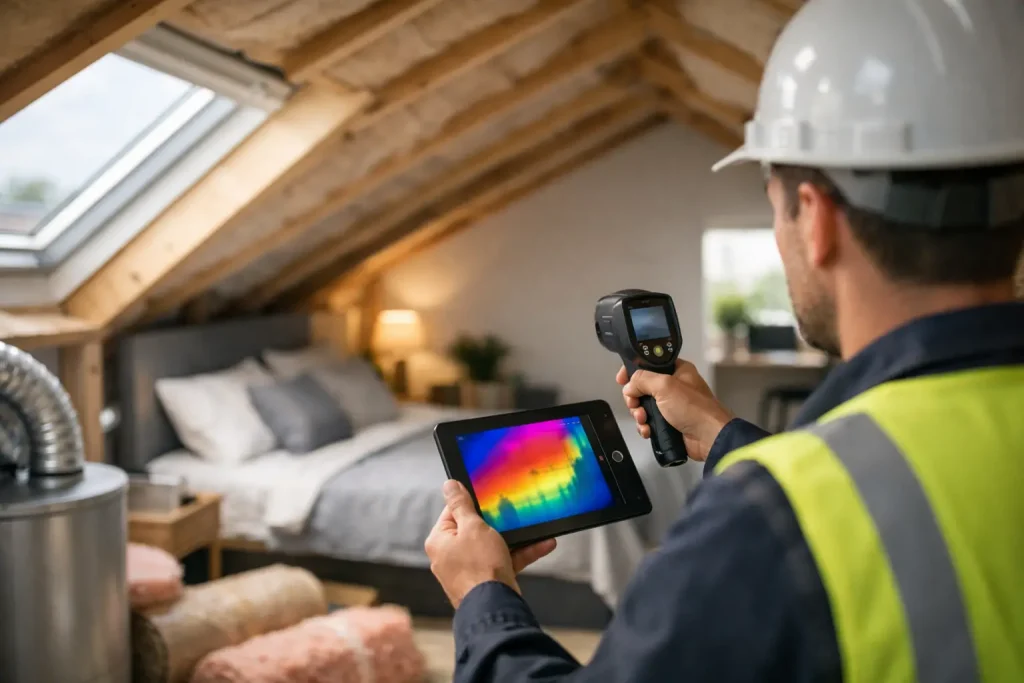
If your EPC says the loft insulation is below current standards, that single line can drag down the overall rating more than many homeowners expect. When people ask how to improve loft EPC rating, the answer is usually quite practical – stop heat escaping through the roof, and make sure the loft still works properly as a usable storage space.
That sounds simple, but the detail matters. A loft that has been partly insulated, badly boarded or compressed under old panels may not perform anything like it should. You can end up paying to heat rooms below while the warmth disappears upwards, and at the same time lose safe storage because the loft is awkward to access or no longer boarded correctly.
Why the loft matters so much for EPC performance
Your EPC looks at how efficiently your home uses energy, and loft insulation is one of the clearest areas where improvements can have a direct effect. Heat rises, so if the top of the house is under-insulated, the whole property works harder to stay warm. That often shows up as higher heating bills, colder rooms and an EPC recommendation to increase insulation thickness.
For many homes, the loft is one of the most straightforward places to improve thermal performance without major disruption. That does not mean every loft should be treated the same way. The age of the property, the current insulation depth, the condition of the joists and whether the space is already used for storage all affect the right approach.
How to improve loft EPC rating without creating new problems
The biggest gain usually comes from bringing insulation up to an effective standard. In many properties, older insulation is too thin by modern expectations, patchy in places or flattened where items have been stored. Once insulation is compressed, it cannot trap air as well, which reduces its effectiveness.
This is where homeowners can get caught out. They want a warmer, more efficient home, but they also need the loft for suitcases, decorations and family storage. If standard loft boards are laid directly on top of the insulation, the material underneath gets squashed. That can undermine the energy-saving benefit you were aiming for in the first place.
A better solution is to raise the boarding above the insulation so the full depth can remain in place. This allows the loft to keep its thermal performance while still giving you a solid storage platform. In newer homes, that approach matters even more because using the right raised system helps protect the property warranty and avoids damaging the insulation layer.
Insulation depth is usually the first issue to fix
If your loft has older mineral wool insulation, it may be far below the level typically recommended today. Topping it up can make a noticeable difference to heat retention, especially in winter. It can also help the home feel more consistent from room to room, rather than warm downstairs and chilly upstairs.
That said, more insulation is only helpful when it is installed properly. Gaps around edges, disturbed sections and blocked ventilation can all reduce performance. A professional survey is useful because it identifies what is already there, what condition it is in and whether any existing boarding needs to be lifted and replaced correctly.
Raised loft boarding supports both storage and efficiency
One of the most sensible ways to improve a loft without sacrificing practicality is raised loft boarding. Instead of pressing boards directly onto the insulation, the boarding is supported above it. That means the insulation can do its job while the loft remains safe and usable.
For homeowners, the real benefit is balance. You are not choosing between better EPC performance and a tidy house. You can have both, provided the boarding system has been designed with insulation depth in mind.
Safe access plays a part too
Strictly speaking, loft ladders and hatches do not usually deliver the same EPC uplift as insulation, but they still matter. If access is poor, people are less likely to use the loft correctly or even know what condition it is in. A draughty or ill-fitting hatch can also contribute to heat loss.
Improving loft access makes the space safer and more convenient, but it also supports the wider goal of proper loft use. If the loft is easier to reach and the hatch is fitted well, homeowners are more likely to keep the area organised, avoid damaging insulation and make better long-term use of the space.
Common reasons loft improvements fall short
A loft can look tidy and still perform badly. We see this most often where old boarding has been installed low over thin insulation, or where the insulation has been disturbed over time to create makeshift storage areas. From below, you only notice the symptoms – rooms that lose heat quickly and energy bills that feel harder to control.
Another issue is assuming that any insulation upgrade will automatically improve the EPC. Usually it will help, but the final result depends on the starting point and the condition of the rest of the property. If the loft is already well insulated, the EPC benefit may be smaller than expected. If it is currently under-insulated, the difference can be much more worthwhile.
Ventilation is another area where proper installation matters. A loft needs the right airflow to help prevent condensation and moisture problems. Packing insulation tightly into the wrong places can create issues that are not obvious at first. Good loft work is not just about adding more material. It is about fitting the right solution neatly, safely and with the whole roof space in mind.
What an EPC assessor is likely to notice
An EPC assessor is usually looking at the insulation level that can be evidenced or reasonably assumed, along with the general energy efficiency of the home. In practical terms, that means a loft with inadequate insulation is often flagged for improvement, while a loft that has been upgraded properly is more likely to support a better overall score.
The loft will not be judged in isolation. Windows, heating systems and wall insulation all play their part. Even so, loft insulation is one of the more cost-effective areas to address because it can reduce heat loss without changing how the rest of the house functions.
If your goal is to sell, remortgage or simply improve running costs, the loft is often a sensible place to start. It is visible in the EPC recommendations, relevant to comfort and usually less disruptive than many other energy improvements.
Choosing the right loft upgrade for your home
The best answer to how to improve loft EPC rating depends on what your loft is doing now. Some households need a straightforward insulation upgrade. Others need old boards removed, insulation brought up to standard and a raised boarded area created so storage is not lost. Some also benefit from a better hatch and ladder so the space becomes properly accessible rather than awkward and underused.
For newer homes, extra care is needed. The installation method should suit the construction of the property, and any raised boarding system should protect the insulation rather than compromise it. Using NHBC approved loft legs where appropriate is one example of doing the job properly rather than taking shortcuts.
This is where specialist advice is worth having. A clear survey and written quote help homeowners understand what is necessary, what is optional and what result they can realistically expect. Honest recommendations matter, especially when the aim is better energy efficiency as well as practical storage.
A sensible upgrade, not a complicated one
Most people are not looking for a technical lecture about thermal performance. They want to know whether the loft is costing them money, whether it can be made warmer and whether they can still use it for storage afterwards. Fair questions, and usually with straightforward answers.
A well-planned loft upgrade can improve comfort, reduce wasted heat and make the house easier to live in day to day. It can also add reassurance when you know the insulation has not been crushed, the boarding is raised correctly and the loft is safe to access.
For homeowners in Milton Keynes and the surrounding areas, that often means treating the loft as more than an empty roof space. Done properly, it becomes one of the most practical places in the home to improve efficiency without making life more complicated.
If you are wondering whether your loft is helping or hurting your EPC, the most useful next step is simply to find out what is already up there and whether it is working as it should.