
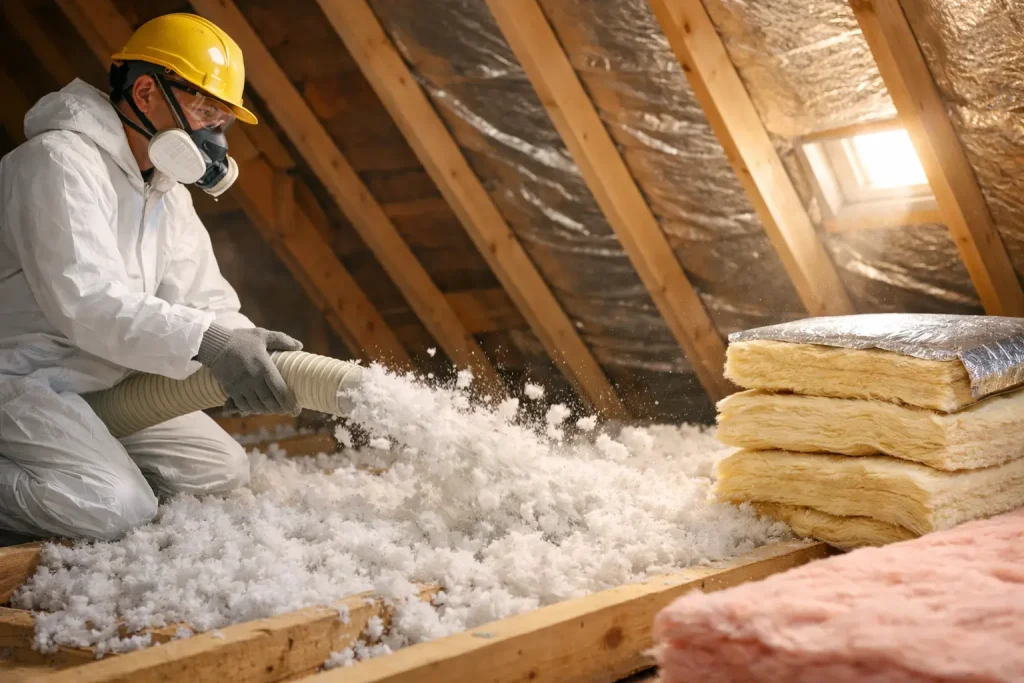
A cold bedroom, rising heating bills and a loft that is too awkward to use often have the same cause: heat is escaping through the roof space. The best ways to insulate attics are not simply about adding more material. They involve choosing the right insulation depth, keeping ventilation clear and protecting any storage area from compressing the insulation beneath it.
For many homes across Milton Keynes and the surrounding area, the loft is an overlooked part of the house. Done properly, insulation can make rooms feel more comfortable, reduce heat loss and turn unused overhead space into practical, safe storage. Done poorly, it can leave cold spots, trapped moisture or a boarded area that undermines the performance of the insulation.
Start with the condition of the loft
Before deciding on insulation, the loft needs a proper look. Existing material may be thin, patchy, damp, disturbed by previous work or compressed under boards and stored belongings. Any signs of condensation, mould, roof leaks or timber damage should be dealt with first. Insulation is designed to hold warmth in the home, not to hide an underlying ventilation or water problem.
It is also worth checking what is already in place. Older lofts often have a shallow layer of mineral wool between ceiling joists, while newer homes may have a deeper layer that has been squashed where people have walked or where boards have been fitted directly on top. That compression matters. When fibrous insulation is flattened, it holds less air and becomes less effective at slowing heat loss.
A professional survey gives you a clear starting point. It should consider the insulation depth, roof ventilation, access, wiring, pipework, light fittings and the amount of storage you genuinely need. This avoids spending money on a solution that looks tidy but does not perform as it should.
Best ways to insulate attics without losing storage
For most homes with a cold loft, insulating at ceiling level is the sensible approach. This means placing insulation across the loft floor, above the rooms below, while keeping the roof space itself ventilated. It is an efficient way to retain warmth where it is needed and is usually the best fit for a loft used mainly for storage.
Bring mineral wool up to an effective depth
Mineral wool loft insulation remains a popular choice because it is effective, widely suitable and can be laid between and across ceiling joists. A cross-layered approach helps cover the timber joists, which can otherwise act as small routes for heat to escape.
Current guidance for many properties in England commonly points towards a total depth of around 270mm of mineral wool, although the right specification depends on the construction of the home and the existing material. More is not automatically better if it blocks airflow at the eaves, interferes with services or is installed over a damp loft. The aim is a consistent, uncompressed layer with appropriate ventilation maintained around the roof edges.
Mineral wool is particularly suited to loft floors that do not need regular access. The trade-off is straightforward: once insulation reaches an effective depth, standard boarding laid straight onto the joists is no longer a good option. It would flatten the insulation and reduce both headroom and thermal performance.
Raise the boarding above the insulation
If you need a usable storage platform, raised loft boarding is one of the most practical answers. A raised system creates a solid deck above the insulation, leaving the full insulation depth beneath it. You get a safer surface for boxes and seasonal belongings without sacrificing the energy-saving benefit of the material below.
This is especially important in newer properties. Where appropriate, NHBC approved loft legs can be used to raise the boarding above the insulation without altering the ceiling structure. This helps protect the insulation from compression and supports a tidy, purpose-built storage area while respecting the requirements associated with a new-build home.
Not every loft needs to be fully boarded. Often, a well-planned central storage area is more useful than covering every inch of the loft floor. It keeps the project focused on the space you will use, preserves access to cables and pipework, and allows insulation to remain undisturbed elsewhere.
Use rigid insulation only where it suits the construction
Rigid insulation boards can provide strong thermal performance at a thinner depth than mineral wool. They can be useful in particular roof or floor details, but they are not a universal replacement for loft-roll insulation. Boards must be fitted accurately, with gaps minimised, and they should not create ventilation issues or make future access to services unnecessarily difficult.
Their higher cost and need for careful detailing mean they are generally best chosen after a proper assessment rather than as a default. In a typical storage loft, mineral wool combined with raised boarding is often the clearer, more cost-effective option. In an awkward roof space or where there are specific thermal weak points, a specialist may recommend a different combination of materials.
Do not overlook ventilation
A well-insulated loft still needs to breathe. Ventilation at the eaves allows moisture-laden air to disperse, helping to protect the roof timbers and reduce the risk of condensation. Insulation should not be pushed tightly into the eaves or laid in a way that blocks air paths.
This is one reason a neat-looking installation is not always a good installation. If insulation has been packed tightly around the edge of the roof, it may appear thorough while creating a longer-term moisture risk. Ventilation trays or rafter vents can help maintain airflow where needed, but the best solution depends on the roof design.
The loft hatch also deserves attention. A poorly fitted, uninsulated hatch can be a noticeable source of draughts and heat loss, particularly when the rest of the loft floor has been upgraded. An insulated hatch with a good seal complements the main insulation and makes a real difference to comfort below.
Protect pipes, cables and light fittings
Lofts contain more than insulation and stored boxes. Water pipes, electrical cables, transformers and recessed light fittings all need consideration. Pipes can be at greater risk of freezing when the loft becomes colder as more heat is retained in the rooms below, so they may need suitable insulation themselves.
Electrical cables should not be buried without thought. Thick insulation can affect how cables dissipate heat, and older wiring or junctions may need checking. Downlights and transformers require appropriate clearances and protection, particularly where they are not designed to be covered. These are details that are easy to miss but essential for a safe, long-lasting result.
Choose access that makes the space genuinely useful
There is little benefit in creating excellent storage if reaching it feels unsafe or inconvenient. A secure loft ladder, a properly sized hatch and adequate lighting can make the space far more practical for family belongings, paperwork, decorations and items used only occasionally.
Access should work alongside the insulation and boarding plan, not be treated as an afterthought. For example, a boarding route should allow safe movement from the hatch to the storage area without crushing insulation underfoot. Good planning also keeps clear access to water tanks, electrical points and other items that may need future attention.
When professional installation is worth it
Attic insulation is one of those improvements where the details make the difference. The material itself is only part of the job. Correct depth, uninterrupted coverage, clear ventilation, safe treatment of services and raised boarding all affect the final result.
A specialist installer can explain the options in plain language, assess whether existing insulation can stay, and provide a written quote for work that suits your property. For homeowners who want lower heat loss and dependable storage without compromising either, that clarity is valuable. Loft Accessories takes this approach with free home surveys, honest recommendations and fully insured installation.
The right attic insulation should not make your loft less useful. With enough insulation to reduce heat loss, a raised area for the belongings that matter and ventilation left clear, it can quietly improve the comfort of your home every day of the year.