
If you own a newer home, loft storage is rarely as simple as laying boards and filling the space with boxes. That is exactly why an nhbc loft legs review matters. In properties covered by the NHBC warranty, the way loft boarding is installed can affect insulation performance and, in some cases, whether the build standard has been followed properly.
For most homeowners, the question is not whether loft legs exist. It is whether they are actually worth using, whether they feel solid underfoot, and whether they genuinely help protect the insulation beneath the boards. The short answer is yes – in the right setting, they are a very sensible solution. The longer answer is a bit more useful, because the value of loft legs depends on the age of the home, the depth of insulation, and what you want the loft space to do.
NHBC loft legs review – what are you really paying for?
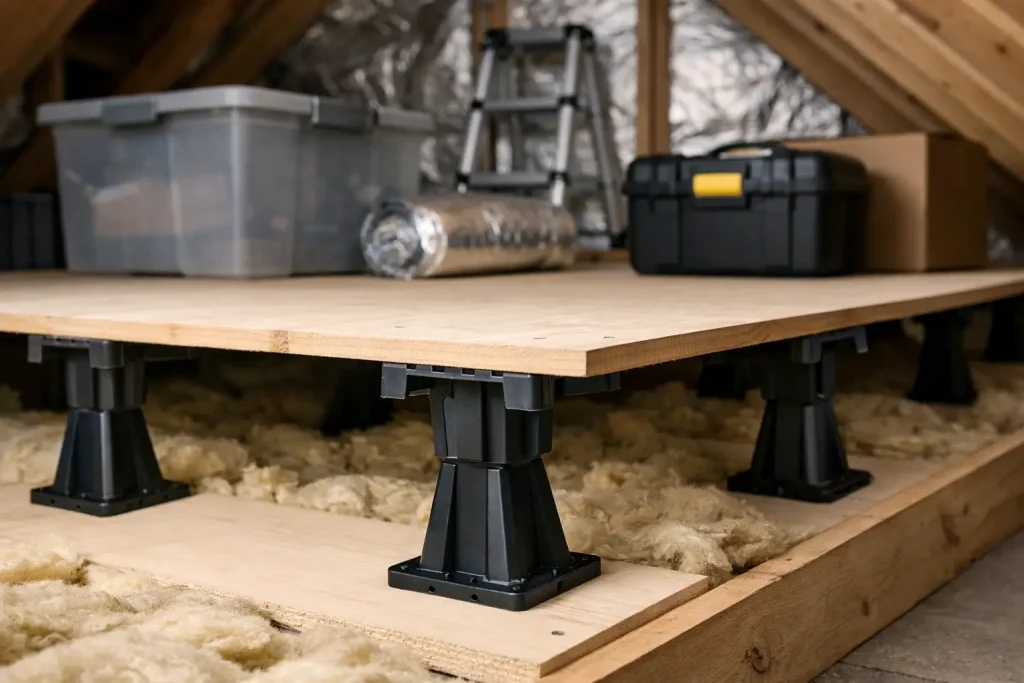
Loft legs are raised supports fitted above the ceiling joists so boarding can sit higher than the insulation layer. In newer homes, this matters because modern insulation is often much deeper than the timber joists themselves. If boards are laid directly across the joists, the insulation gets compressed, which reduces its effectiveness.
That may not sound dramatic, but compressed insulation can mean more heat escaping through the roof and less benefit from the materials already installed in your home. You paid for that insulation as part of the build. Flattening it just to create storage space is usually a false economy.
This is where NHBC approved loft legs come into their own. They create a raised platform, allowing insulation to retain its depth while still giving you a usable boarded area. For homeowners who want practical storage without undermining energy efficiency, that is the main selling point.
How NHBC loft legs perform in real homes
From a practical point of view, loft legs do what they are supposed to do. When installed correctly, they provide a firm framework for loft boards and create a stable raised deck for light domestic storage. Seasonal items, luggage, decorations and household overflow can all be stored neatly without squashing the insulation below.
The key phrase there is installed correctly. Loft legs are not a magic fix on their own. Their performance depends on the overall loft boarding system, including the condition of the joists, the layout of the loft, the quality of the boards, and whether safe access has been considered as part of the job.
In well-planned installations, the result is tidy, strong and genuinely useful. The loft becomes easier to use, safer to access and better organised. In poor installations, any boarding system can feel awkward or uneven, so the product should be judged as part of the full setup rather than in isolation.
The main advantages
The biggest advantage is straightforward. Loft legs let you gain storage space without compressing the insulation, which helps your home stay warmer and more energy efficient.
The second benefit is warranty protection in newer properties. Homeowners are often rightly cautious about making changes in the loft during the NHBC cover period. Using an NHBC approved raised system is a sensible way to create storage while respecting the standards expected in those homes.
There is also the matter of practicality. A boarded loft with raised supports is far more usable than balancing belongings across joists or avoiding the space altogether. For busy households, that extra storage can make a real difference downstairs.
Finally, there is the cleanliness factor. Proper loft boarding creates a defined storage area, which helps keep boxes dry, level and away from loose insulation. That means less mess and less chance of items being damaged or lost under insulation rolls.
Are there any downsides?
A fair nhbc loft legs review should mention that loft legs are not the answer for every situation. They are designed for storage platforms, not for turning the loft into a habitable room. That distinction matters, and a good specialist will explain it clearly.
They also raise the boarded floor level, which can reduce headroom slightly. In some lofts, that is no issue at all. In others, especially where the roof pitch is lower, it can make movement more restricted. That does not mean the system is wrong, only that expectations need to match the space available.
Cost is another factor. A raised boarding system will usually cost more than the cheapest basic approach, but there is a reason for that. You are paying for a method that protects insulation performance and is suited to modern build standards. For many homeowners, it is better value in the long run than doing the job cheaply and creating problems later.
Why newer homes need extra care
New-build lofts are often assumed to be ready for storage because the house itself is new. In reality, they are usually designed with energy efficiency in mind first. That means deeper insulation, lighter roof structures in some cases, and stricter attention to how loads are distributed and where storage is suitable.
This is why homeowners should be wary of any approach that simply covers over the insulation without considering the impact. The loft may look unused, but it is already doing an important job in keeping heat where it belongs.
In these homes, using NHBC approved loft legs is less about adding an accessory and more about following the right method. It protects what is already there while making the loft more practical.
Stability, strength and everyday use
One concern people often have is whether loft legs feel sturdy enough. That is understandable. Nobody wants a loft floor that feels springy or uncertain when carrying boxes.
When fitted to a proper boarded system, loft legs are generally stable and reliable for normal domestic storage. They are not intended for excessive loads, and that is where honest advice matters. A loft should be assessed based on joist size, spacing and intended use. Some households only need space for light storage, while others may want a larger area spread across the loft. The right layout depends on those details.
A trustworthy installer will explain what the loft can safely handle and where boarding should go. That matters more than any sales claim about the supports themselves.
Is it worth paying for NHBC approved loft legs?
In a newer property, yes, often it is. They address a very specific problem properly. Rather than forcing a storage solution into a loft not designed for direct boarding over deep insulation, they create the needed clearance and help preserve thermal performance.
If your main priority is keeping the house energy efficient while making use of otherwise wasted space, they are a sensible investment. If your loft already has shallow insulation and the property is much older, the decision may depend on the current setup and what improvements are needed overall. In some cases, additional insulation and raised boarding still make excellent sense. In others, the best solution may vary.
That is why one-size-fits-all advice is rarely helpful in loft work. The best answer comes from assessing the loft as a whole, not just choosing a product from a description.
What to look for beyond the product itself
The product matters, but the standard of installation matters just as much. A good result depends on clear surveying, honest recommendations and proper fitting from start to finish.
Homeowners should expect a written quote, a simple explanation of how the raised system works, and realistic advice about what can be stored. They should also expect the work to be carried out neatly and with respect for the home. Loft improvements should make life easier, not leave you with damage, mess or unanswered questions.
That is one reason many homeowners prefer using a specialist rather than a general tradesperson. A specialist understands how loft boarding, insulation, access and safe storage all fit together. At Loft Accessories, that joined-up approach is a big part of why we use NHBC approved loft legs in suitable new homes.
Our honest verdict
If this nhbc loft legs review had to come down to a plain answer, it would be this: they are a worthwhile solution for newer homes where you want safe, practical storage without compromising insulation. They are not a gimmick, and they are not just a branded extra. Used correctly, they solve a real problem.
The trade-off is that they need to be part of a properly planned installation, and they are not the cheapest route if you only look at the upfront figure. But when you weigh that against protecting insulation, maintaining sensible standards and gaining usable loft storage, the value is easy to see.
A good loft should work for your household and for the home itself. If raised boarding helps you achieve both, it is money well spent.