
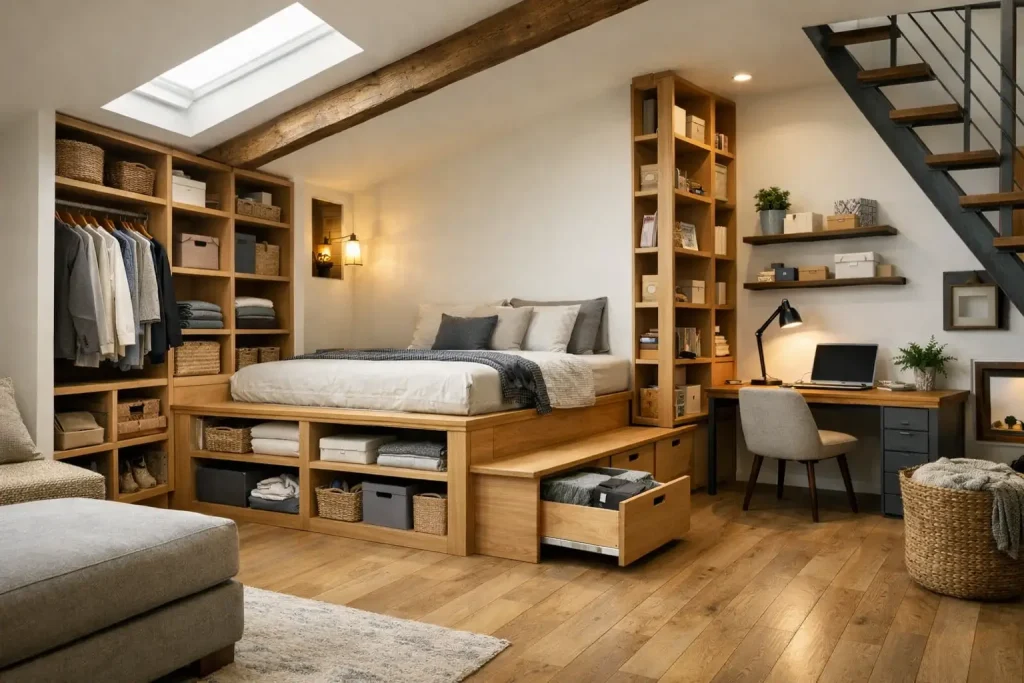
A loft often becomes the place where everything goes when there is nowhere else for it to go: suitcases, Christmas decorations, baby equipment, paperwork and the boxes that may be useful one day. Yet without safe access, proper boarding and sufficient insulation, it is difficult to use that space well. The best storage upgrades for lofts make the area easier to reach, safer to move around and better for your home’s energy efficiency.
A worthwhile loft storage plan is not just about fitting more boards. It should protect your insulation, account for the structure above your ceilings and give you a practical route in and out of the loft. When those details are handled properly, you gain useful storage without creating problems downstairs.
Start with raised loft boarding
For most homes, raised loft boarding is the foundation of effective loft storage. Standard ceiling joists were not designed to have boards laid directly across insulation, particularly where modern insulation depths are needed to reduce heat loss. Compressing insulation beneath boards reduces its effectiveness, which can leave rooms colder and heating bills higher.
A raised boarding system creates a firm storage platform above the insulation. This allows the insulation to retain its full depth while providing a clear, stable area for stored belongings. It is a practical upgrade for families who need to free up bedrooms, cupboards and garages without sacrificing warmth in the home.
The amount of boarding needed depends on how you intend to use the space. Some homeowners need a small central area for light seasonal items, while others benefit from a larger boarded section for several boxes and household belongings. A good survey considers the available headroom, joist layout, water tanks, pipework and access point before recommending the right size platform.
For newer properties, the detail matters even more. NHBC approved loft legs can raise the boards safely above insulation while helping to protect the terms of an NHBC warranty. This is one reason a specialist installation is preferable to a one-size-fits-all approach.
Upgrade insulation before the storage goes in
A loft is one of the most significant areas for heat loss in a house. If insulation is thin, uneven, damaged or missing around awkward edges, adding storage alone will not make the loft perform as it should. Improving insulation before or alongside boarding is usually the sensible order of work.
Modern loft insulation helps keep warmth within the living areas below, making rooms more comfortable during colder months. It can also reduce the demand on your heating system, which is welcome when household energy costs remain a concern. The benefit is not only financial: a well-insulated loft supports a more energy-efficient home and can contribute to a better EPC rating.
There is a balance to strike. The loft needs enough insulation to provide thermal performance, but it also needs ventilation and careful detailing around cables, pipes and loft features. Pushing insulation into every gap without considering airflow can cause issues later. A professional assessment helps ensure the insulation and storage system work together rather than compete for the same space.
Safer access makes storage genuinely useful
Even a well-boarded loft is of limited value if getting into it feels awkward or unsafe. A sturdy loft ladder is one of the best storage upgrades for lofts because it changes how often you can comfortably use the space. Instead of balancing on a chair or struggling with a loose ladder, you have dependable access when you need it.
There are several ladder styles, and the right choice depends on the landing area, available loft space and how regularly the loft will be used. Folding and sliding ladders can both work well, provided they are fitted securely and selected to suit the opening. The aim is straightforward: a ladder that is stable underfoot, simple to operate and easy to stow away.
The loft hatch deserves equal attention. Older hatches can be small, poorly fitted and difficult to manage, especially when carrying a box. Enlarging or improving the hatch can make access safer and less frustrating. An insulated hatch also helps reduce draughts and heat loss at a point that is often overlooked.
Together, a suitable hatch and ladder make the loft feel like a practical part of the home rather than an inaccessible void above the ceiling.
Create storage zones, not an overloaded loft
Once the platform is in place, it is tempting to fill every available inch. That is rarely the best long-term use of the space. A sensible loft should have clear walkways, accessible areas around essential services and enough room to retrieve items without moving half the contents first.
Think in terms of storage zones. Keep lightweight, infrequently used belongings towards the edges of the boarded area, with items you may need more often closer to the hatch. Clearly labelled boxes make a surprising difference, particularly for seasonal decorations, children’s clothing and household records. Storage should make daily life less cluttered, not relocate the clutter to a place where it cannot be found.
Weight is another important consideration. A loft storage platform is suitable for normal household storage, but it is not intended for excessively heavy items. Large stacks of books, heavy furniture, gym equipment or anything containing significant amounts of liquid should be considered carefully. A specialist can explain what is appropriate for your particular loft structure.
Do not overlook lighting and small practical details
A basic loft light can turn an inconvenient space into one that is safe to use. Good lighting helps you see where you are stepping, read labels and spot any concerns such as condensation, disturbed insulation or a leak. It is a small upgrade with a clear safety benefit.
Where appropriate, neat cable management and a safely positioned switch can improve the finish further. The key is to keep electrical work properly planned and to avoid cables being buried, pulled tight or left where stored items may damage them.
Other details can make a real difference too. Pipework in lofts may require protection against cold weather, while water tanks, ventilation routes and electrical equipment need to remain accessible. A tidy installation respects these features instead of boarding over them and hoping for the best.
Choose upgrades that suit your home, not a standard package
The right loft solution is rarely identical from one house to the next. A family home in Milton Keynes may need enough boarding for prams, school items and holiday luggage. A smaller property near Bedford or Northampton may benefit more from a compact storage deck, better insulation and easier ladder access. In both cases, the result should be practical, safe and proportionate to the property.
This is why an honest survey is valuable. It gives you the opportunity to understand what your loft can accommodate, what work is worthwhile and what should be left clear. You should receive straightforward advice on the storage area, insulation depth, access options and likely cost before work begins.
Loft Accessories takes this specialist approach, with clear written quotes and fully insured installation work designed around the individual home. The focus is on fitting a storage solution properly, leaving the area tidy and helping homeowners get lasting value from space they already have.
A storage upgrade that pays its way
The strongest loft improvements combine three things: a raised, usable storage surface; insulation that continues to do its job; and safe access that makes the space easy to use. Each element supports the others. Boarding without access can be inconvenient, access without a safe platform can be risky, and storage that crushes insulation can undermine the comfort of the home below.
A well-planned loft does not need to be complicated. It simply needs to be assessed carefully and installed with the right materials for the property. Done properly, it can clear valuable space inside the house, make seasonal storage far less troublesome and help keep your home warmer for years to come.