
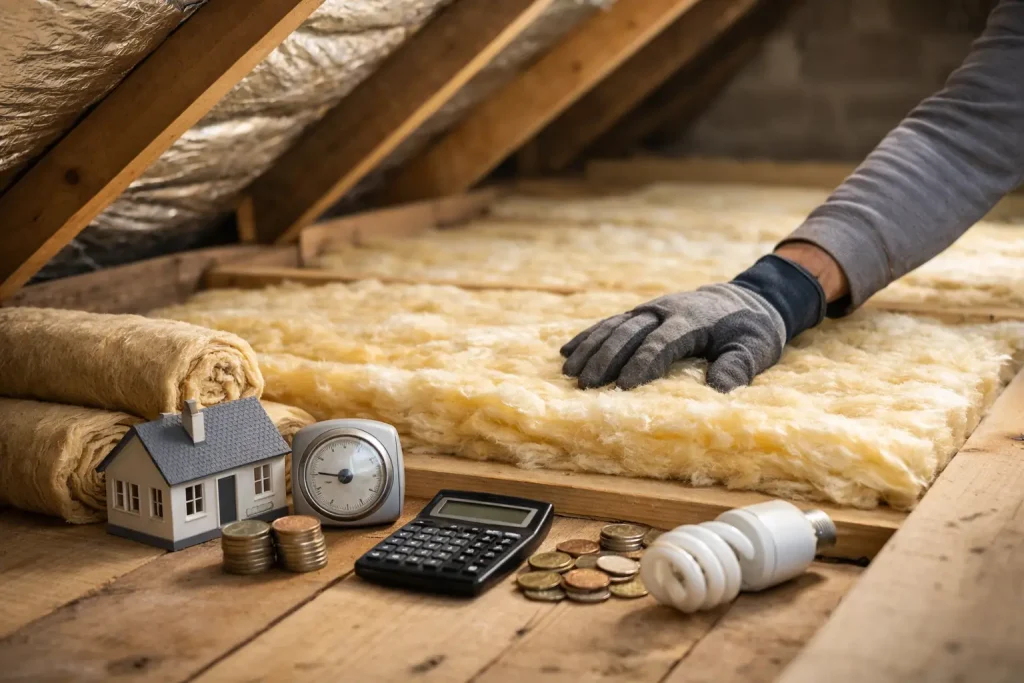
If your heating seems to be working hard but the house still feels chilly, the loft is one of the first places worth checking. Many homeowners ask, can loft insulation lower bills, and the short answer is yes – but the real savings depend on how much insulation you already have, how well it has been fitted, and whether your loft is set up properly for storage without crushing the material that is meant to keep heat in.
Can loft insulation lower bills in a typical home?
Heat rises, and in a poorly insulated property a significant amount of that warmth escapes through the roof. That means your heating system has to keep replacing lost heat, which pushes up your energy use and your monthly bills.
Loft insulation works by slowing that heat loss down. Instead of warm air disappearing quickly through the ceiling and roof space, more of it stays where you actually want it – in the rooms below. The result is usually a home that feels warmer for longer and a heating system that does not need to work as hard.
For many households, that translates into lower energy bills over time. It can also make temperatures feel more consistent from room to room, especially during colder months when upper floors often lose heat fastest.
Why the answer is not always a simple yes
Although loft insulation can reduce bills, the amount you save is not the same in every property. A house with little or no insulation will usually see the biggest improvement. If your loft already has a decent depth of insulation, the financial benefit of topping it up may be more modest, though comfort levels can still improve.
Your heating habits matter too. If you keep the thermostat high for long periods, better insulation may still help, but the savings will depend on how you use your system. The same goes for the age of the property, the type of heating you have, and whether there are other weak points such as draughts, poor windows or gaps around the loft hatch.
This is why honest advice matters. A proper survey should look at the loft as a whole, not just recommend more insulation for the sake of it.
Where loft insulation makes the biggest difference
The biggest gains usually come when a loft is under-insulated, unevenly insulated, or has insulation that has been disturbed over time. Older material can be patchy, compressed or poorly laid, leaving cold spots that allow heat to escape.
Another common issue is when lofts have been used for storage without the right raised boarding system. If boards are laid directly on top of insulation, the material gets squashed. Once compressed, it cannot trap air as effectively, and its thermal performance drops. In simple terms, you may think your loft is insulated, but it may not be doing its job properly.
That is especially important in newer homes, where care needs to be taken to preserve both insulation depth and any relevant build standards. Raised systems that sit above the insulation help create usable storage space without reducing energy efficiency.
How much insulation should a loft have?
Current guidance for loft insulation is far higher than what many older homes were originally fitted with. Plenty of properties still have a thin layer that was acceptable years ago but now falls short of modern expectations.
If the insulation is shallow, uneven or missing in places, topping it up can be worthwhile. If it is already close to the recommended depth and in good condition, the discussion becomes more about quality, coverage and whether the loft has been boarded correctly.
That practical detail is often overlooked. Homeowners are sometimes told they need loft boarding for storage and insulation for warmth, as if the two are separate jobs. In reality, they need to work together. A loft should be insulated properly first, then boarded in a way that protects that insulation rather than flattening it.
Can loft insulation lower bills if you use the loft for storage?
Yes, but only if the storage solution is designed around the insulation rather than against it.
This is where specialist installation makes a real difference. If you need your loft to stay usable for boxes, suitcases and seasonal items, the boarding must be raised above the insulation. That keeps the full depth intact and allows the insulation to continue performing properly.
Without that, homeowners often end up with the worst of both worlds – a boarded loft that seems convenient, but insulation that is no longer working as it should. Over time, that can mean higher heating costs and a colder home, even though money has already been spent on the loft.
For newer properties, the correct system matters even more. Using NHBC approved loft legs where appropriate helps protect the insulation and maintain compliance with the standards expected in those homes.
The benefits go beyond the bill
Lower energy costs are a strong reason to improve loft insulation, but they are not the only one. A well-insulated loft can make the house feel more comfortable day to day. Bedrooms tend to feel less cold in winter, and the home may hold its temperature more evenly.
There can also be a longer-term property benefit. Energy efficiency is increasingly on buyers’ minds, and improvements that support a better EPC rating may add appeal when the time comes to sell. Even if moving is not on your radar, many homeowners value practical upgrades that make the house more efficient, more comfortable and easier to live in.
There is also the environmental side. If your heating system burns less energy because less heat is escaping through the roof, your household is wasting less overall. That is a sensible outcome for both your budget and your home’s footprint.
Signs your loft insulation may not be doing enough
Some warning signs are easy to miss because they build up gradually. If the upstairs feels cold even when the heating is on, if rooms lose warmth quickly once the heating goes off, or if bills have climbed without an obvious explanation, the loft could be part of the problem.
Another sign is visible compression under old boards or around stored items. Patchy insulation, exposed joists, draughts near the loft hatch, and a loft space that looks untidy or improvised can all point to a setup that is not performing efficiently.
In many homes, the issue is not that insulation is completely absent. It is that it has been compromised by age, poor layout or unsuitable boarding.
Why professional assessment matters
A loft is not just a void above the ceiling. It is part of how the whole house performs. That is why a proper assessment should consider insulation depth, condition, ventilation, access and storage needs together.
For homeowners in places like Milton Keynes, Bedford or Northampton, that often means looking for a local specialist rather than a general service that treats every property the same way. A specialist is more likely to spot when insulation has been compressed, when boarding needs to be raised, or when a loft hatch and ladder arrangement could be improved at the same time.
Clear recommendations matter just as much as the work itself. Homeowners should know what is being installed, why it is suitable, and what difference it is expected to make. Straightforward written quotes and honest advice help people make sensible decisions without pressure.
So, can loft insulation lower bills enough to be worth it?
In many cases, yes. If your loft is under-insulated, poorly fitted out or affected by compressed insulation beneath old boarding, there is a good chance you are losing heat unnecessarily. Putting that right can reduce waste, improve comfort and help bring heating costs down.
The key is not simply adding more material and hoping for the best. The loft needs to be treated as a usable part of the home, especially if you want safe storage as well as better thermal performance. When insulation, access and boarding are planned properly together, the results tend to be far more reliable.
A warmer house and lower bills rarely come from one dramatic change. More often, they come from getting the basics right – and the loft is one of the best places to start.