
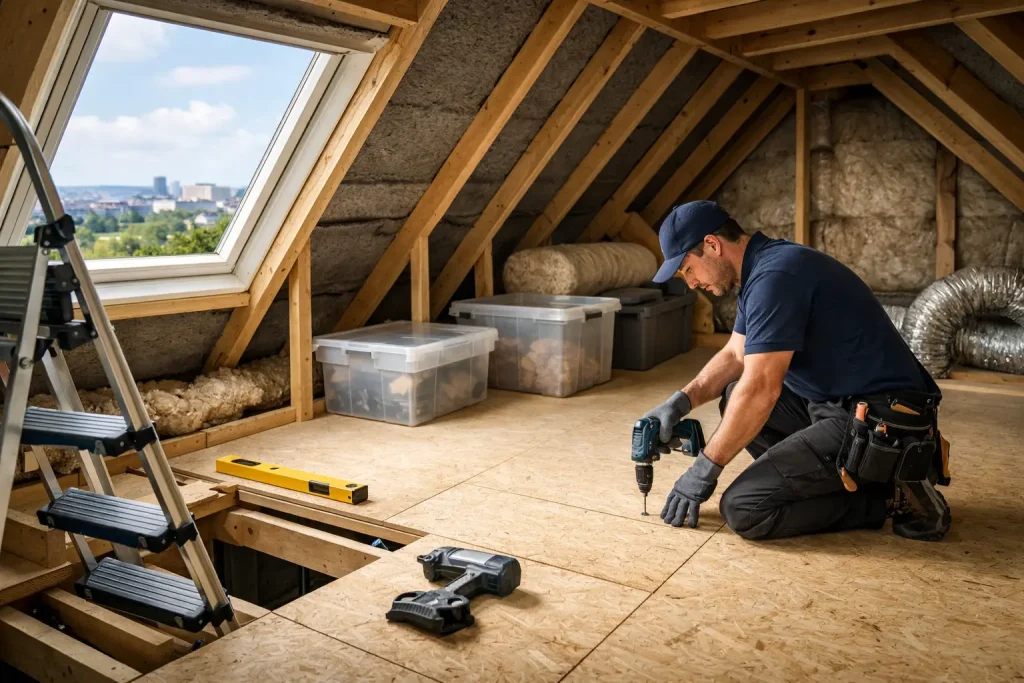
Boxes balanced on ceiling joists, a wobbly step from the hatch, and insulation flattened under old suitcases – that is how many lofts start. A good Milton Keynes loft boarding service fixes those everyday problems properly, turning an awkward void into safe, usable storage without sacrificing warmth or peace of mind.
For most homeowners, the real issue is not simply lack of space. It is the frustration of having space overhead that feels too risky, too dusty or too awkward to use. Boarding a loft the right way can make a noticeable difference to day-to-day life, especially in family homes where storage always seems to run short.
What a Milton Keynes loft boarding service should actually do
Loft boarding is often talked about as if it is just a floor. In practice, a proper installation is about storage, access, safety and energy performance working together. If one part is wrong, the whole job is compromised.
The first point is protecting insulation. In many homes, especially newer properties, the insulation depth is there for a reason. If boards are laid directly on top and the insulation is compressed, thermal performance can drop. That means the loft may become easier to use but the house below can become less energy efficient. A specialist service will normally raise the boarding above the insulation so the material can continue to do its job.
The second point is safe access. There is little value in creating storage if getting into the loft still feels uncertain. A well-fitted loft ladder and a suitable hatch can make the space straightforward to reach, which means the storage actually gets used rather than ignored for another few years.
The third is load-bearing practicality. Homeowners do not usually want technical jargon. They want to know whether they can store Christmas decorations, luggage, keepsakes and household overflow with confidence. Good boarding should provide a stable platform for normal domestic storage, with recommendations based on the property itself rather than guesswork.
Why specialist installation matters more than most people think
A loft is not just an empty shell. It contains insulation, joists, wiring, pipework and ventilation considerations, and every home is a little different. That is why specialist knowledge matters.
A general handyman may be able to fit boards, but a loft specialist is more likely to spot the details that affect performance over time. In newer homes, for example, there may be concerns around preserving the NHBC warranty. Using NHBC approved loft legs for raised boarding can be an important part of keeping that protection intact while still making the space usable.
Older properties bring different considerations. Access may be tight, insulation may need updating, and the existing hatch may be too small for practical use. In these homes, the best answer is often a combination of boarding, insulation and improved access rather than a single isolated job.
That joined-up approach tends to save hassle. It also gives homeowners a clearer idea of what they are paying for and why.
Storage is only half the story
People usually enquire about loft boarding because they need somewhere to put things. That makes sense. But the wider benefits are often what make the job feel worthwhile afterwards.
A boarded loft can help take pressure off bedrooms, cupboards and the garage. It can make seasonal storage simple, keep rarely used items out of the way and help a house feel less cluttered. For growing families, that extra breathing room matters.
There is also the energy side. If the work includes modern insulation or avoids damaging the insulation already in place, the home should retain heat more effectively. That may support lower heating costs and a more comfortable house during colder months. It is not a miracle fix for every energy issue, but it is one of the more sensible improvements when the loft is underperforming.
Property value enters the conversation too, although it depends on the home and the local market. Well-installed loft storage will not transform a house overnight, but practical improvements that make a property tidier, more efficient and easier to live in are rarely wasted.
What to expect from a home survey and quote
A reliable loft boarding service should start with a proper survey, not a rough estimate given without looking. The loft needs to be assessed as it actually is.
That includes the current insulation depth, how easy the loft is to access, the condition and layout of the joists, the amount of usable space available and whether any hatch or ladder improvements are advisable. If there are limitations, you should be told clearly. Honest advice is a good sign. Not every loft suits every option, and a trustworthy installer will explain the trade-offs.
Written quotes matter here. They help homeowners compare like with like and avoid confusion later. If one quote seems much cheaper than another, the difference is often in what has been left out – raised boarding, hatch enlargement, insulation upgrades or finishing details. Clear paperwork makes that easier to spot.
It also helps to know whether the work is insured and whether the installer takes care to leave the property clean and tidy. Those points may sound small at first, but they shape the overall experience.
Raised boarding and why it matters
One of the biggest misunderstandings around loft boarding is the idea that any boarding is good boarding. It is not.
Raised boarding systems are designed to create a platform above the insulation rather than crushing it underneath the boards. That gap is important because insulation works best when it is allowed to retain its full depth. If it is compressed, some of its effectiveness is lost.
For homeowners, the benefit is simple. You gain storage space without undermining the thermal protection your loft is meant to provide. In newer homes, this approach is often especially important because it helps preserve standards and safeguards linked to the property.
This is one of those areas where doing the job properly from the outset is usually better value than correcting a poor installation later.
When access needs attention as well
Sometimes the loft itself is not the main problem. The real issue is that getting in and out is awkward, cramped or feels unsafe.
If the hatch is too small or poorly positioned, using the loft can be frustrating from the start. If the ladder is flimsy or inconvenient, many homeowners simply avoid the space altogether. That is why boarding, ladder installation and hatch improvements often go hand in hand.
A sensible recommendation should be based on how the space will be used. Someone storing only lightweight, occasional items may need a different setup from a household relying on the loft regularly for organised storage. The best result is not the most complicated one. It is the one that suits the home and the people living in it.
Choosing a local service with confidence
When comparing companies, experience counts, but so does focus. A business that specialises in loft work is usually better placed to advise on the details than one offering every home improvement under the sun.
Local knowledge helps as well. Homes across Milton Keynes and nearby areas can vary widely in age, layout and loft access, and a company that works with these properties every week will often recognise common issues quickly. That can make the process smoother and the recommendations more practical.
It is also worth paying attention to how the company communicates. Friendly, straightforward advice is a good sign. So is a willingness to explain what is needed, what is optional and what may not be worth doing in your particular loft. Loft Accessories, as a family-run local specialist, has built its reputation on that kind of clear and honest service.
Is loft boarding right for every home?
Not always in the same way, and that is where honest guidance matters.
Some lofts are ideal for a larger boarded storage area. Others are better suited to partial boarding, improved insulation or access upgrades first. The right solution depends on head height, layout, existing insulation and how much storage you realistically need.
That is why a one-size-fits-all sales pitch is rarely helpful. Homeowners benefit more from a service that assesses the space, explains the options plainly and recommends the work that will genuinely improve the home.
A well-planned loft should feel simple. You open the hatch, climb up safely, place items on a stable platform and come back down without worrying about damaged insulation, shaky footing or wasted heat. If that sounds like a small change, it is often the sort of small change that makes a house work better every single week.
If your loft is currently a wasted space rather than a useful one, the best next step is not to guess what might fit – it is to have the space assessed properly and find out what can be done well.