
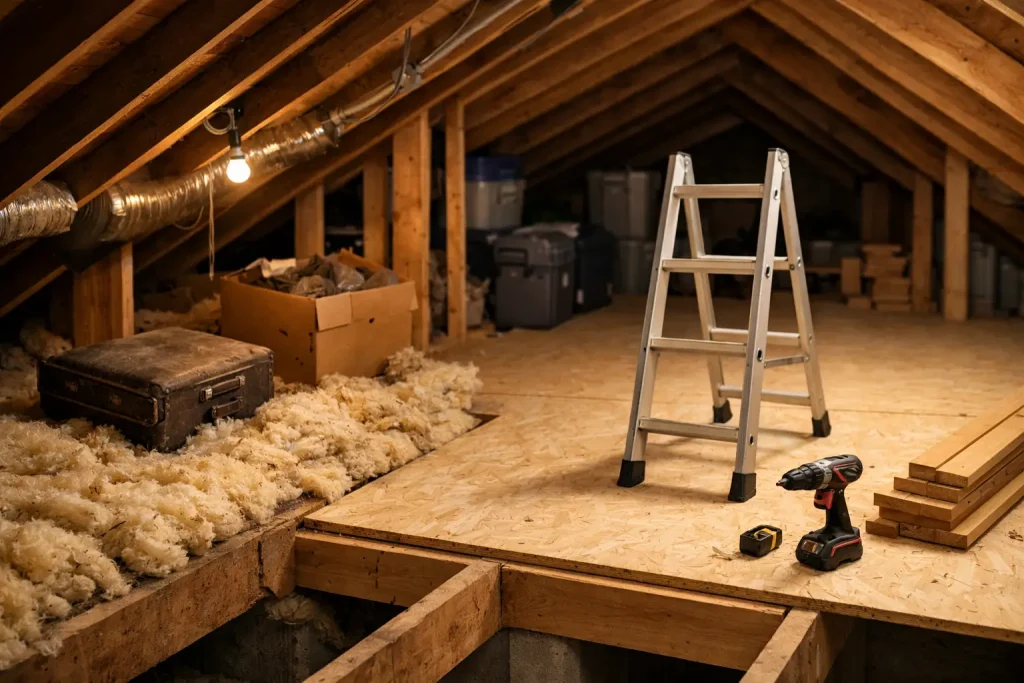
That wobble when you step off the ladder onto a ceiling joist is usually the moment homeowners realise something is not quite right. One of the clearest signs your loft needs boarding is when the space feels too risky or awkward to use, so boxes get balanced on timbers, insulation gets flattened, and useful storage space goes to waste.
A loft should make life easier, not become a place you avoid. If you are short on cupboard space, tired of clutter building up in spare rooms, or worried that stored items are damaging insulation below, proper loft boarding can turn an underused area into safe, practical storage. The key is knowing when your current setup has stopped working.
Signs your loft needs boarding
Some signs are obvious, while others show up gradually. In many homes, the issue is not simply a lack of boards. It is that the loft was never designed to be used safely for storage in its current state.
1. You only store things on the joists
If every box, suitcase and Christmas decoration has to sit directly on exposed joists, your loft is not functioning as usable storage. It may seem manageable at first, but it creates a narrow, awkward route through the space and leaves little room to organise anything properly.
It also increases the chance of a misstep. Between the joists is only plasterboard, and that is not built to take your weight. A boarded loft creates a stable raised platform, so the space becomes far more practical and much safer to access.
2. Your insulation is being squashed
This is one of the most common problems we see in family homes. Homeowners understandably need somewhere to keep belongings, so items end up resting on top of the insulation. Over time, that compresses the material and reduces its ability to hold heat in the home.
If your loft insulation looks flattened, patchy or pressed down by storage boxes, that is a strong sign your loft needs boarding properly. Raised boarding systems allow insulation to remain at the correct depth while still creating a solid storage area above it. That matters even more in newer homes, where using the right system helps protect warranty requirements.
3. You avoid going up there
A loft that is difficult to use often becomes wasted space. If you find yourself putting off simple jobs like retrieving keepsakes, checking stored items or putting things away after Christmas, poor access is often part of the problem.
Sometimes the issue is the flooring. Sometimes it is a combination of unsteady footing, poor lighting and awkward movement around the loft. Whatever the cause, if the space feels more like a hazard than a help, boarding can make a real difference. The goal is not just extra storage, but a loft you can use with confidence.
4. Boxes are creeping into bedrooms and landings
When a loft is technically available but practically unusable, household storage spills into the rest of the home. You might notice suitcases on top of wardrobes, paperwork in spare rooms, or seasonal items stacked in corners simply because the loft does not feel secure enough.
That is often when boarding starts to make sense as a practical home improvement rather than a luxury. A well-boarded loft can free up everyday living space without changing how the rest of the house works. For busy households, that extra breathing room is often the biggest benefit.
When poor loft storage starts costing you
Boarding is often thought of as a storage job, but there is usually an energy efficiency angle too. A poorly used loft can lead to problems that affect comfort and heating costs as well as convenience.
5. Your heating bills are climbing and the loft is part of the problem
Not every rise in heating bills comes from the loft, but it can be a contributing factor. If insulation has been crushed by stored items or disturbed over time, your home may be losing more heat through the roof than it should.
This is where a specialist approach matters. Boarding should work with insulation, not against it. If the loft has been partially boarded years ago with sheets laid directly over joists and insulation trapped underneath, that setup may be doing more harm than good. In many cases, the best answer is a raised system that preserves thermal performance while giving you proper storage.
6. The current boards feel uneven, flimsy or badly placed
Some lofts already have a few boards laid down, but that does not always mean the job has been done properly. If the flooring shifts underfoot, dips in places, or only covers a few awkward sections, it may not be giving you the safe, stable platform you need.
This is particularly important if you are storing heavier household items. A suitable boarding layout should reflect how the loft will actually be used. There is a difference between a token patch of boarding near the hatch and a properly planned storage area that feels secure and accessible.
7. You have a newer home and want to protect the insulation and warranty
Newer properties often have deeper insulation levels, which is good news for energy efficiency but makes standard boarding more complicated. If boards are fixed directly over the joists without allowing for insulation depth, the insulation gets compressed. That can reduce performance and may create unnecessary concerns around compliance in homes still under warranty.
This is one of those situations where it really does depend on the age and setup of the property. In many newer homes, raised loft legs approved for this type of installation are the sensible option because they create a usable boarded area above the insulation rather than pressing it down.
8. You want to use the loft regularly, not just once a year
There is a big difference between a loft used for the odd suitcase and one used as a proper part of household storage. If you plan to access the space regularly for family records, seasonal clothes, decorations or children’s keepsakes, the loft needs to be set up for that level of use.
Regular access calls for stability, sensible layout and enough boarded area to move around safely. If your current loft only works for a quick reach-in and retreat, it is probably time to improve it.
Why boarding is not just about adding timber
Good loft boarding is really about how the whole space performs. Storage matters, of course, but so does safety underfoot, protection of insulation, and making sure access is straightforward enough for day-to-day life.
That is why a proper assessment is useful. Some lofts need only partial boarding because the aim is to create a clean, safe storage zone around the hatch and central area. Others benefit from a more extensive layout, especially in homes where storage pressure is constant. The right answer depends on the structure of the loft, the insulation depth and what you actually want to store.
It is also worth remembering that not every item belongs in a loft. Very delicate belongings, or anything affected by temperature changes, may be better kept elsewhere. Honest advice should always take that into account.
What to look for in a professional loft boarding service
If you have recognised a few of these signs your loft needs boarding, the next step is choosing a specialist who will do the job properly. Clear written quotes, full insurance and a straightforward survey process matter because they tell you what is included and help avoid surprises.
A tidy finish matters too. Loft work should improve your home, not leave you with mess, damaged insulation or a hatch area that feels unfinished. For homeowners in and around Milton Keynes, Northampton, Bedford, Buckingham, Leighton Buzzard and Oxford, working with a dedicated loft specialist usually means a better result than treating the space as just another flooring job.
The best boarding work does not shout for attention. It simply gives you a loft that feels solid, accessible and genuinely useful, while still supporting the energy efficiency of the house below.
If your loft has become a balancing act of boxes, joists and wasted space, that is usually your answer. A properly boarded loft can turn an awkward area into one of the most useful parts of the home.