
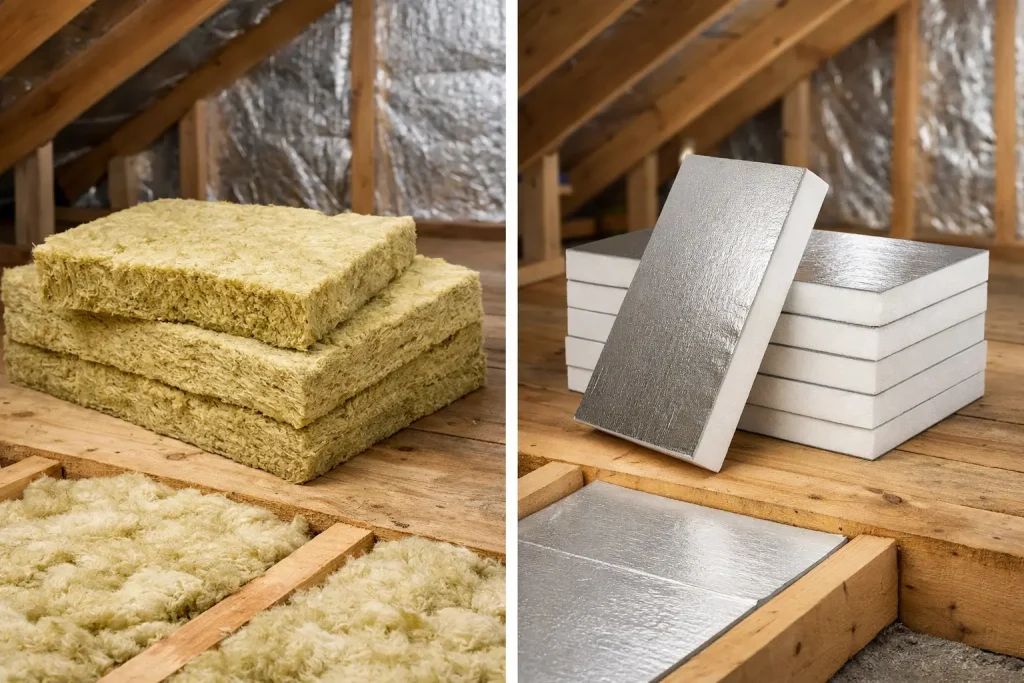
A loft can look well insulated while still allowing expensive heat to escape. The difference often comes down to material, depth and whether the insulation has been squashed beneath stored belongings. When comparing mineral wool vs rigid loft insulation, the best answer is not simply which product is warmer. It is which one suits your loft’s structure, your storage plans and the condition of the home.
For many properties, mineral wool is the sensible starting point. For others, rigid boards earn their place where depth is tight or a particular part of the loft needs a firmer insulating layer. The right installation matters just as much as the product itself, especially when you want a safe boarded area without compromising thermal performance.
Mineral Wool vs Rigid Loft Insulation: The Main Difference
Mineral wool is the soft, fibrous insulation most homeowners recognise. It is commonly supplied in rolls and laid between, then across, ceiling joists. It is widely used because it is effective, comparatively affordable and well suited to the uneven spaces found in many lofts.
Rigid loft insulation is supplied as firm boards, often made from PIR or similar insulation materials. It provides strong thermal performance for its thickness, making it useful where available headroom or joist depth limits how much insulation can be added.
Neither material is automatically right for every loft. Mineral wool generally works best when there is enough room to build up the recommended depth over the ceiling. Rigid boards can be useful when a thinner build-up is needed, but they require accurate fitting so that gaps do not reduce their effectiveness.
Why Mineral Wool Is So Common in Lofts
Mineral wool is popular for good reason. It adapts easily around joists, pipes, cables and the less-than-perfect corners that are common in older properties. Because it is flexible, it can form a continuous layer over the timber joists, helping to reduce heat loss through the timber itself.
For a typical cold loft used mainly for household storage, mineral wool can provide excellent value. Modern guidance often calls for around 270mm of mineral wool insulation at ceiling level, although the appropriate specification for an individual property should be assessed properly. If existing insulation is thin, patchy or compressed, adding the correct depth can make a noticeable difference to comfort and heating costs.
It also has useful acoustic qualities. While the main aim in a loft is usually keeping heat within the rooms below, the dense fibres can help soften some sound transfer through the ceiling.
The drawback is its depth. A generous layer of mineral wool cannot simply be flattened to make room for boards and boxes. Compression reduces the air held within the fibres, and that air is a key part of how the material resists heat flow. A loft may then look tidy and usable while performing much less effectively than intended.
Where Rigid Insulation Boards Make Sense
Rigid boards offer more insulation in less thickness than mineral wool. That can be valuable in a loft with limited clearance, shallow joists or awkward details where raising the floor substantially is not practical.
They are also firm enough to retain their shape, provided they are supported and installed correctly. This makes them useful in carefully planned areas, particularly where insulation needs to fit within a defined depth. However, insulation board is not a substitute for a properly designed storage floor. It should not be treated as a surface for walking on or for carrying the weight of stored items.
The main challenge with rigid boards is fitting. Small gaps around board edges, pipes or irregular timbers can allow air movement and reduce the benefit of the insulation. Joints and edges need careful attention. In older lofts with uneven rafters, wiring routes and varied joist spacing, this can be more time-consuming than laying mineral wool.
Rigid board is usually the more expensive option per square metre. That extra cost may be worthwhile where space is genuinely restricted, but it is not always the most cost-effective route to a warmer home.
Storage Changes the Decision
The question becomes more practical when the loft is needed for storage. Insulation protects the rooms below; boarding makes the loft safer and more useful. Both can work together, but only when the boarding is raised above the insulation.
If boards are laid directly on the ceiling joists, deep mineral wool is usually compressed beneath them. This reduces the insulation’s performance and can create a colder home below. It may also restrict airflow around parts of the roof structure, which is never something to overlook.
A raised boarding system creates a clear space above the insulation. The insulation can remain at its intended depth, while the boards provide a stable platform for seasonal items, suitcases and other household belongings. For homeowners who want both energy efficiency and orderly storage, this is often the most sensible arrangement.
In newer homes, the details are particularly important. NHBC-approved loft legs can raise the boarding while helping to protect the insulation beneath. Used appropriately, they allow a practical storage platform without unnecessarily compressing the thermal layer or putting a new-build warranty at risk.
Consider the Existing Loft Before Choosing
A decision based on a product label alone can lead to unnecessary expense. The loft needs to be looked at as a whole: the current insulation depth, ceiling joists, access route, wiring, pipes, water tanks, ventilation and the area you genuinely need for storage.
A few common situations show why the answer varies:
- A loft with thin or uneven existing insulation will often benefit most from topping up mineral wool to an appropriate depth, with a raised boarded section where storage is needed.
- A loft with limited height may call for a more considered use of rigid insulation, particularly where every centimetre matters.
- A newer home needing storage is usually best served by a raised system that keeps the insulation clear and supports the boards correctly.
- A loft with signs of damp, staining or poor ventilation should have the underlying issue assessed before extra insulation or boarding is added.
It is also worth checking the hatch and ladder arrangement. There is little benefit in creating useful storage space if access remains awkward or unsafe. A properly sized hatch and a secure loft ladder can make the space much easier to use day to day.
Thermal Performance Is Only Part of the Cost
Rigid board often looks attractive because it can achieve a good thermal result at a lower thickness. But the overall cost includes the material, precise cutting, fitting around obstructions and detailing at joints. Mineral wool usually costs less and can cover a large area quickly, though it needs more depth and a raised platform if the space will be boarded.
The more economical choice is therefore linked to the loft’s purpose. If the priority is straightforward heat retention across a broad ceiling area, mineral wool is often hard to beat. If the restriction is available depth, rigid board may justify its higher price. In some lofts, a combination of materials is appropriate, rather than an all-or-nothing decision.
Homeowners should also think beyond the initial installation cost. Insulation that is left undisturbed, dry and correctly supported can continue doing its job for many years. Insulation that is compressed beneath boards or fitted with gaps may save money at first but deliver less value over time.
Do Not Forget Ventilation and Pipe Protection
A colder roof space is normal in a traditionally insulated loft because the insulation sits at ceiling level, keeping heat in the rooms below. That means ventilation at the eaves and roof void must not be blocked by insulation. Good airflow helps manage moisture and protects the roof structure.
Pipes and water tanks in the loft also need sensible consideration. Insulating the ceiling can make the loft itself colder, increasing the importance of suitable pipe insulation. Electrical cables should not be buried without thought either, as some installations may require cables to be positioned or assessed differently to avoid overheating.
These details are where a professional survey is valuable. The aim is not simply to add more material. It is to create a warm home below, a dry and well-ventilated loft above, and storage that is properly supported.
Choosing the Right Option for Your Home
For most homeowners, mineral wool remains the practical choice for insulating a loft floor, especially when there is sufficient depth available. It is effective, adaptable and well suited to large areas. Rigid insulation comes into its own where depth is limited or a particular construction detail demands a thinner solution.
What should not be compromised is the quality of the finished storage area. If you need to use the loft, the boarding should sit above the insulation rather than crushing it. That single decision can protect the warmth of your rooms, preserve valuable storage space and avoid paying for insulation that cannot perform as it should.
At Loft Accessories, a free survey gives homeowners in Milton Keynes and surrounding areas a clear view of what their own loft needs, without guesswork. The best result is a loft that stays easy to access, safe to use and properly insulated long after the boxes have been put away.