
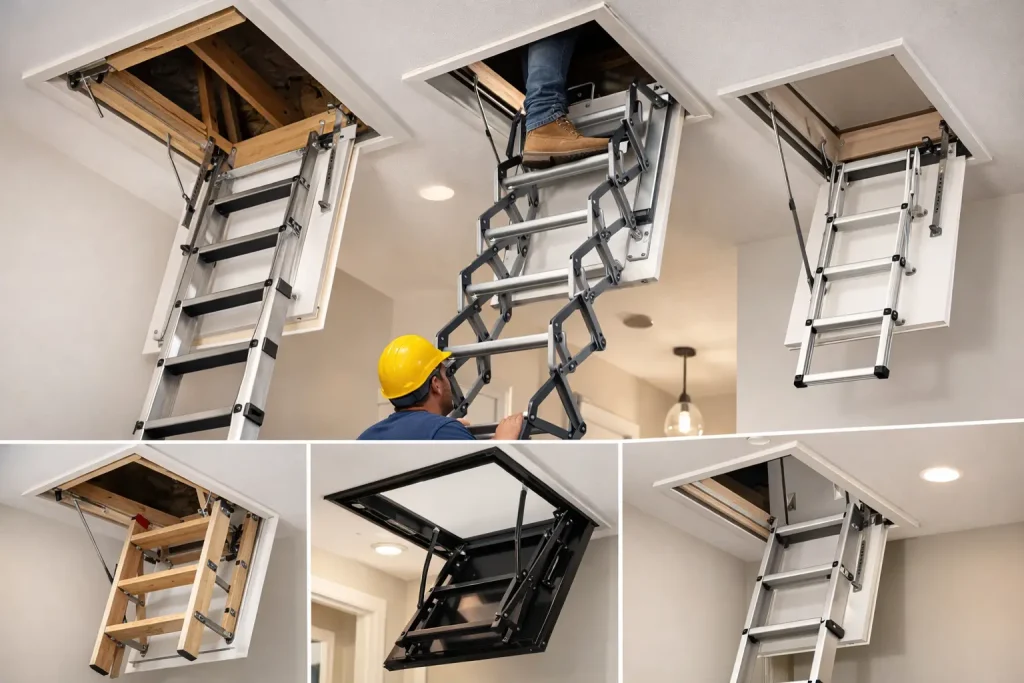
If your current loft hatch is small, draughty or awkward to use, it tends to put the whole loft off limits. That is why choosing from the best loft hatch options matters more than many homeowners expect. The right hatch does not just make access easier – it can improve safety, reduce heat loss and turn wasted space into practical storage you will actually use.
For most households, the question is not simply which hatch looks best. It is which one suits the size of the opening, the amount of headroom, the type of ladder needed and how often the loft will be used. A hatch that works well in one property can be completely wrong in another, so it pays to look at the options properly before anything is fitted.
What makes a loft hatch a good option?
A good loft hatch should open smoothly, close securely and feel sturdy in daily use. It also needs to do its job thermally. Older hatches are often little more than a thin panel with gaps around the frame, which can let warm air escape into the loft and make rooms below feel colder.
Modern hatch systems are much better in this respect. Insulated doors, draught seals and tighter-fitting frames all help reduce heat loss. If your loft is being used for storage, that matters twice over. You want easy access, but you also want the insulation and hatch area to support a more energy-efficient home.
There is also the matter of safety. A hatch should give enough space to move through comfortably and work properly with the right loft ladder. If the opening is too small or poorly positioned, even a decent ladder can feel awkward and unstable to use.
Best loft hatch options for different homes
When people talk about the best loft hatch options, they are usually comparing four main types. Each one has strengths, and each suits a different sort of property and usage.
Standard drop-down loft hatches
This is the most familiar style. The hatch door drops down on hinges or simple fittings and is usually opened with a pole. In the right home, it is a straightforward, cost-effective choice.
A standard drop-down hatch can work well when the loft is only used occasionally and the opening is already a practical size. If upgraded with insulation and proper draught sealing, it can be a noticeable improvement on an old basic hatch.
The limitation is access. Some older drop-down hatches are still quite narrow, which makes getting boxes in and out more awkward than it needs to be. For homeowners who want to use the loft regularly, a larger opening is often the better long-term answer.
Push-up loft hatches
Push-up hatches are simple and neat, often sitting flush with the ceiling for a cleaner appearance. They can be suitable where space is tight and a minimal look is preferred.
That said, they are not always the most convenient option for regular use. Because the hatch panel is fully removed or pushed up into the loft space, it can feel less manageable than a hinged system. For households storing seasonal items only, that may be perfectly acceptable. For more frequent access, it is worth considering whether ease of use will become a frustration over time.
Hinged loft hatches with integrated ladder access
For many homeowners, this is where practicality really improves. A hinged loft hatch paired with an integrated ladder creates a more complete access solution rather than treating the hatch and ladder as separate decisions.
This type of setup is particularly useful for family homes where the loft is used as proper storage space rather than an afterthought. Opening the hatch and lowering the ladder is quicker, safer and more predictable. It also helps avoid the awkwardness of balancing on steps while trying to manage a separate ladder.
The quality of installation matters here. A well-fitted hatch and ladder should feel secure, easy to operate and tidy in finish. If it is done properly, it becomes part of the home rather than something that always feels a bit improvised.
Enlarged loft hatches
In many cases, the best answer is not just replacing the hatch door but increasing the size of the opening. Enlarged loft hatches are one of the best loft hatch options for homes where the original opening is too small for safe, comfortable use.
This can make a bigger difference than people expect. A wider opening gives easier movement into the loft, better access for boarding and insulation work, and far less hassle when storing larger items. If your current hatch makes every trip into the loft feel awkward, the size of the opening may be the real issue.
Not every property will suit the same dimensions, and the surrounding ceiling structure needs to be considered carefully. That is why a proper survey is important. The aim is to improve access without compromising the integrity or finish of the ceiling.
Insulated loft hatches are often the smartest choice
If you are comparing options purely on convenience, it is easy to miss the energy side of the decision. Yet an insulated hatch is often the smartest upgrade, especially in homes with older access points.
Warm air rises, and any weak spot at loft level can contribute to unnecessary heat loss. A well-insulated hatch with effective seals helps keep the boundary between the living space and the loft where it should be. That can support the performance of your loft insulation and help the house feel more comfortable overall.
For homeowners already thinking about reducing bills or improving EPC performance, this is one of those details that should not be overlooked. A hatch may seem small compared with the rest of the loft, but poor access points can undermine good insulation work around them.
Matching the hatch to the ladder
A loft hatch should never be considered on its own. The hatch and ladder need to work together as one system.
Timber ladders remain a popular choice and can feel solid underfoot. Aluminium ladders are often lighter and easier to operate. The right option depends on the available space, the height from ceiling to floor and how often access is needed. What matters most is that the ladder opens cleanly, sits at the correct angle and feels stable when in use.
This is another reason why the best loft hatch options vary from home to home. A compact hatch with a basic ladder may suit a smaller property with occasional storage needs. A larger insulated hatch with a stronger folding ladder may be far better for a busy family home where the loft is used regularly.
Things that influence the right choice
Budget is part of the picture, but it should not be the only factor. The cheapest hatch is not always the best value if it still leaves you with awkward access, poor insulation or a finish that does not last.
Ceiling position also matters. Some hatches are in narrow landings, others above larger spaces where ladder operation is easier. Head height in the loft, the direction of joists and the amount of clear floor space below the opening all play a role.
Newer-build homes need particular care. If the loft is also being prepared for storage, it is important that any boarding solution protects the insulation depth and, where relevant, helps preserve the NHBC warranty position. Access, insulation and storage should all be planned together rather than treated as separate jobs.
When to replace an old loft hatch
There are a few clear signs that replacement is worth considering. If the hatch feels flimsy, lets in draughts, sticks when opened or is simply too small to use comfortably, it is likely holding the loft back.
Many homeowners put up with poor loft access for years because it seems like a minor annoyance. In reality, it affects whether the loft becomes genuinely usable space. Once the hatch is improved, the difference is immediate. Access feels safer, storing items becomes easier and the whole area is more practical.
For homes across Milton Keynes and the surrounding areas, this is often one of the simplest ways to get more from existing space without unnecessary disruption.
Choosing a specialist makes the result better
Loft access sounds straightforward until details start to matter. The fit of the frame, the thermal performance of the hatch, the way the ladder operates and the finish around the opening all affect the result.
That is why specialist advice is valuable. An honest survey should identify what is possible, explain any limitations clearly and recommend a solution that suits how you actually use the loft. In our experience at Loft Accessories, homeowners appreciate straightforward recommendations far more than being sold the most expensive option.
The best outcome is a hatch that feels like it should always have been there – easy to use, neatly installed and properly insulated. If your current loft access is awkward enough that you avoid using the space, that is usually a sign the right upgrade will pay off in everyday convenience as much as in energy efficiency.
A better loft hatch will not transform your home overnight, but it can quietly solve several problems at once. When access is safe, storage is simpler and heat loss is reduced, the loft stops being wasted space and starts doing its job properly.