
If your loft is full of awkward gaps, squashy insulation and the odd wobbly board, choosing among the best loft boarding systems is less about buying a product and more about protecting your home properly. A good system should give you safe, usable storage without crushing insulation, blocking airflow or creating problems with warranties in newer properties.
That is where many homeowners get caught out. On the surface, loft boarding can seem simple enough. In practice, the wrong setup can reduce insulation performance, make access less safe and leave you with a storage area that never feels quite solid. The right system does the opposite – it creates dependable storage, keeps the loft functioning as it should and makes day-to-day life easier.
What makes the best loft boarding systems worth choosing?
The best loft boarding systems are designed to work with modern insulation standards, not against them. In most homes, insulation sits above the ceiling joists. If boards are fixed directly onto those joists, the insulation underneath gets compressed. Once that happens, it cannot perform as effectively, which can contribute to heat loss and higher energy bills.
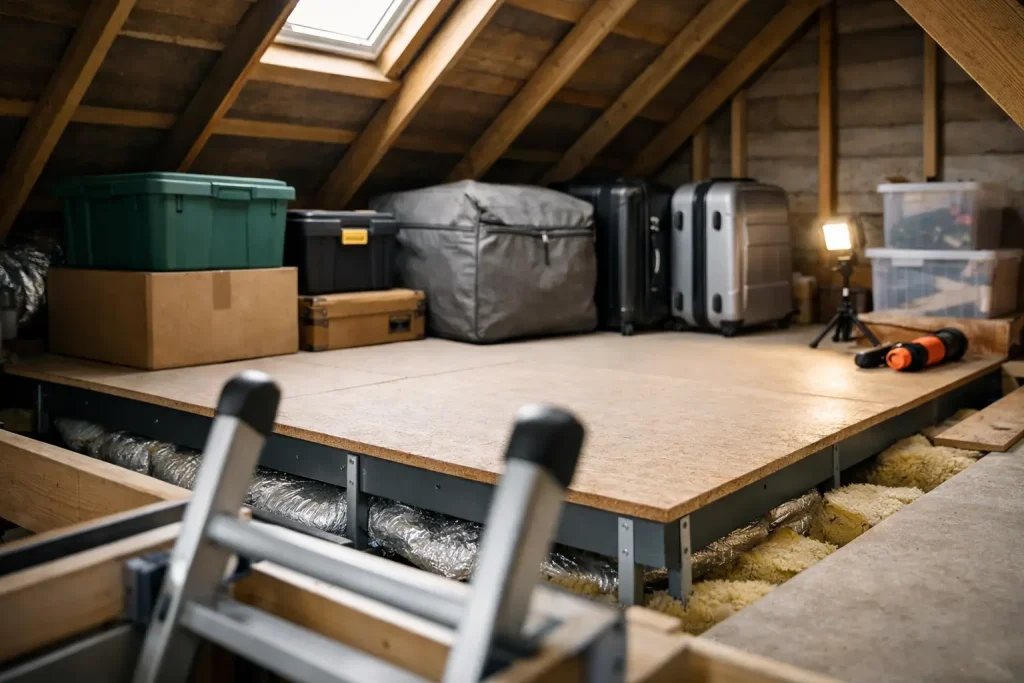
A proper raised boarding system solves that problem by lifting the storage deck above the insulation. That gap matters. It allows the insulation to retain its depth and helps maintain the thermal performance your home needs. For homeowners who want extra storage without compromising warmth, this is usually the key difference between a short-term fix and a lasting improvement.
Strength matters too, but it needs to be judged sensibly. Not every loft is meant to carry heavy loads across the entire space, and a trustworthy installer should be honest about that. The best system for one property may not be the right choice for another, because joist depth, loft layout, insulation levels and access all vary.
Raised systems are usually the right starting point
For most modern homes, a raised boarding system is the strongest option because it balances storage and insulation properly. It creates a platform above the insulation rather than flattening it down. That means you gain practical storage while keeping the loft energy efficient.
This is especially important in newer properties. Many homeowners are understandably cautious about making changes in a home still covered by an NHBC guarantee. In those cases, NHBC approved loft legs are often the sensible route because they are designed specifically to raise boards above insulation without affecting the validity of the 10-year warranty. It is a detail that can easily be overlooked, but it matters if you want the job done properly and without future headaches.
Raised systems also tend to give a neater and more consistent finish. The loft feels more secure underfoot, access is more predictable and the storage area is clearly defined. That can make a real difference if you use the loft regularly for suitcases, decorations, paperwork or the things families seem to collect over time but do not need every week.
Comparing the main types of loft boarding system
When people talk about loft boarding, they often lump everything together. In reality, there are a few distinct approaches, and the trade-offs are worth understanding.
Boards fixed directly to joists
This is the older, simpler method. It can create a flat surface, but it is rarely the best choice where insulation depth needs to be preserved. In homes with minimal insulation it may once have been common, yet current expectations around energy efficiency make it a weaker option. It can also leave you with a loft that technically stores boxes but performs poorly as part of the home.
Raised loft leg systems
These systems use supports to lift the boards above the insulation. For many homeowners, this is the most practical all-round choice. It protects insulation, creates accessible storage and suits a wide range of loft spaces. It is particularly useful where insulation has been topped up to modern depths and there is no room to board directly without compression.
Timber-framed raised systems
In some lofts, a timber sub-frame may be used to create a raised deck. This can work well in the right property, especially where the loft layout calls for a more tailored solution. The benefit is flexibility. The trade-off is that it needs careful planning and should never be treated as a one-size-fits-all answer.
The best loft boarding systems are not defined by whichever sounds most substantial. They are defined by whether they suit the structure of the loft, protect insulation and give you safe, useful storage for the long term.
The boarding itself matters as much as the support system
It is easy to focus on loft legs or framing and forget the boards. The deck boards need to be moisture-resistant, properly fitted and suitable for the environment they are going into. Tongue-and-groove loft panels are a common choice because they lock together neatly and help create a more stable surface.
Board thickness also matters, but bigger is not automatically better. The aim is a system that feels secure and performs consistently, rather than overbuilding for the sake of it. A good installer will match the boarding to the support system and the intended use of the loft. If the space is for general household storage, that should be reflected in the design and recommendations.
This is one reason specialist loft companies tend to offer better outcomes than general trades. The details are small, but they add up – board spacing, ventilation, insulation depth, hatch access, ladder positioning and weight distribution all affect how useful the finished loft actually feels.
Access and insulation should be part of the same conversation
A boarding system on its own does not solve everything. If the hatch is small, awkward or poorly insulated, or the ladder feels unsafe, the loft may still be difficult to use. Likewise, if insulation is outdated, boarding over the top of it will not magically make the space more energy efficient.
The best results usually come from looking at the loft as a whole. Safe access, proper insulation and correctly raised boarding all support each other. Homeowners often start out wanting storage, then realise the real benefit is that the loft becomes practical, tidy and easier to manage throughout the year.
This joined-up approach can also be better value. If work is planned properly from the outset, you avoid piecemeal changes and get a storage area that functions properly from day one. That is far more useful than a loft which technically has boards but still feels difficult to reach or too cold and draughty to trust with stored belongings.
How to judge the right system for your home
The most reliable starting point is a proper survey. That should include the loft structure, insulation levels, ventilation, access and how you actually want to use the space. Honest advice matters here. Not every loft needs full boarding, and not every household needs the same amount of storage.
A clear written quote is another good sign. It shows what is being installed, how the system is raised, whether insulation is being protected and what kind of finish you can expect. It also gives you confidence that the price reflects a proper solution rather than a quick fix.
Insurance matters as well. Loft work takes place inside your home, often above bedrooms and landing areas, so peace of mind is important. A fully insured specialist offers reassurance that the work is being carried out professionally and responsibly.
For homeowners in and around Milton Keynes, Bedford, Northampton or Oxford, local knowledge can also help. Property styles vary, and a specialist who regularly works in the area is more likely to recognise the common layouts and practical challenges found in local homes.
Choosing value, not just price
The cheapest option is not always the most economical. If a loft is boarded in a way that compresses insulation or ignores safe access, any short-term saving can be offset by poorer energy performance and a less usable space. Paying for the right system first time usually gives better value because the loft becomes safer, warmer and more practical.
That does not mean the most expensive system is automatically the best either. Good advice should be proportionate. A family looking for neat, dependable storage does not need to be sold something overly complicated. They need a solution that matches the home, protects insulation and is installed neatly with minimum disruption.
That is why clear communication matters so much. A trustworthy specialist will explain the options in plain English, highlight any limitations and recommend what genuinely suits your property. At Loft Accessories, that straightforward approach is central to how loft boarding should be done – honest recommendations, tidy workmanship and a finish that makes the space easier to use for years to come.
The best loft boarding systems are the ones that respect how your home works while making everyday storage simpler. If your loft is going to earn its keep, it should do it safely, efficiently and without compromising the comfort of the rooms below.