
The Christmas decorations, suitcases and boxes of keepsakes need somewhere dry, safe and easy to reach. A partially boarded loft can provide exactly that, but partially boarded loft regulations are worth understanding before any storage platform is fitted. The right approach protects your insulation, respects the limits of the structure and gives you useful space without creating problems further down the line.
For most homes, partial boarding means creating a raised storage area in one section of the loft rather than covering the whole floor. It is often the sensible choice for families who need practical storage but also want to keep their home warm and their loft clear for ventilation and services.
What does partially boarded mean?
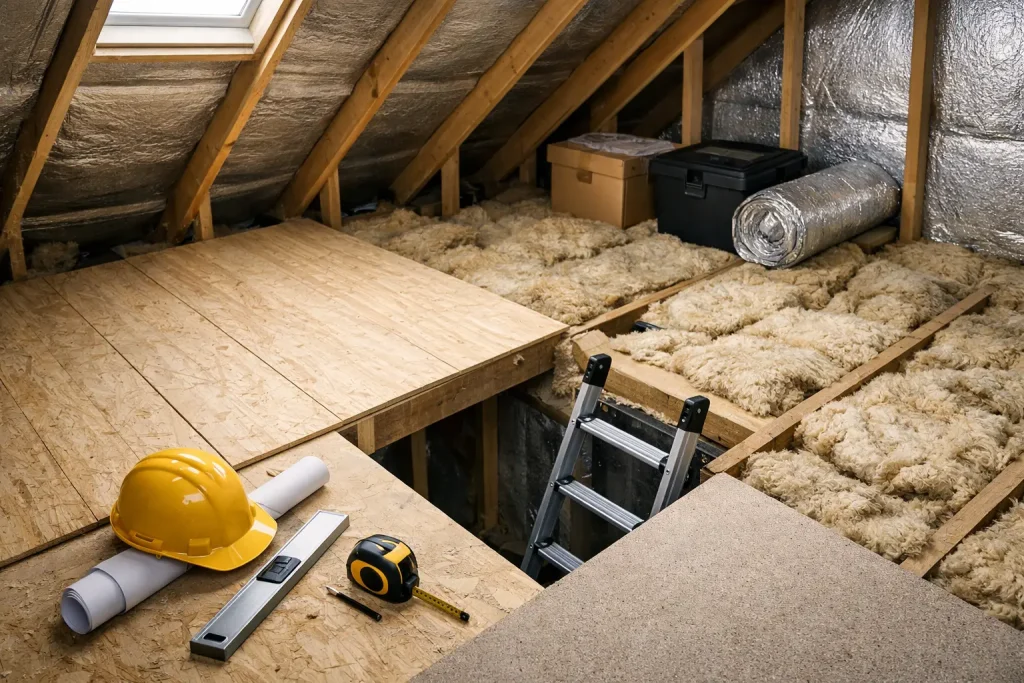
A partially boarded loft usually consists of a defined decked area, often near the hatch, with clear routes for safe access. The boards are raised above the insulation on suitable supports, rather than being laid directly onto the ceiling joists. This leaves the insulation at its intended depth and avoids squashing it flat.
The amount of boarding should match how the space will genuinely be used. A modest platform for lighter, occasional storage is very different from an area intended for numerous heavy boxes. There is no benefit in paying to board every available inch if much of it will remain unused. Equally, a small area that is overloaded will not be safe simply because it is only part of the loft.
A professional survey should identify where a storage platform can sit sensibly, where pipes, cables and lighting need to remain accessible, and whether the existing hatch and ladder make regular use safe. It is this overall picture, rather than the boards alone, that makes a loft storage solution work properly.
Do partially boarded loft regulations require approval?
In many straightforward cases, installing a storage platform does not need planning permission or a Building Control application. However, that does not mean every installation can be treated in the same way. Building Regulations may become relevant if the work involves structural alterations, significant changes to the ceiling or roof structure, electrical work, or changes that affect fire safety.
The key distinction is between creating storage and altering the home for a different purpose. A boarded loft should remain a storage area unless the property has been designed and approved for something else. Adding heating, extensive electrical work, permanent stairs or other substantial alterations can bring additional requirements and should be assessed properly before work begins.
New-build homes deserve particular care. Builders’ warranties and NHBC requirements can place restrictions on alterations, especially where work could compress insulation, affect ventilation or interfere with the roof structure. Raised systems using NHBC-approved Loft Legs are designed to keep boarding above the insulation. This is a practical way to create storage while helping to protect the performance and condition of a newer property. Always check the terms of your own warranty if you are unsure.
Listed buildings, homes in conservation areas and properties with unusual construction may also need more specific advice. The principle is simple: a small, well-planned storage area is often straightforward, but structural or safety-related changes should never be assumed to be routine.
Partially boarded loft regulations and insulation
Insulation is where many otherwise good storage ideas go wrong. Modern loft insulation is deliberately thick because it slows heat escaping through the ceiling. If boards are fitted directly on top of it, the insulation is compressed and its thermal performance can be reduced. That can leave rooms below feeling colder and contribute to higher heating bills.
A raised boarding system solves this problem by supporting the deck above the insulation. It preserves the insulation depth while creating a level surface for storage. The gap beneath the boards also makes it easier to see where services run and prevents the storage platform from becoming a barrier to future insulation improvements.
Ventilation matters too. Loft spaces need airflow to manage moisture. Boarding should not block eaves ventilation or cover vents, and insulation should be positioned carefully around the edges of the roof. Dampness in a loft is not always caused by boarding, but poor access, trapped air and hidden defects can make a problem harder to spot.
If your insulation is old, thin, uneven or has been disturbed over the years, it makes sense to address that before the boards go down. A clean, raised platform installed over suitable insulation gives a far better long-term result than trying to work around a patchy existing layer.
Check the structure before loading it
Loft joists are often designed to support the ceiling beneath, insulation and limited access for maintenance. They may not be suitable for substantial stored weight without a proper assessment. The fact that a floor feels solid underfoot does not tell you how much load it can safely carry.
This is particularly relevant in older homes, properties with altered roof layouts and lofts containing water tanks or large pipe runs. Heavy items such as books, tools, tiles, furniture and densely packed boxes can add up quickly. Storage should be spread sensibly across the platform, with the heaviest items kept to a minimum.
A specialist installer will consider the direction, spacing and condition of the joists before recommending a boarding layout. They can also identify warning signs such as damaged timber, previous alterations or inadequate supports. Honest advice may mean recommending a smaller area, lighter storage or further investigation. That is a better outcome than fitting more boards than the loft can safely accommodate.
Safe access, lighting and fire protection
A usable storage area needs safe access from the first step. A hatch should be large enough for practical entry and for the items you plan to store, while a properly fitted loft ladder should provide a stable route up and down. Balancing on a chair or carrying boxes through an awkward opening is not a safe long-term arrangement.
Once inside the loft, the route from the hatch to the boarded area should be clear and well lit. Suitable lighting makes it easier to spot uneven surfaces, cables and low roof timbers. Electrical cables, downlights and transformers can generate heat, so they should not be buried beneath insulation or boxed in without suitable clearance.
Fire safety should also be considered whenever the hatch, ceiling or electrical installation is affected. The hatch and surrounding ceiling form part of the separation between the loft and the rooms below. Retaining appropriate fire protection is especially important in properties with more than one storey or where the original construction has been altered.
Choosing the right amount of boarding
The best partially boarded loft is not necessarily the largest one. For many households, a neat raised area close to the hatch is enough for seasonal belongings and household items, leaving the rest of the loft insulated, ventilated and accessible for maintenance.
Think about what you are storing, how often you will need it and whether it can be carried safely through the hatch. Clear plastic boxes, labelled carefully and kept within sensible weight limits, make the space more useful without turning it into a difficult obstacle course. Leaving room around services and avoiding overloaded stacks will also make future checks much easier.
A good survey brings these decisions together. It should cover insulation depth, structural suitability, access, ventilation and the storage area you actually need. For homeowners across Milton Keynes and the surrounding area, Loft Accessories takes this practical, straightforward approach, with clear recommendations and a written quote before any work starts.
A partially boarded loft should make daily life easier, not create a hidden worry above your ceiling. When the boards are raised correctly, the loading is sensible and access is safe, you gain valuable storage while keeping warmth, safety and peace of mind where they belong.