
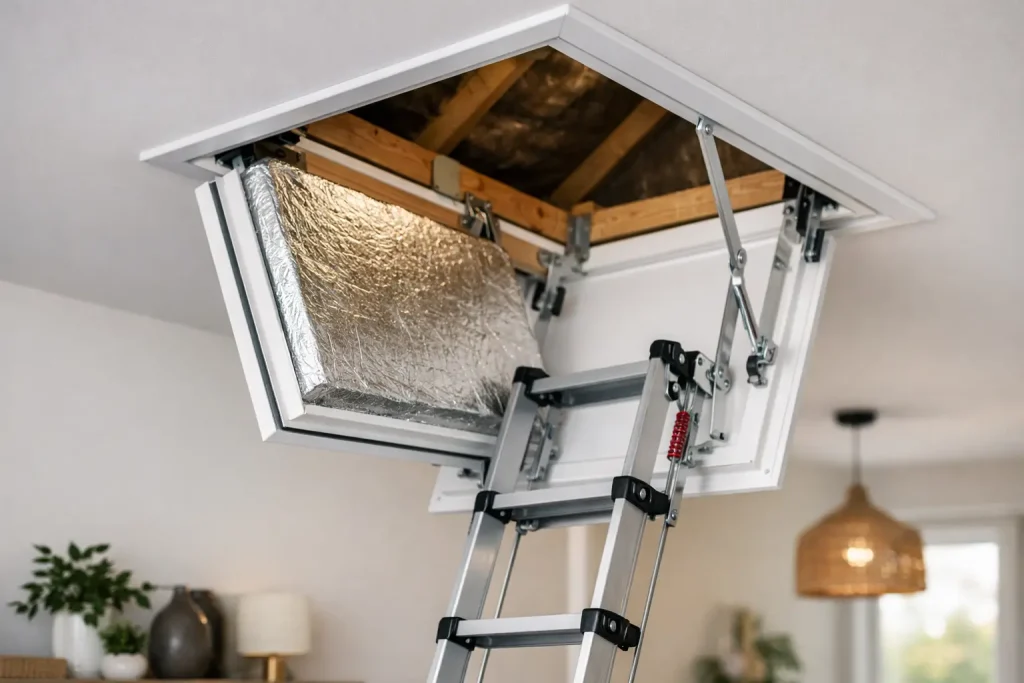
A loft hatch can be one of the least noticed parts of a home, yet it sits directly between your warm living space and a much colder roof void. If it is thin, poorly fitted or draughty, heat can escape through a gap you use only occasionally. The top benefits of insulated loft hatches are therefore about far more than the hatch itself: they help make the home warmer, protect the performance of your loft insulation and make access to storage safer and simpler.
For homeowners who are already feeling rising heating costs or cold spots around an upstairs landing, this is a practical improvement worth considering alongside loft insulation and boarding. The right hatch should suit the opening, work with your ladder and close properly every time.
Top benefits of insulated loft hatches for your home
1. Less heat loss through the loft opening
Most homes lose heat through the roof area if insulation is inadequate or interrupted. Even where plenty of insulation has been laid between the loft joists, an uninsulated hatch can leave a weak point in the thermal layer. Warm air naturally rises, so a lightweight panel above the landing or hallway may allow heat to pass into the loft while the heating is on below.
An insulated loft hatch adds a thermal barrier at that opening. It will not replace the need for sufficient insulation across the wider loft, but it helps complete the job. This matters particularly in homes where insulation has been improved over time but the original hatch has been left in place.
The difference can be especially welcome during cold Milton Keynes winters, when an upstairs corridor or bedroom can feel noticeably cooler than the rest of the house. Reducing heat loss means your heating has less work to do to maintain a comfortable temperature.
2. A warmer, more even-feeling home
The benefit homeowners tend to notice is comfort. A properly insulated and sealed hatch can reduce the cold air movement that makes a landing feel chilly, even when the radiator is on. It can also help limit the sharp temperature contrast between the loft and the rooms below.
This does not mean every cold room is caused by the hatch. Draughts around windows, poor wall insulation, ventilation issues and gaps around pipework can all play a part. However, the loft opening is a sensible place to check because it is often straightforward to improve and is commonly overlooked.
A hatch that fits snugly also helps keep warmed air inside the house rather than allowing it to drift into the loft. The result is a home that feels more consistently comfortable, rather than simply turning the thermostat up and hoping for the best.
3. Lower pressure on your heating system
When less warmth escapes, your boiler or heat pump should not need to run as long to replace it. The potential saving varies with the size of the hatch, the condition of the existing opening, the rest of the home’s insulation and how the household uses heating. It is best to view an insulated hatch as one useful part of an overall energy-efficiency plan, rather than a single fix for high bills.
That said, small improvements around the home add up. A well-insulated loft, raised boarding that does not compress insulation, and a thermally efficient hatch work together to reduce unnecessary heat loss. This can support lower energy use over the long term while making the home more pleasant day to day.
For long-term property owners, it is also a sensible way to look after the fabric of the house. Energy efficiency is increasingly relevant when reviewing household costs and a property’s EPC performance.
4. Better protection for your loft insulation
A hatch needs to open freely, but it should not flatten, disturb or leave large gaps in the insulation surrounding it. A well-planned installation considers the whole loft entrance, including the frame, the insulation around the opening and how the hatch closes.
This is particularly important where loft boarding is being installed. In newer properties, boarding should be raised above the insulation using suitable loft legs so the insulation can retain its depth and effectiveness. Compressing it to make room for storage reduces its ability to hold heat in the home.
The hatch should complement that setup. It gives you convenient access without creating an awkward, poorly insulated break in an otherwise carefully improved loft. A specialist survey can identify whether the existing opening is suitable or whether a replacement hatch and frame will provide a cleaner, more effective result.
5. Reduced draughts, dust and loft air movement
Insulation is only one part of thermal performance. Air leakage also matters. A hatch with gaps around its edges can allow draughts to pass between the loft and the living area. Depending on the condition of the loft, that air can carry dust or make the hallway below feel less comfortable.
Many insulated loft hatches include seals designed to improve the fit around the frame. When fitted correctly, these help reduce unwanted air movement while still allowing the hatch to be opened when needed. The aim is not to make the loft inaccessible or interfere with appropriate roof ventilation. It is simply to close the access point properly.
If condensation or damp is already a concern, the wider cause should be assessed rather than assuming a new hatch alone will solve it. Good insulation, sensible ventilation and a properly sealed loft opening need to work together.
6. Safer, easier access to useful storage
A loft hatch should make access feel straightforward, not like an awkward balancing act. Older openings can be small, flimsy or poorly positioned, which makes carrying boxes through them difficult and discourages homeowners from using valuable storage space.
An upgraded insulated hatch can be designed around practical access. When paired with an appropriate loft ladder and a secure boarded storage area, it makes seasonal items, luggage and household belongings easier to reach. That can free up bedrooms, cupboards and garages without changing the footprint of the home.
Size and placement matter here. A larger opening may be useful for bulky items, but it needs careful assessment to ensure the surrounding structure and ceiling finish are properly considered. The best option is the one that gives safe access and strong thermal performance without creating unnecessary work.
7. A neater finish and a more considered home improvement
A worn hatch cover, uneven frame or visible gaps can make a landing look tired. Replacing it with a neatly fitted insulated hatch gives the area a cleaner finish while delivering a benefit you cannot always see. It is a modest change, but one that shows care has been taken with both comfort and storage.
Professional fitting is valuable because the details matter. The hatch must sit square, the frame needs to be secure, seals must meet correctly and the surrounding ceiling should be left tidy. A hatch that is technically insulated but does not close flush will not provide the result you expect.
For homeowners considering future sale, practical improvements such as accessible storage and better energy efficiency can also make a home easier to appreciate. They are not a substitute for wider maintenance, but they are useful signs of a property that has been looked after properly.
Choosing the right insulated loft hatch
There is no single hatch that suits every property. The existing opening, available headroom, type of ceiling, insulation depth and preferred method of access all affect the right choice. A simple replacement may be enough in some homes. In others, particularly where loft boarding or a new ladder is planned, it makes more sense to assess the entrance as part of the complete storage solution.
It is also worth asking how the hatch will be used. If it is only opened a few times each year, airtight closure and insulation may be the main priorities. If the loft will become regular storage, easy operation, a sensible opening size and safe ladder access become just as important.
A clear survey and written quote remove guesswork. Loft Accessories takes this practical approach, looking at the condition of the current hatch, the insulation already in place and how the space can be used safely. The aim is honest advice and a result that performs well after the installers have left.
An insulated loft hatch is a small part of the ceiling, but it can make a meaningful difference when it is fitted as part of a well-planned loft. If your landing feels cold, your hatch is draughty or your storage access is overdue an upgrade, having the whole arrangement checked is a sensible next step.