
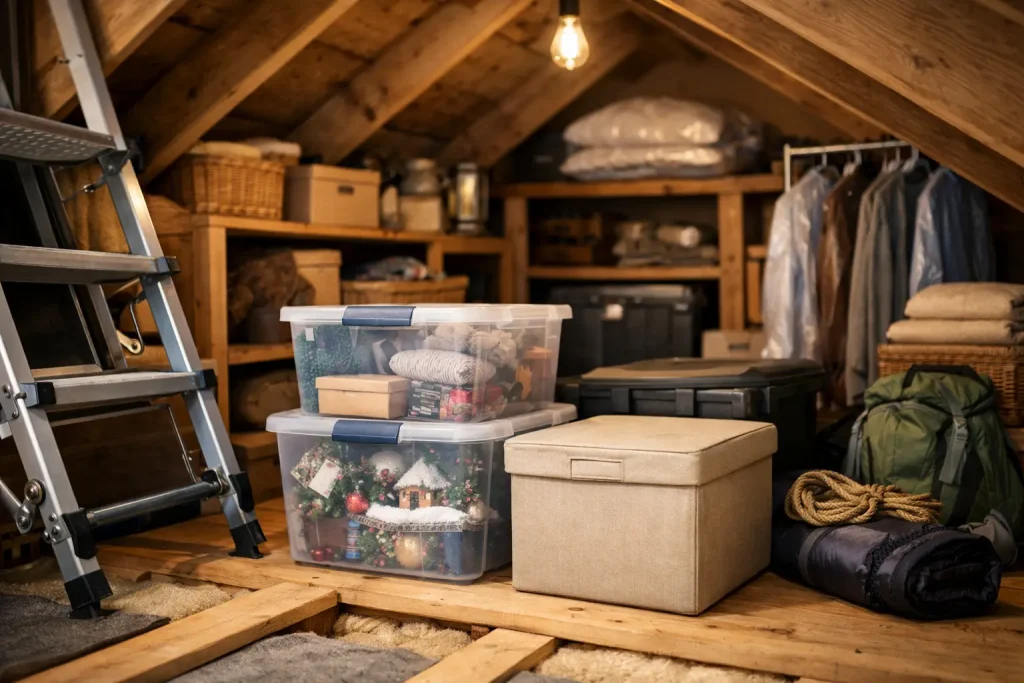
The problem with most loft spaces is not lack of room. It is that the space is awkward, poorly accessed and easy to use the wrong way. Safe loft storage solutions fix that by turning an unreliable area above your ceiling into practical storage that supports the home rather than putting it at risk.
For many households, the loft becomes a place for suitcases, Christmas decorations, keepsakes and the things you do not need every day but do want to keep. That makes sense, but only if the space is designed for storage properly. If it is not, the result can be compressed insulation, difficult access, damaged ceiling plaster and a loft that never feels quite safe to use.
What safe loft storage solutions really mean
A safe storage setup is not just a few boards laid down to make room for boxes. It is a combination of proper support, reliable access and enough protection for the insulation underneath. Each part matters, because lofts are not designed in the same way and what works in one home may be unsuitable in another.
The biggest misunderstanding is thinking that any boarded area is automatically fit for storage. In reality, many lofts have insulation laid between the joists, and modern insulation depths are often greater than the joist height itself. If boards are fixed directly on top, the insulation gets squashed. That reduces thermal performance and can contribute to higher heating costs over time.
Good storage should also feel secure underfoot. Homeowners should not have to balance on ceiling joists, stretch awkwardly from the hatch or worry about putting weight in the wrong place. When access is poor, people are more likely to avoid the loft altogether or use it in ways that are unsafe.
Why raised boarding matters
One of the most effective safe loft storage solutions is raised loft boarding. This creates a storage platform above the insulation rather than flattening it underneath. That simple difference has a big impact on both safety and energy efficiency.
By lifting the boarded area, the insulation can continue to do its job properly. The loft becomes usable without sacrificing the thermal protection your home needs. For newer properties, this point is especially important. Using NHBC approved loft legs helps create a raised platform while protecting the validity of the NHBC warranty, which is a sensible consideration for homeowners who do not want short-term storage to create longer-term issues.
Raised boarding also gives a more even, dependable surface for storing household items. You are no longer trying to place boxes between joists or guessing where it is safe to stand. Instead, the area is clearly defined and built for the purpose.
Access is part of storage, not an extra
Even the best boarded loft will be frustrating if getting into it feels like a chore. Safe loft storage solutions should always include sensible access. That usually means looking at the loft ladder, the hatch and the amount of headroom available when entering the space.
A loft ladder needs to be stable, easy to operate and suited to the property. If it is too steep, too flimsy or awkward to fold away, the loft will not get used properly. More importantly, it can create an avoidable safety risk. Households often use the loft while carrying storage boxes or seasonal items, so secure footing matters.
The hatch matters too. In some homes, the opening is small and restrictive, making access more difficult than it needs to be. Enlarging the hatch can make storing and retrieving items much easier, especially for families who intend to use the loft regularly. It also helps create a cleaner, more practical route into the space.
This is where specialist advice makes a real difference. A loft should work as a whole system. Boarding, insulation and access should support each other rather than being treated as separate jobs.
The weight question every homeowner should ask
Storage is useful only if the loft can handle it properly. That does not mean every loft should be loaded with heavy boxes from end to end. One of the most sensible parts of planning safe loft storage solutions is being realistic about what the space is for.
Most loft storage is best suited to lighter household items such as decorations, luggage, archived paperwork, clothing, toys and sentimental belongings. It may not be the right place for very heavy furniture, large gym equipment or anything that puts unnecessary strain on the structure. The answer depends on the property, the layout and the condition of the loft.
That is why a proper survey matters. It allows the space to be assessed before any installation takes place. Clear advice at this stage helps homeowners avoid the common mistake of treating the loft like another full room when its role is really to provide convenient, secure overhead storage.
Insulation and storage should work together
Many people start thinking about loft storage because the house feels cluttered. Just as often, they are also noticing higher heating bills or rooms that never feel warm enough. The good news is that these concerns often overlap.
A well-planned loft can provide storage and improve energy efficiency at the same time. If insulation is missing, patchy or outdated, the loft is already underperforming. Adding proper insulation while creating a raised boarded area gives you a more useful space without losing the energy-saving benefit.
This is one of the main trade-offs in loft work. Homeowners want storage, but they should not have to choose between practical space and lower heat loss. Done properly, both are possible. Done badly, one tends to undermine the other.
For households trying to make sensible improvements rather than dramatic changes, this balanced approach often offers the best long-term value. You gain storage space, easier access and a loft that supports a warmer, more efficient home.
Safe loft storage solutions for different types of home
Older homes and newer homes often need slightly different approaches. In an older property, the priority may be creating safer access and replacing poor-quality insulation. In a newer property, the concern is often protecting the existing insulation depth and making sure any boarding is installed in a way that does not affect warranty requirements.
Family homes usually benefit from larger, clearly defined storage zones because day-to-day clutter builds quickly. Long-term homeowners may be more focused on keeping treasured items safe and dry while also improving the overall condition of the loft. In both cases, the right solution is usually the one that feels straightforward to use. If the loft is hard to reach or awkward to trust, it will not deliver much value.
That is why tailored advice matters more than a one-size-fits-all package. A tidy, useful loft starts with understanding how the household will actually use it.
What to look for in a professional installation
When choosing someone to carry out loft work, homeowners should look for more than just a low price. The quality of the installation affects safety, durability and the performance of the insulation underneath.
A specialist should explain the options clearly, provide a written quote and set out what is suitable for your property without overcomplicating the job. They should also be fully insured and able to advise on the right combination of boarding, insulation, ladder access and hatch improvements.
Good workmanship is often visible in the details. The loft should feel solid, tidy and properly finished. The route into the space should be easy to use. The storage platform should be secure, and the insulation should be protected rather than crushed. Those are the signs that the work has been done with care.
For homeowners in Milton Keynes and surrounding areas, working with a loft specialist rather than a general contractor can make the process much simpler. Companies such as Loft Accessories focus on this type of work every day, which means the advice tends to be clearer and the installation more closely matched to what the loft actually needs.
A safer loft is a more useful loft
The best storage solutions are the ones that make life easier without creating hidden problems. A loft should not be a place you avoid because it feels awkward or unsafe. It should be a dependable part of the home, with secure access, proper boarding and insulation that still performs as it should.
If you are considering safe loft storage solutions, the right starting point is not how many boxes you want to fit up there. It is whether the space can be made properly accessible, properly supported and properly protected. Get that right, and the loft stops being wasted space and starts becoming one of the most useful parts of the house.