
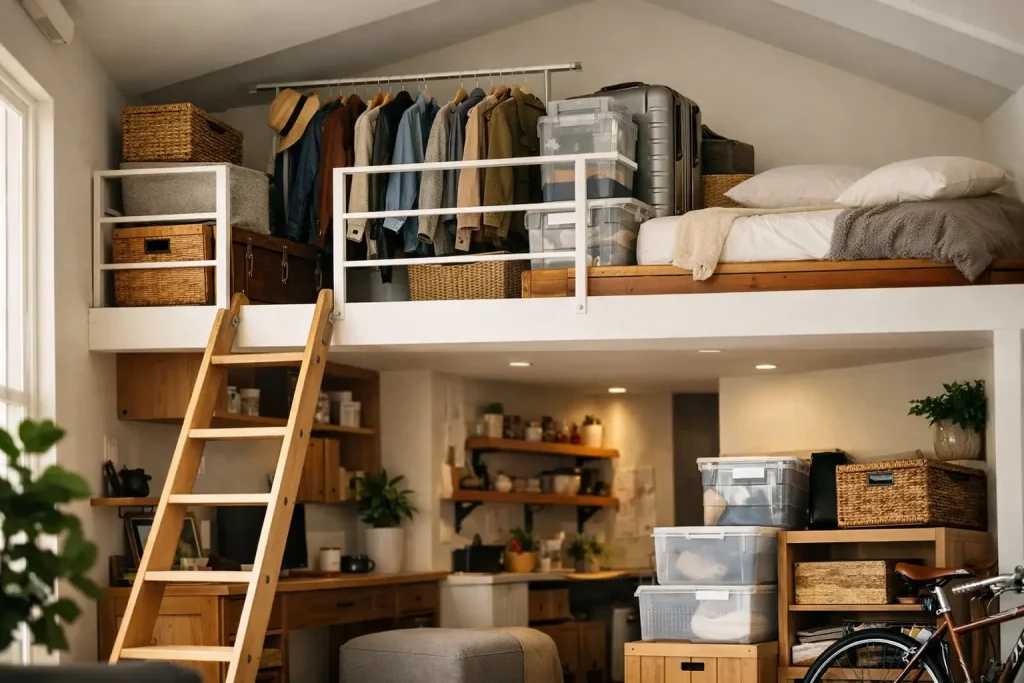
When cupboards are full, the airing cupboard is doing overtime and every spare room corner has become a holding area, the loft starts to look like the obvious answer. The challenge is that loft storage ideas for small homes need to be practical, safe and worth the investment. In a compact property, every bit of space matters, but so does protecting insulation, keeping access straightforward and making sure the loft is actually usable rather than just somewhere to dump boxes.
For most households, the best results come from treating the loft as a proper storage area rather than an afterthought. That means thinking about structure, access, lighting and layout together. A few smart choices can turn an awkward roof space into something that genuinely makes day-to-day life easier.
Loft storage ideas for small homes that actually work
The most effective idea is often the simplest – create a stable raised loft boarding area. In small homes, this gives you a clear, usable platform for storage without compressing the insulation underneath. That matters more than many homeowners realise. Squashed insulation cannot perform properly, which can lead to more heat escaping through the roof and higher heating bills.
Raised boarding is especially important in newer homes. If the boarding sits directly on top of insulation, it can affect thermal performance and in some cases create issues with warranty requirements. Using the right raised system keeps the insulation doing its job while still giving you a sturdy storage surface.
Another strong option is to board only the areas that make sense. Many people assume the whole loft needs covering, but that is not always the most practical or cost-effective route. In a smaller property, a well-planned central walkway with boarded storage zones at the most accessible points can be far more useful than trying to cover every inch. Roof shape, head height and joist layout all influence what is sensible.
If your loft is difficult to reach, improved access should sit near the top of the list. A secure loft ladder and properly sized hatch can make a dramatic difference. There is little value in having storage space if getting to it feels awkward or unsafe. For busy households, ease of access is often what determines whether the loft becomes part of everyday home organisation or remains ignored.
Good lighting is another upgrade that pays for itself in convenience. A dark loft encourages rushed trips, poor visibility and badly stacked items. Simple, reliable lighting turns the space from a balancing act into somewhere you can use with confidence.
Make the loft easier to use, not just bigger
One of the most overlooked loft storage ideas for small homes is zoning. Rather than seeing the loft as one large dumping ground, divide it by purpose. Keep seasonal items in the furthest areas, everyday overflow closer to the hatch and sentimental or infrequently used belongings in clearly defined sections. This helps prevent the all-too-common problem of moving ten boxes to reach one.
Storage choice matters too. Uniform, lidded containers usually work better than a mix of bags, open crates and odd cardboard boxes. They stack more neatly, protect contents from dust and make it easier to use the available footprint well. In a small home, tidy storage is not just about appearance – it directly affects how much the loft can hold and how easy it is to find what you need.
It also helps to be realistic about what belongs up there. Loft spaces are ideal for lighter household items such as decorations, keepsakes, luggage and out-of-season clothing. Heavier items may need more consideration depending on the structure and the type of boarding installed. A trustworthy specialist will explain what your loft is suitable for and where limits apply, rather than simply promising maximum storage without context.
Why access and safety matter as much as storage
Homeowners often focus first on how much they can fit into the loft, but access and safety are just as important. In smaller homes, loft use tends to be more regular because storage pressure is higher. That makes a safe ladder, secure footing and sensible layout essential.
A narrow hatch can make even simple storage awkward. Enlarging the hatch where appropriate creates a much more practical route for boxes and makes entry feel less cramped. Combined with a well-fitted loft ladder, it turns the loft into a storage space you can rely on rather than avoid.
Boarding also needs to be professionally planned around the loft’s existing features. Pipework, cables, water tanks and insulation all need proper consideration. This is one of those areas where the details matter. A neat-looking finish is only part of the job. What sits underneath that finish determines whether the loft performs properly over time.
There is also the question of balance. Some households want maximum storage; others mainly want better insulation with a modest boarded area for essentials. Neither approach is wrong. It depends on the property, the loft structure and how you actually live in the home.
Smart storage starts with insulation
It might sound odd to mention insulation in an article about storage, but in many homes the two go hand in hand. A loft packed with poorly planned boards and compressed insulation is not really an upgrade. You may gain a place to keep boxes but lose thermal efficiency in the process.
That is why one of the best long-term loft storage ideas for small homes is to improve insulation at the same time as creating storage space. Raised boarding allows the insulation depth to be maintained, helping the home stay warmer in winter and reducing heat loss through the roof. For households watching energy costs, this can be just as valuable as the extra storage itself.
There is also a comfort benefit. Better-insulated loft spaces can contribute to a more consistent indoor temperature, which is something many homeowners notice quickly once the work is done properly.
Small-home loft layouts that make sense
Every loft has awkward areas. Eaves, low pitch sections and limited headroom are common, especially in smaller houses. The key is not forcing every part of the space to do the same job.
Central areas with the best head height are usually the easiest places for regular-access storage. Lower sections can still be useful for flatter containers or items only needed once or twice a year. This kind of layout planning makes the loft feel more organised and avoids wasting the best-accessed areas on things you rarely use.
Walkways are worth considering as part of the layout rather than an extra. A clear route from hatch to storage area reduces the chance of missteps and helps keep the loft tidy over time. It also means you are less likely to place items randomly just because reaching the intended area feels awkward.
For families, it often helps to think one step ahead. Storage needs tend to grow rather than shrink. Creating a layout that leaves some room for change can save time and disruption later on.
Choosing the right solution for your home
The right answer depends on your loft, your property age and what you want from the space. Older homes can have quirks that need careful planning. Newer homes often require particular attention to raised boarding systems so insulation is not compressed and warranty considerations are respected. This is where specialist advice makes a real difference.
A clear survey and written quote should tell you what is suitable, what is not and why. That matters because loft work should never be based on guesswork. If a recommendation is sound, it should be easy to explain in plain English.
At Loft Accessories, this is exactly the approach we believe in – straightforward advice, proper installation and storage solutions that make your home easier to live in. For homeowners in and around Milton Keynes, that usually means finding the best balance between storage capacity, safe access and energy efficiency rather than pushing for more than the loft should sensibly do.
The best loft storage ideas are not the ones that promise miracles. They are the ones that make a small home feel calmer, tidier and easier to manage every day. If your loft can be made safer to reach, properly boarded above the insulation and laid out with a bit of thought, it can become one of the most useful parts of the house. A good loft space does not need to be glamorous – it just needs to work hard for your home.