
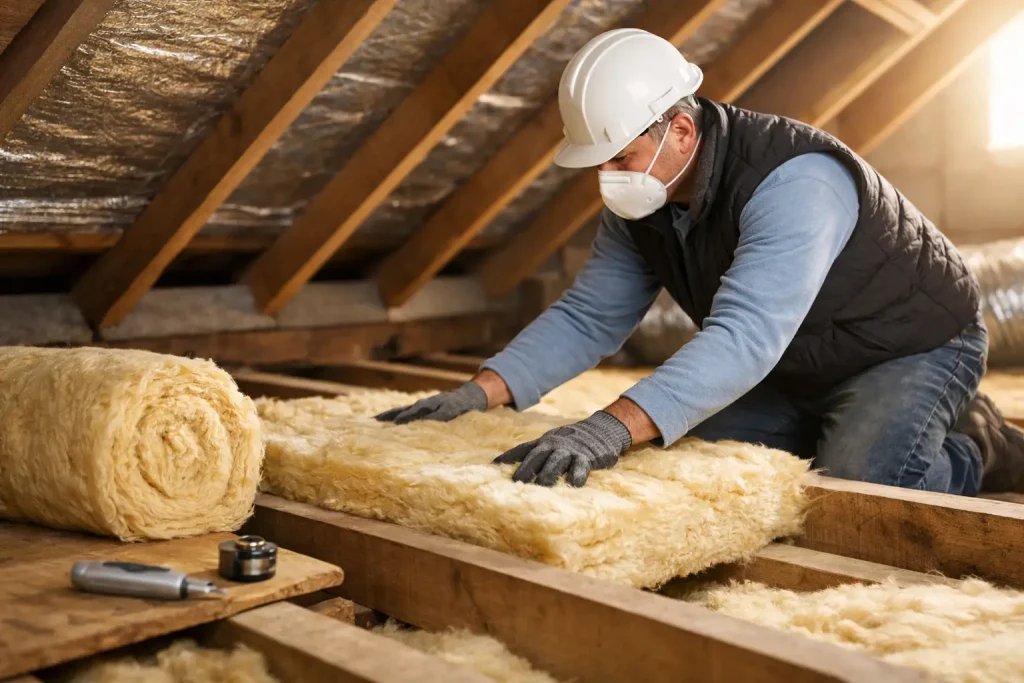
If your upstairs feels chilly in winter and stuffy in summer, your loft may be part of the problem. Knowing how to improve loft insulation properly is not just about adding more material and hoping for the best. The way insulation is installed, protected and worked around makes a real difference to comfort, storage space and heating bills.
For many homeowners, the loft is easy to forget until energy costs rise or boxes start piling up in spare rooms. Yet this space sits directly above the warmest part of the house, and if it is poorly insulated, a noticeable amount of heat can escape through the roof. Done well, loft insulation helps your home stay warmer for longer, reduces wasted energy and makes the loft more practical at the same time.
How to improve loft insulation without creating new problems
The first thing to understand is that more insulation is not always the whole answer. Depth matters, but so does condition, coverage and what sits on top of it. We often see lofts where insulation has been squashed flat under old boards or stored items, leaving homeowners with a false sense that the job has already been done.
Insulation works by trapping air within its structure. Once compressed, it loses a good part of that thermal performance. That means a loft can look insulated and still underperform badly. If you are trying to improve energy efficiency while keeping the space usable for storage, the aim should be to raise the boarding above the insulation rather than press it down.
This is especially important in newer homes. Where the property is still within its NHBC period, using the right raised boarding system helps protect both the insulation and the warranty. That is why specialist loft systems matter – they keep the insulation at the correct depth while still creating a secure platform for storage.
Start with the current condition of the loft
Before any improvement is made, the loft needs to be assessed properly. Not every loft loses heat for the same reason. In one property, the insulation may simply be too shallow. In another, it may be patchy, damp, disturbed or blocked around the eaves.
An older layer of insulation is not always useless, but it does need checking. Gaps around the edges, missing sections near pipework and flattened areas around boarded sections can all reduce performance. Even a decent amount of insulation can fail to do its job if warm air is escaping through poorly sealed hatches or if ventilation has been blocked.
That balance matters. A loft should be insulated well, but it should also be able to breathe. Good ventilation helps prevent condensation and moisture build-up, which can affect timber, insulation performance and the general health of the roof space. Improving insulation should never mean sealing the loft so tightly that damp problems start later.
The depth of insulation matters – but so does the layout
Current recommendations are far higher than what many older homes were originally fitted with. A lot of properties still have a thin layer that was acceptable years ago but no longer offers the standard of thermal protection most households need.
Topping up insulation can make a real difference, particularly where the original material has settled or where coverage is uneven. But the loft layout has to be considered as well. Water tanks, pipework, cables, downlights and access routes all affect how the insulation should be installed. It is not a case of laying it wall to wall without thought.
For example, pipes may need careful protection to reduce the risk of freezing in cold weather. Electrical fittings may require special attention depending on the type of light below and how much heat the fitting produces. The loft hatch itself is another common weak point. If the hatch is draughty or poorly insulated, warm air can escape even when the rest of the loft has been upgraded.
Storage is often where insulation goes wrong
A practical loft should not mean sacrificing thermal performance. This is where many homeowners run into trouble. They want to use the loft for storage, so standard boards are laid directly over the joists and insulation is compressed beneath them. It creates a flat surface, but it also reduces the very benefit the insulation was meant to provide.
A better approach is to create raised storage above the insulation. This allows the loft to stay energy efficient while still giving you usable, safe space for household items. It is one of the clearest examples of why specialist loft work pays off. You are not choosing between insulation and storage – you are making both work together.
This can also improve safety. A properly boarded loft with clear access is easier to use than balancing on joists or squeezing around uneven rolls of insulation. For families trying to clear bedrooms, free up cupboards or store seasonal items properly, that added usability matters just as much as the reduction in heat loss.
Access and insulation should be planned together
Improving insulation often highlights another issue – poor loft access. If the hatch is too small, the ladder feels unsafe or there is no proper walkway, the loft becomes awkward to use and difficult to inspect. That can lead to insulation being disturbed over time or parts of the loft simply being ignored.
When access is upgraded alongside insulation, the whole space tends to work better. A larger hatch, a secure loft ladder and a defined boarded area mean the loft is easier to enter, easier to use and less likely to suffer accidental damage. It also makes future checks much simpler, whether you are looking for signs of condensation, roof leaks or shifting stored items.
For homeowners who want a practical improvement rather than a short-term fix, this joined-up approach usually gives the best result. It keeps the loft efficient, usable and straightforward to manage.
Why a professional survey makes a difference
Every loft has its own limitations. Roof shape, joist depth, access points and existing materials all affect the best way forward. That is why a proper survey is so valuable. It helps identify not only how to improve loft insulation, but how to do it without damaging the loft’s usefulness or creating hidden issues.
A clear written quote also matters. Homeowners should know exactly what is being installed, how the storage area will be protected and whether the system is suitable for the age and type of property. Honest advice is especially important when a loft already has some insulation in place, because the right solution may be topping up, replacing damaged sections or raising existing boarding rather than starting from scratch.
At Loft Accessories, this sort of practical, straightforward assessment is a big part of doing the job properly. It means the recommendation fits the house, not just a generic specification.
Common mistakes homeowners should avoid
One of the biggest mistakes is assuming any boarded loft is a well-insulated loft. In reality, old boarding often hides flattened insulation underneath. Another is focusing only on insulation depth while ignoring weak spots such as the loft hatch, gaps at the edges or disturbed sections around stored belongings.
There is also the question of material condition. If insulation has been affected by damp, dirt or repeated compression, keeping it in place may not be worthwhile. And where homes have newer build warranties, using the wrong boarding method can cause problems that are easily avoided with the correct raised system.
Cost is another area where shortcuts can disappoint. A cheaper approach may seem fine on the day, but if it reduces thermal performance or leaves you with awkward, unsafe storage space, the value soon disappears. A loft should work properly for years, not just look tidy after installation.
What good loft insulation feels like in everyday life
The benefits are usually noticed in small ways first. Bedrooms feel less draughty. The heating does not need to work quite so hard. The house holds onto warmth for longer, especially during colder months.
Over time, the savings and comfort add up. For some households, the biggest improvement is lower energy waste. For others, it is finally having a loft that can be used without compromising the home’s thermal performance. Either way, good insulation tends to support the whole house, not just the roof space above it.
If you are weighing up whether it is worth doing, think beyond the insulation itself. A well-planned loft can give you better storage, safer access, lower heat loss and more confidence that the space above your ceiling is working for your home rather than against it.
The best results come from treating the loft as part of the house, not an afterthought. When insulation, access and storage are all considered together, the improvement is not just technical – it is something you feel every day.