
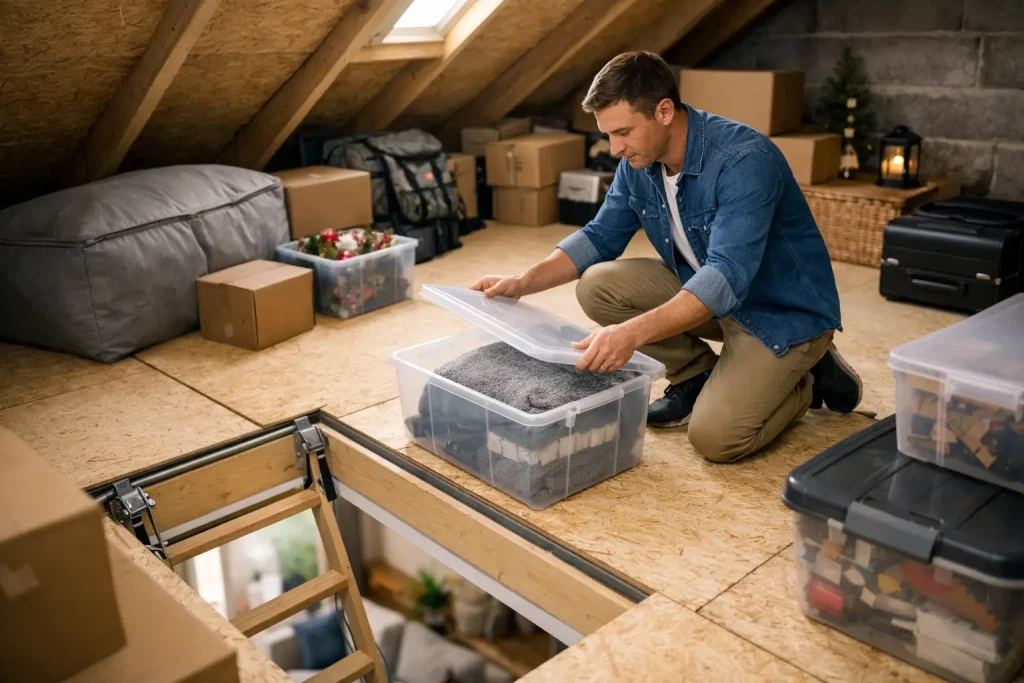
If your airing cupboard is packed, the spare room has become a dumping ground and seasonal items are creeping into everyday living space, the loft starts to look less like wasted space and more like a missed opportunity. That is exactly how loft boarding saves space – not by adding a new room, but by making an area you already own safe, usable and easy to access.
For many homeowners, the problem is not a lack of square footage. It is that the space they do have is poorly organised. When storage spills into bedrooms, landings and under-stairs cupboards, the whole house feels smaller. A properly boarded loft changes that. It gives you a dedicated place for the things you need to keep but do not need every day.
How loft boarding saves space in real terms
The biggest benefit is simple. Loft boarding turns an awkward, underused roof space into practical storage. Instead of balancing boxes on joists or avoiding the loft altogether, you gain a solid raised platform designed to hold household items safely.
That has a knock-on effect across the rest of the home. Suitcases can come out of wardrobes. Christmas decorations can leave the top of kitchen cabinets. Baby equipment, old paperwork, keepsakes and out-of-season clothing can all be stored overhead rather than spread through valuable living areas.
This matters most in family homes, where storage pressure builds over time. Children outgrow toys but you may want to keep them. Sports kit, schoolwork and bulky bedding all take up room. Loft boarding creates breathing space downstairs without forcing you to be ruthless about what stays and what goes.
It is also useful in homes where one room now serves several purposes. A guest room may also be a home office. A dining area may double as homework space. When the loft can take the overflow, the rooms below can work as intended.
Why an unboarded loft rarely helps
A lot of people assume they already have loft storage because there is technically space above the ceiling. In practice, that space is often hard to use well. Standard lofts can be uneven, poorly lit and difficult to access. More importantly, the insulation below should not be squashed under boards or storage boxes.
That is where specialist boarding makes the difference. Raised loft boarding is fitted above the insulation, allowing the insulation to do its job while still creating a stable deck for storage. In newer homes, this point is especially important. Using the right raised system, such as NHBC approved loft legs where required, helps protect both the insulation depth and the conditions of the property warranty.
So when people ask how loft boarding saves space, the answer is not just that it gives you somewhere to put boxes. It gives you a storage area that works properly, without compromising the thermal performance of your home.
Space saved downstairs feels bigger than space gained upstairs
One of the less obvious benefits of loft boarding is how much larger the rest of the house can feel afterwards. Even when no walls move and no floorspace is added, clearing clutter changes how rooms function.
A bedroom with clear floor space is easier to keep tidy. A landing without storage baskets feels safer and more open. Built-in wardrobes work better when they are not stuffed with items you only use once a year. The result is a home that feels calmer, more organised and easier to live in.
That is often why loft boarding appeals to long-term homeowners. It is a practical improvement rather than a disruptive one. You are making better use of what is already there, and the value shows up in daily life.
The role of safe access
Storage only saves space if you can use it easily. If the loft hatch is awkward, the ladder feels unsteady or the area is poorly lit, people tend to avoid using the loft properly. Items get left in hall cupboards and spare rooms because it is quicker than wrestling with difficult access.
A well-planned loft storage setup usually works best when boarding is considered alongside access. A secure loft ladder, a suitable hatch and proper lighting turn the loft from an inconvenience into a realistic part of the home. That is when the space becomes truly useful.
There is a practical point here too. Safe access reduces the temptation to store things carelessly near the hatch or to rely on unsafe footing in the loft itself. A professional installation should leave the space easier to use, not just technically boarded.
Not all loft space should be treated the same
There is no one-size-fits-all answer to storage in the loft. The amount of usable area depends on the roof structure, insulation depth, head height and how you plan to use the space. Some households need room for a few carefully packed items. Others want a larger boarded section to take the pressure off several rooms.
That is why good advice matters. In some properties, full boarding across a large area makes sense. In others, a more targeted section is the better option. The right outcome is the one that gives you useful storage while keeping ventilation, insulation performance and safe movement in mind.
This is also where specialist knowledge is worth having. A dependable loft company will explain what is suitable for your home, what is not, and why. Clear written quotes and honest recommendations are part of getting the result right.
Loft boarding and energy efficiency go hand in hand
Homeowners often come to loft boarding because they need more storage, then realise the loft is also affecting comfort and heating costs. If insulation is old, patchy or compressed, the house may be losing heat through the roof. That means the loft can influence more than just storage.
A properly raised boarding system allows insulation to remain effective underneath. If insulation is upgraded at the same time, you can improve the usefulness of the loft while helping the house stay warmer. That can make a noticeable difference, particularly in winter, when upper rooms often feel the impact of heat loss first.
So while the main question here is how loft boarding saves space, there is often a second benefit close behind – better thermal performance. It is a practical combination because you are not choosing between storage and efficiency. When installed correctly, you can have both.
A tidy solution that adds everyday value
The best home improvements are often the ones that remove friction from daily life. You notice them when getting ready for Christmas, clearing a child’s room, storing holiday cases or making space for guests. Loft boarding sits firmly in that category.
It helps you store things where they belong rather than wherever they fit. It reduces the clutter that slowly spreads into living areas. It can even make routine cleaning easier because there is less crowding in cupboards and corners downstairs.
For homeowners in places such as Milton Keynes, Bedford or Northampton, where many properties have loft space that is present but underused, boarding is often a sensible step. It is especially appealing if you want a straightforward upgrade carried out by a specialist who understands insulation, access and the importance of doing the work properly.
What to expect from a professional approach
A good loft boarding job should feel simple from the customer side. The property is assessed, the options are explained clearly and the quote sets out what is included. On installation day, the work should be tidy, safe and completed with care.
That matters because people are trusting someone to work in an important part of the home, often above bedrooms and hallways. Full insurance, clear communication and a specialist focus all help give peace of mind. Family-run companies such as Loft Accessories tend to understand that homeowners are not just buying boards – they are paying for reassurance that the space will be safe, reliable and fit for purpose.
There is also long-term value in using proper materials. Raised systems, suitable boarding products and a neat finish all contribute to a loft that stays usable for years rather than becoming another half-finished area that causes concern later.
A loft does not need to be fancy to be useful. It just needs to be safe, accessible and designed around the way you actually live. When that happens, the things cluttering up the rest of your home finally have somewhere sensible to go.