
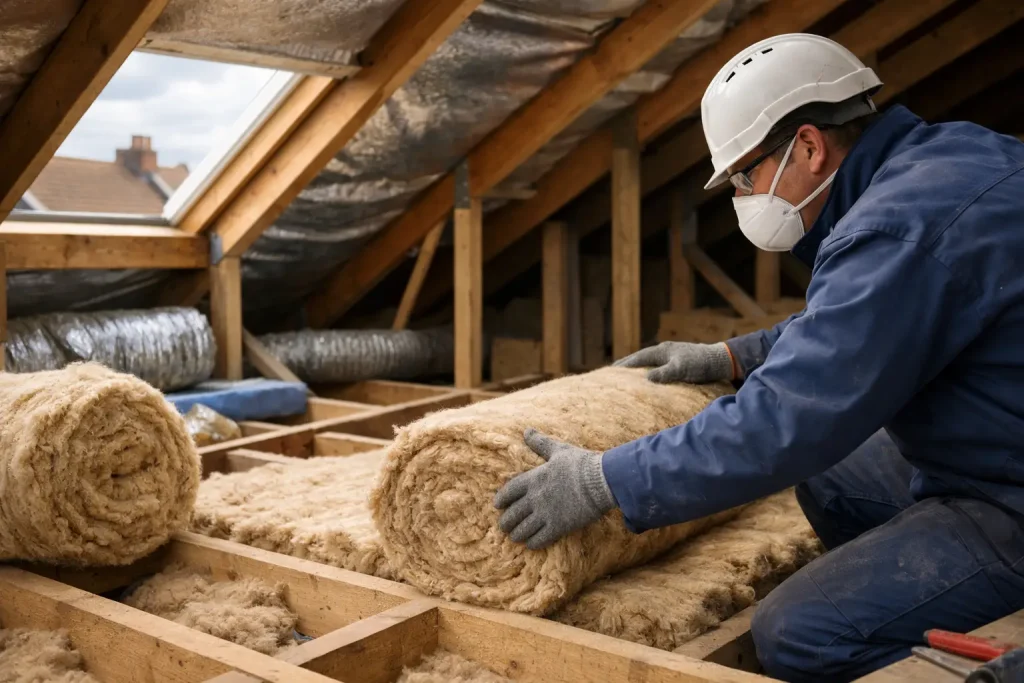
Cold bedrooms, draughty landings and heating bills that seem to climb every winter often have the same cause – too much heat escaping through the roof. A good home loft insulation guide should make this simple: keep the warmth in, improve comfort downstairs, and make sure your loft still works as a practical part of the house.
For many homeowners, the loft is easy to ignore because it is out of sight. But if insulation is thin, patchy or compressed, you can end up paying to heat the outside. That is especially frustrating when the loft could also be a safe, useful storage space. The right approach is not just about adding more material. It is about choosing the correct depth, protecting airflow where needed, and making sure any boarding sits above the insulation rather than squashing it flat.
Why loft insulation matters more than people think
Heat rises, and an uninsulated or poorly insulated loft lets a significant amount of that warmth escape. In practical terms, that means rooms below can feel harder to heat and slower to stay warm. You may notice the boiler running longer, cold ceilings upstairs, or a house that cools down quickly in the evening.
There is also a comfort factor that often gets overlooked. Proper loft insulation can help create more even temperatures across the home, so bedrooms and upstairs hallways feel less chilly in colder months. For households trying to manage energy costs without major building work, loft insulation is one of the more straightforward improvements with a clear day-to-day benefit.
It can also support the value of the property. Buyers increasingly pay attention to running costs and EPC performance, and insulation plays a part in that. It is not the only factor, but it is a sensible place to start if your loft has been neglected for years.
Home loft insulation guide: what to check first
Before any work is planned, it helps to understand what is already in the loft. Many homes have some insulation in place, but not always enough, and not always in good condition. Older layers may be uneven, disturbed, damp in places, or flattened by stored items and boards.
Depth is one of the first things to assess. If the insulation sits only level with the joists, it may not meet modern expectations for thermal performance. Many properties benefit from topping up insulation to a greater depth. That said, more is not automatically better if it is installed badly or blocks necessary ventilation.
Condition matters just as much. If insulation is clean, dry and properly laid, it may be suitable for upgrading. If it is compacted, torn or affected by moisture, it may need more careful attention. Damp patches should never be ignored, because insulation will not perform properly if there is an underlying issue with condensation or roof leaks.
Access also needs to be considered. A loft that is awkward or unsafe to enter often ends up underused, which is why insulation projects are best looked at alongside practical features such as safe access, lighting and appropriate boarding where storage is needed.
Choosing the right insulation depth
Current guidance for loft insulation in many homes typically points towards a much greater depth than older installations have. If your loft was insulated many years ago, there is a fair chance it falls short of what would now be considered effective.
The principle is simple enough. A first layer usually sits between the joists, and an additional layer goes across the top to reduce heat loss further. Where homeowners sometimes run into trouble is assuming they can board directly over this and still get the full benefit. In reality, compressing insulation reduces its performance. Once it is squashed down, it cannot trap heat as effectively.
That creates a common trade-off. You want a warmer, more efficient home, but you also want usable storage space. The answer is not to choose one or the other. It is to make sure the boarding is raised above the insulation so the loft remains functional without undermining the thermal improvement.
Storage and insulation need to work together
This is where many lofts fall short. Homeowners understandably want somewhere to store suitcases, decorations and family paperwork, yet standard boarding methods can press down on insulation and undo a lot of the benefit.
A raised loft boarding system avoids that problem by creating a platform above the insulation. This keeps the thermal layer at the right depth while still providing a stable area for storage. In newer homes, this point is particularly important. Using the correct approved supports helps protect the structure of the installation and avoids issues linked to compressing insulation in properties still covered by housebuilder warranties.
The best result usually comes from treating the loft as a complete system rather than a single job. Insulation, boarding, hatch access and ladders all affect how useful the space becomes. When these elements are planned together, the loft is safer, tidier and much easier to use.
Ventilation, condensation and other details that matter
Insulation should keep heat in the house, but the loft still needs suitable ventilation. Blocking eaves or restricting airflow can increase the risk of condensation, and that can lead to damp timbers, musty smells and reduced insulation performance.
This is why a proper survey matters. Every loft has its own quirks depending on roof shape, age of property and existing materials. Some need extra care around the eaves. Some have wiring, pipework or tanks that affect how insulation is laid. Others may already show signs that ventilation needs improving alongside the insulation work.
There is no single answer for every property. A 1930s house, a 1980s detached home and a newer estate property will not always need exactly the same approach. Good advice should be specific to the home rather than based on a one-size-fits-all recommendation.
When older insulation may need attention
Not all insulation has to be removed before an upgrade, but some lofts do benefit from a fresh start. If existing material is very uneven, badly compressed or affected by moisture, simply laying new insulation over the top may not solve the real issue.
Another point to consider is cleanliness and usability. A loft with poor access and decades of disturbed insulation can feel unpleasant and impractical. Bringing it up to standard can make the space far easier to manage, especially for families who want straightforward, safe storage without worrying about where to step.
If the loft contains old boards resting directly on joists, it is worth checking whether they are limiting insulation depth. Replacing an outdated arrangement with a raised system often gives a better long-term result than trying to work around it.
A practical home loft insulation guide for householders
For most homeowners, the process should be clear and stress-free. First comes an assessment of the current loft, including insulation depth, condition, access and any signs of damp or restricted ventilation. Then the options can be explained properly, including whether the insulation needs topping up, whether boarding should be raised, and what kind of access would make the loft easier and safer to use.
Written quotations are helpful here because they remove guesswork. You can see exactly what is being installed and how the work will be carried out. That matters when comparing prices, because a cheaper figure does not always include the details that protect performance, such as raised boarding or suitable clearance above the insulation.
Good installation should also be tidy and respectful of the home. Most customers are not looking for disruption. They want the work done properly, on time and with clear communication throughout. That is often the difference between using a loft specialist and using a general tradesperson who only tackles this kind of work occasionally.
In areas such as Milton Keynes and the surrounding towns, many homes have lofts with good storage potential but poor thermal performance. Improving both together makes far more sense than treating them as separate jobs months or years apart.
What a well-insulated loft should feel like
You may not walk into your loft and think about insulation every day, but you will usually notice the effects in the rooms below. The house should feel more stable in temperature, with less heat disappearing overnight. Bedrooms can feel less chilly, and the heating should not have to work so hard to maintain comfort.
Just as importantly, the loft itself should feel usable. A proper access point, a secure ladder and a raised boarded area can turn an awkward dead space into something genuinely practical. That is a far better outcome than a loft that is technically insulated but impossible to use without disturbing the material.
The right insulation job is rarely about one product alone. It is about creating a loft space that protects warmth, supports storage and suits the way your household actually lives. If your loft has been overlooked for years, a careful assessment is often the first step towards a warmer, tidier and more efficient home.