
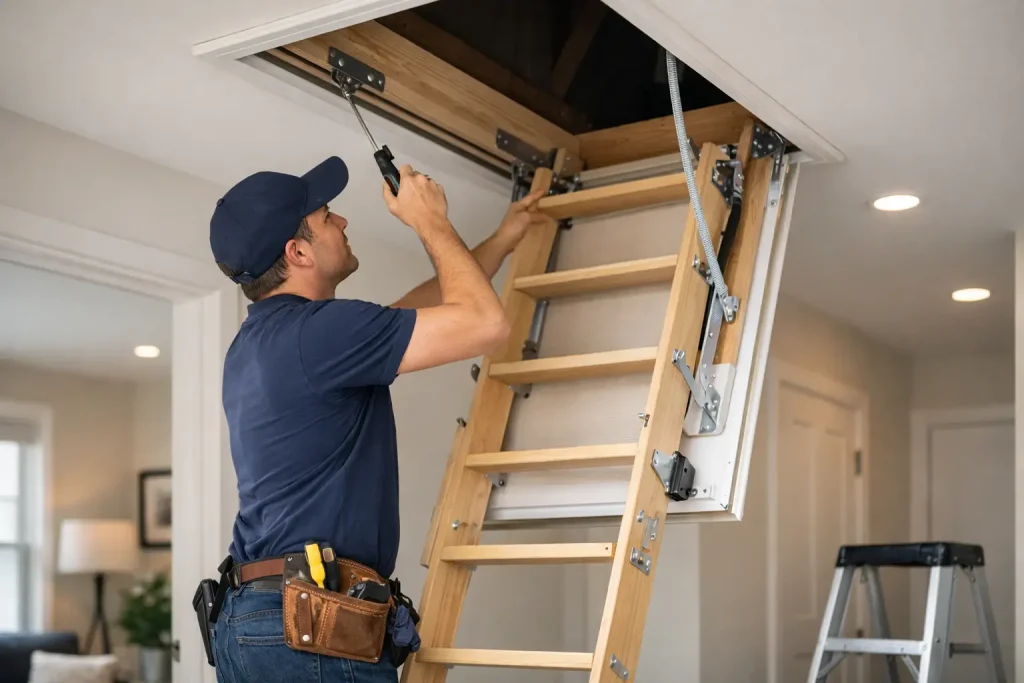
That awkward moment when you need something from the loft and hesitate at the hatch tells you a lot. If access feels unsafe, awkward or like a balancing act with a stepladder, Bedford loft ladder installation is usually less about convenience and more about making your home work properly.
For many households, the loft is valuable storage space that is barely used because getting up there is such a nuisance. A well-fitted loft ladder changes that immediately. It gives you safe, straightforward access, makes day-to-day storage far more practical and, when planned properly, works neatly with insulation and boarding rather than against them.
Why Bedford loft ladder installation matters
Most people do not think about their loft ladder until the existing setup becomes a problem. Sometimes there is no ladder at all. Sometimes there is an old folding model that feels unsteady underfoot. In other homes, the hatch opening is too small, the ladder is awkward to use or the loft itself is only partly accessible.
The issue is not simply getting from the landing to the loft. Good access affects how often you use the space, how safely you can move boxes or decorations, and whether the area becomes useful storage rather than wasted square footage above your ceiling.
There is also a knock-on effect on insulation and energy efficiency. If a loft hatch is poorly fitted or draughty, warm air from the house can escape into the loft. If access is difficult, homeowners are also less likely to make full use of proper raised boarding and insulation improvements. In that sense, a loft ladder is often part of a bigger upgrade that helps a home feel more organised and more efficient to run.
What makes a good loft ladder installation
A good installation starts with suitability, not speed. The right ladder depends on the height from ceiling to loft floor, the space available on the landing, the size and position of the hatch, and how regularly the loft will be used.
In a typical family home, the best result is usually a ladder that feels stable, opens smoothly and stores neatly without taking over the landing. The hatch should close properly, the frame should be fitted cleanly, and the ladder should be comfortable to climb while carrying lighter household items.
This is where specialist fitting matters. A ladder that looks fine on paper can be wrong in practice if it clashes with a door swing, needs more clearance than the landing allows or leaves the user climbing at an awkward angle. The aim is not just to install a ladder. It is to create safe, reliable access that suits the house and the people living in it.
Choosing the right type of loft ladder
There is no single best option for every property. Timber ladders remain popular because they feel solid and are often a good fit for regular use. Aluminium ladders are lightweight and practical, particularly where a compact design is needed. Concertina and sliding models can suit tighter spaces, although they may not feel quite as comfortable underfoot as a more substantial timber option.
The trade-off usually comes down to space, comfort and frequency of use. If you only need occasional access for lighter storage, a compact ladder may be perfectly suitable. If the loft is used more often, many homeowners prefer something sturdier and easier to climb.
Hatch size also matters. Some homes can use the existing opening, while others benefit from enlarging it to improve access and make the ladder more practical. That depends on the structure of the property and the layout around the hatch. Done properly, this can make a noticeable difference to usability without turning the job into something unnecessarily disruptive.
The loft hatch is part of the job
A loft ladder should never be considered in isolation from the hatch itself. If the hatch is flimsy, badly insulated or poorly located, replacing or upgrading it at the same time often makes sense.
A modern hatch can improve ease of use and help reduce draughts. For households trying to keep heating bills under control, that matters. Warm air rises, and any weak point at ceiling level can work against the rest of your insulation.
A tidy, well-sealed hatch also improves the finish visually. It is one of those details that sounds small but makes the final result feel properly done. Homeowners generally want practical improvements that blend into the home, not something that looks like an afterthought on the landing ceiling.
Bedford loft ladder installation and storage planning
In many cases, the real benefit of Bedford loft ladder installation appears when it is considered alongside storage use. A ladder on its own improves access, but access to what exactly? If the loft floor is not suitable for storage, or if insulation has been laid in a way that leaves no clear platform, the ladder only solves part of the problem.
That is why specialist advice is useful. A loft can often be made safer and more usable with raised boarding above insulation, creating proper storage space without compressing the insulation below. In newer homes especially, that detail matters because the wrong approach can affect thermal performance and, in some cases, warranty compliance.
For homeowners, the practical outcome is simple. You want to open the hatch, climb up safely and place items on a solid, usable area. Christmas decorations, suitcases, archived paperwork and keepsakes all need stable storage, not a patchwork of joists and insulation rolls.
What to expect from a professional survey
The best loft ladder installations begin with a proper look at the space. That means checking measurements, headroom, landing clearance, hatch position and the general condition of the loft access area.
It is also the stage where honest advice matters most. In some homes, the ideal ladder is not the most expensive one. In others, a straightforward ladder replacement is not enough because the hatch needs attention too. A good specialist explains the options clearly, points out any limitations and gives a written quote so the cost is clear from the outset.
For homeowners in and around Bedford, that kind of clarity is often what separates a dependable service from a rushed one. You are not just paying for parts. You are paying for a fitting that works properly, looks neat and gives you confidence every time you use it.
Safety, finish and peace of mind
Loft access should feel secure. The ladder should sit correctly, the fixings should be sound and the hatch should open and close without sticking or dropping awkwardly. Small details matter here. A ladder that rattles, shifts or feels too steep can quickly put people off using the loft again.
Finish matters too. Most homeowners are not looking for disruption. They want punctual service, tidy workmanship and a result that feels like a sensible improvement to the house. That includes protecting the home during the work, completing the installation cleanly and leaving the area ready to use.
Insurance and experience also count for something. When work is being carried out above the landing ceiling, people want reassurance that the job is in professional hands. That is especially true if the installation forms part of a wider plan to improve loft storage and thermal performance over time.
When is the right time to install a loft ladder?
Usually, the right time is when the loft is underused because access is poor, or when household clutter starts spreading into bedrooms, cupboards and the garage. It can also make sense before winter if you are already thinking about insulation and heat loss, because loft access and loft efficiency often go hand in hand.
Families often reach this point gradually. The house has enough space in theory, but not enough practical storage in the rooms you use every day. A proper loft ladder can help you reclaim that overhead space without fuss.
If you are already wary of the current hatch arrangement, that is reason enough to look into it. A home improvement does not need to be dramatic to be worthwhile. Sometimes the best upgrades are the ones that quietly solve an everyday annoyance and keep doing their job for years.
For households that want a safer, tidier and more useful loft, the smartest next step is usually a straightforward survey and clear advice. When access is planned properly, the loft stops being an awkward void above the ceiling and starts earning its place in the home.