
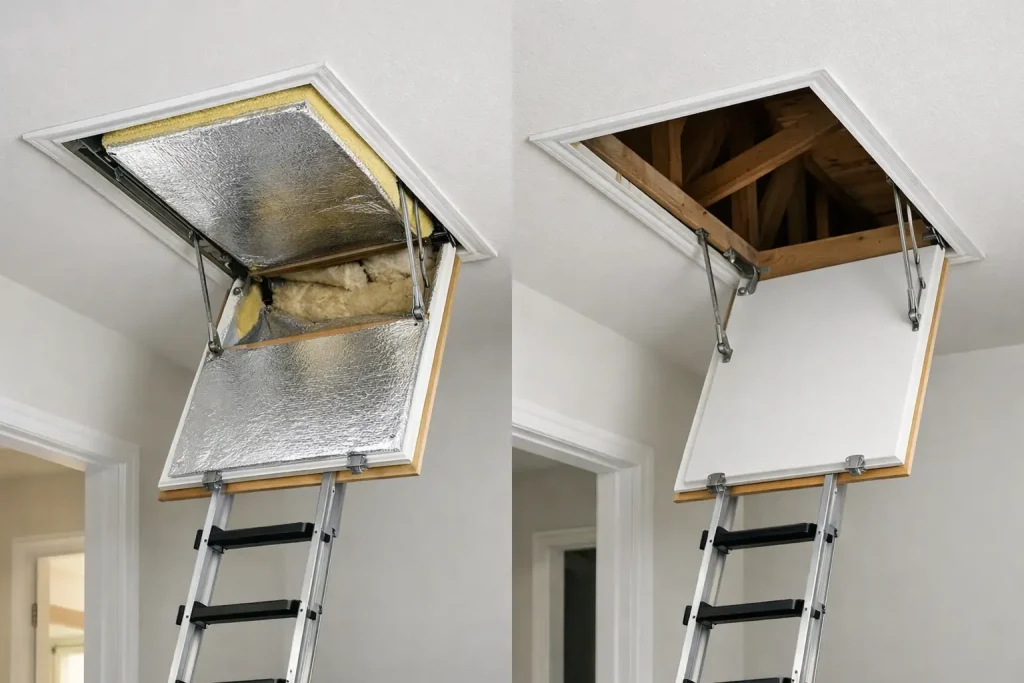
A loft hatch might look like a small detail, but it often sits right in the middle of your home’s thermal envelope. When homeowners compare an insulated vs non insulated loft hatch, they are usually trying to answer a very practical question: will this make a noticeable difference to comfort and heating bills, or is it just an upgrade that sounds good on paper?
In many homes, the answer is straightforward. If the loft itself is unheated, the hatch should help keep warm air in the rooms below and cold air in the loft where it belongs. A poorly fitted or non insulated hatch can become a weak spot, letting heat escape and making the landing feel colder than it should.
Insulated vs non insulated loft hatch – what is the difference?
A non insulated loft hatch is exactly what it sounds like. It provides access to the loft, but it does very little to slow heat transfer. Older hatches are often just a thin timber panel or basic board sitting over the opening, sometimes with gaps around the frame and no real seal.
An insulated loft hatch is built to reduce heat loss through the opening. That usually means the hatch itself includes insulating material and the frame is designed to fit more tightly, often with draught sealing around the edges. Some also have a better drop-down or push-up mechanism that helps the hatch close more securely.
The key point is not only the insulation within the hatch panel. It is also about air leakage. Even a decent hatch can underperform if warm air is escaping around the perimeter. In real homes, draughts and poor fit are often just as much of a problem as the hatch material itself.
Why the hatch matters more than people expect
Most homeowners think first about loft insulation depth, and rightly so. That is where the biggest energy-saving gains tend to come from. But once the main insulation is in place, the hatch can stand out as a relatively small area with disproportionately poor performance.
Warm air rises. If that warm air reaches an unsealed loft opening, it will find the easiest route out. You might notice colder air on the landing, a slight draught beneath the hatch, or even condensation around the frame. None of that is ideal, especially during winter.
This is why a loft hatch should be looked at as part of the whole loft access setup, not as a separate afterthought. If you have invested in proper loft insulation, safe boarding and improved access, it makes sense for the hatch to support those improvements rather than undermine them.
The case for an insulated loft hatch
For most homes, an insulated hatch is the better long-term option. It helps reduce heat loss, improves comfort and creates a more complete barrier between the living space and the colder loft above.
That does not mean every insulated hatch delivers the same result. Quality of installation matters. A hatch with insulation but a poor fit can still leak warm air. A properly fitted system with effective seals is what makes the real difference.
Homeowners often notice the benefit in the most ordinary parts of daily life. The upstairs landing feels less chilly. Bedrooms near the loft opening are more comfortable. Heating does not need to work as hard to maintain a steady temperature. You may not stand under the hatch and think about it again, which is usually a sign the job has been done properly.
There is also the question of condensation. When warm, moist air from the home passes into a colder loft space, it can contribute to damp problems over time. Reducing uncontrolled air movement at the hatch is one sensible part of protecting the loft environment.
When a non insulated loft hatch might still be found
Non insulated hatches are common in older properties, and sometimes in homes where the loft access has simply never been upgraded. In some cases, they remain because they still open and close, so replacing them has never reached the top of the list.
There are also situations where homeowners assume the hatch does not matter because the rest of the loft has been insulated. Unfortunately, that is a bit like fitting good windows but leaving the front door ajar. The main insulation can be doing its job while the hatch still allows avoidable heat loss.
A basic hatch may be acceptable in a very limited sense if there are no comfort complaints and the opening is relatively well sealed. Even then, it is rarely the best option. If you are already reviewing loft access, adding ladders, or improving insulation levels, it makes little sense to keep a hatch that is clearly the weak point.
Insulated vs non insulated loft hatch for energy efficiency
When people ask whether an insulated loft hatch saves money, the honest answer is that it helps rather than transforms. It is unlikely to cut bills dramatically on its own, but it does contribute to overall efficiency, particularly in homes where heat loss through the hatch is obvious.
The benefit becomes more meaningful when combined with other loft improvements. Properly installed loft insulation, raised boarding that does not compress the insulation, and a well-fitted insulated hatch all work together. That joined-up approach is usually where the best value lies.
For homeowners thinking about energy performance, this matters beyond monthly bills. A better-insulated home is generally more comfortable to live in and more attractive to future buyers. Practical upgrades that reduce wasted heat tend to age well.
Comfort, draughts and everyday use
The biggest difference many households notice is not on a spreadsheet. It is comfort. A non insulated hatch can create a cold patch in the home, especially on the top floor. If the landing or upstairs hallway always feels cooler than the rest of the house, the loft hatch may be part of the reason.
There is also the issue of usability. Older hatches can be awkward, heavy or poorly balanced. If they do not sit neatly in the frame, they are more likely to let warm air through. A modern insulated hatch can improve access while also addressing heat loss, which is a far better outcome than treating those as separate problems.
For families using the loft for storage, that balance matters. You want safe, simple access without compromising the thermal performance of the home below.
What to consider before choosing
The right choice depends on the age of the property, the current condition of the hatch, how the loft is used and whether other loft upgrades are planned. In truth, the insulated option is the right answer for most households, but there are still a few practical considerations.
First, look at the existing fit. If there are visible gaps, signs of draughts or staining from condensation, the hatch is already telling you it is underperforming. Second, think about the bigger picture. If the loft insulation has been improved, the hatch should keep pace. Third, consider access. If the current opening is small, awkward or not particularly safe to use, replacing the hatch can solve more than one problem at once.
In newer homes, care also needs to be taken when adding loft boarding around the access point. Raised systems that protect insulation depth are especially important where homeowners want storage without compromising performance. That is one reason specialist loft companies tend to recommend solutions that work together rather than isolated fixes.
Is it worth upgrading an old hatch?
In many cases, yes. If your current loft hatch is thin, draughty or badly fitted, upgrading it is usually worthwhile. The gain is not just energy related. It can improve comfort, reduce cold spots and create a neater, more secure opening.
A proper assessment helps here. Some hatches need complete replacement, while others may only seem serviceable because they have been there for years. What matters is how well they perform now, not how long they have lasted.
For homeowners in Milton Keynes and surrounding areas, this is often part of a wider conversation about making better use of loft space while keeping the home warm and efficient. Loft Accessories regularly sees cases where the hatch has been overlooked for years, even though it is one of the easiest places to improve the overall result.
The better option for most homes
If you are weighing up an insulated vs non insulated loft hatch, the practical answer is that insulated is usually the better investment. It supports the work your loft insulation is already doing, helps reduce draughts and improves comfort in the rooms below.
The real value comes from getting the full setup right – a well-fitted hatch, effective sealing, safe access and insulation that performs as it should. When those elements are handled properly, the loft becomes easier to use and the house below feels better for it.
A loft hatch should not be the reason warm air leaves your home. If it is, that small opening deserves more attention than it gets.