
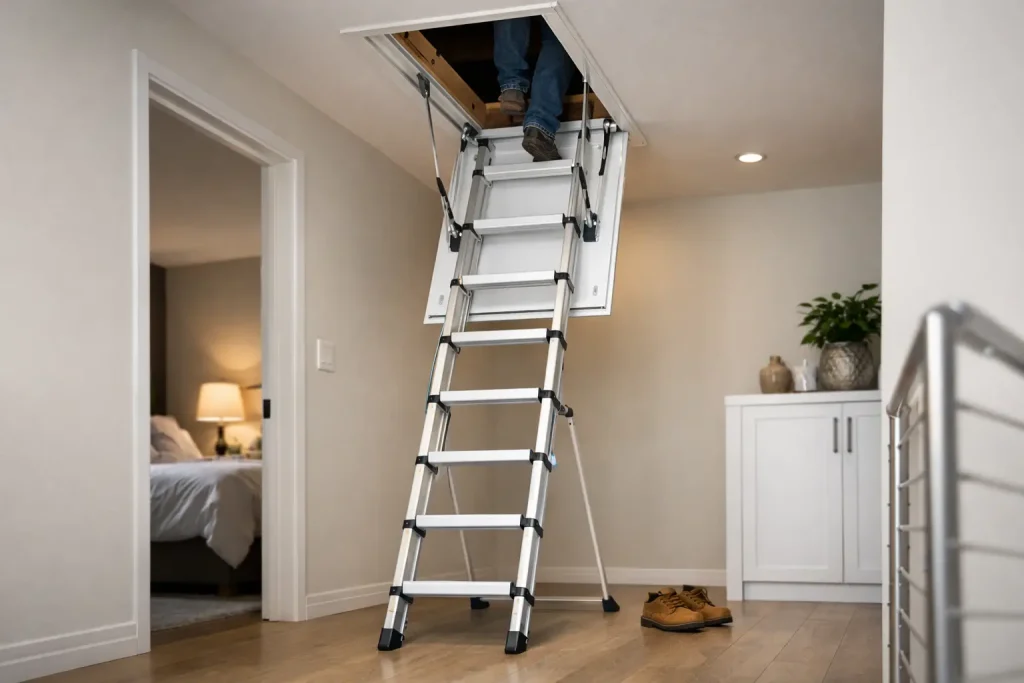
A loft ladder often gets noticed only when it feels awkward, wobbly or harder to use than it should be. That is usually the point where safe loft ladder access stops being a nice extra and becomes a real household priority. If you use your loft for storage, getting up there should feel steady, simple and well planned, not like a balancing act with a torch and a box in your hand.
For most homeowners, the issue is not just the ladder itself. Safe access depends on how the ladder, hatch, loft space and flooring work together. A decent ladder fitted to a small hatch, poor lighting or an unboarded loft can still leave the space inconvenient and risky to use. When the whole setup is considered properly, the loft becomes much more practical and far safer for everyday storage.
What safe loft ladder access really means
In straightforward terms, safe loft ladder access means you can reach your loft without unnecessary strain, poor footing or makeshift solutions. It should allow you to climb up and down confidently, open and close the hatch without difficulty, and move stored items in a controlled way.
That sounds obvious, but plenty of lofts still rely on outdated arrangements. Heavy hatches, narrow openings, steep steps and unstable pull-down ladders are common in homes where the loft was never designed for regular use. Even where a ladder is already in place, it may not suit the household now using it. A young family storing seasonal items, for example, has very different needs from an older couple who want easy access without overreaching or awkward climbing.
A safe setup usually includes the right ladder style, a suitable opening, reliable fittings and a loft area that can actually be used once you get up there. There is little benefit in fitting better access if the first thing waiting above is compressed insulation, uneven joists or nowhere safe to stand.
Why the right ladder matters more than people think
Not all loft ladders are equal, and the cheapest option is rarely the best one if the loft will be used regularly. The key point is matching the ladder to the home and the people using it.
Timber ladders are often chosen for their solid feel underfoot. They can provide a reassuring climb and are popular in family homes where the loft gets used often. Aluminium ladders are also widely used and can be an excellent choice where a lightweight, durable solution is needed. The right answer depends on the ceiling height, available landing space, hatch size and how frequently access is required.
Comfort on the climb matters more than many people expect. Step depth, ladder angle and handhold position all affect how secure the ladder feels. If the angle is too steep or the treads are too narrow, carrying anything becomes more difficult. That can lead to rushed movements and poor footing, which is where accidents happen.
There is also the matter of operation. A loft ladder should open and close smoothly, without sticking, dropping suddenly or needing excessive force. If it is fiddly to use, people put off using the loft properly or start taking shortcuts. Neither is ideal.
Safe loft ladder access starts with the hatch
A loft hatch can be the weak point in the whole arrangement. Older hatches are often small, draughty and inconveniently placed. Even with a good ladder beneath them, they can make access feel cramped and uncomfortable.
A larger hatch opening can make a significant difference, especially if you are storing bulky household items such as suitcases, Christmas decorations or archived paperwork. It improves visibility, gives more room to move and makes climbing through the opening less awkward. That extra space can be especially valuable in homes where the loft is used little and often rather than just once or twice a year.
Insulation and draught-proofing matter here too. The loft hatch is part of the thermal envelope of your home, so it should not become a source of heat loss. A properly fitted, insulated hatch helps preserve warmth while still giving reliable access above. That is one reason specialist installation tends to give better long-term results than piecemeal fixes.
The loft itself needs to be safe once you arrive
One of the most overlooked parts of safe loft ladder access is what happens at the top. Reaching the loft is only half the job. You also need somewhere stable to step onto, enough headroom to move carefully, and storage arranged in a way that does not create trip hazards.
This is where loft boarding often becomes part of the conversation. If boards are laid correctly above the insulation, you create a usable storage platform without compressing the insulation below. In newer properties, that matters for both performance and compliance. Using NHBC approved loft legs in suitable homes keeps the boarding raised, protects the insulation depth and helps preserve the validity of the NHBC warranty.
That balance is important. Homeowners want storage, but not at the expense of energy efficiency. A loft should help the house work better overall, not become a source of heat loss because the insulation has been flattened to make room for boxes.
Good lighting also makes a real difference. Even a quality ladder feels less safe if the loft space above is dim and difficult to navigate. Clear visibility reduces hesitation and makes it easier to place your feet correctly, particularly when stepping off the ladder.
Common signs your current access is not safe enough
Many households get used to poor loft access over time, which means problems are often ignored until someone has a near miss. There are some clear signs that the setup needs attention.
If the ladder feels unstable, too steep or difficult to operate, it is not doing its job properly. The same applies if the hatch is too small for comfortable movement or if there is no proper boarded area at the top. You should also take notice if using the loft requires overreaching, twisting awkwardly or stepping straight onto joists.
Sometimes the issue is not obvious until the loft starts being used more often. A family may begin by storing only a few lightweight items, then gradually rely on the space more heavily. What once felt acceptable can quickly become inconvenient and unsafe when access becomes frequent.
Older homeowners often notice this first. A ladder that was manageable years ago may no longer feel comfortable, especially if the climb is steep or the hatch is awkward to handle. Better access can make a real difference to confidence as well as safety.
Why professional fitting makes such a difference
Safe loft ladder access is about more than attaching a ladder to an opening. The fit needs to be right for the property, the loft structure and the way the space will be used. Poor alignment, weak fixings or a badly chosen ladder can affect the stability of the whole system.
A specialist will look at ceiling height, available clearance, hatch position, insulation levels and the condition of the loft itself before recommending the right option. That leads to a setup that works in practice, not just one that looks acceptable on paper.
It also helps avoid false economy. Homeowners sometimes replace one part of the access arrangement without addressing the rest, only to find the loft is still awkward to use. A proper survey gives a clearer picture from the start. It means you can make informed choices, understand the costs upfront and avoid paying twice for work that should have been planned together.
For homeowners in Milton Keynes and surrounding areas, this is often where a local specialist adds the most value. Clear advice, a written quote and insured installation offer peace of mind that the work will be carried out properly and leave the home tidy and fully usable.
Choosing a setup that suits everyday life
The best loft access solution is not always the biggest or most expensive one. It is the one that fits the household. If the loft is used every week, comfort and ease of operation become especially important. If access is only occasional, a different style may be perfectly suitable, provided it still feels secure and practical.
It also depends on what is being stored. Light seasonal items create one type of demand. Heavier household storage places another. The ladder, hatch and boarded area should all reflect that reality.
A good installation should feel unremarkable in the best possible way. You should be able to pull the ladder down, climb up, retrieve what you need and come back down without thinking twice about your footing. That is what proper access is meant to achieve.
When a loft is safe to reach, it becomes far more useful. It stops being wasted space and starts working as part of the home. If your current setup feels awkward, cramped or unreliable, it is worth sorting sooner rather than later – because the safest loft ladder is the one you can trust every time you use it.