
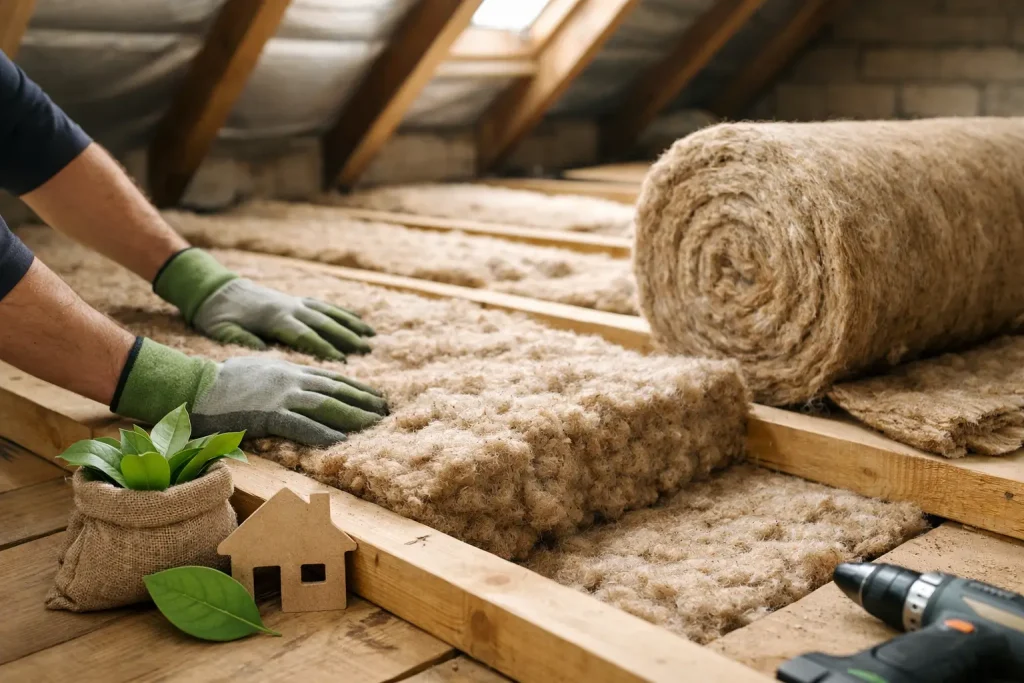
Heating a home only for warmth to drift straight through the roof is frustrating, especially when energy bills keep climbing. Eco friendly loft insulation gives homeowners a practical way to hold on to more heat, make rooms feel more comfortable, and reduce the environmental impact of the property at the same time.
For many households, the loft is easy to forget about until winter sets in or storage becomes a headache. But what sits beneath your loft boards, and how it has been installed, has a direct effect on both running costs and usable space. Good insulation is not just about adding more material. It is about choosing the right product, fitting it properly, and making sure the loft still works safely as a storage area.
Why eco friendly loft insulation matters
A large amount of household heat is lost through an under-insulated roof. That means your heating system has to work harder to maintain the temperature you want, which leads to higher bills and unnecessary waste. Eco friendly loft insulation tackles that problem while also reducing reliance on materials with a heavier environmental footprint.
That said, not every so-called green insulation product is right for every home. Some materials score well on recycled content but are less suitable where moisture control is a concern. Others perform very well thermally but may cost more upfront. The best choice depends on the age of the property, the current loft set-up, ventilation, and whether the loft needs to remain accessible for storage.
For most homeowners, the aim is simple enough. You want a warmer home, lower heat loss, and a loft space that remains safe and usable. The insulation should support that, not create fresh problems.
What makes loft insulation eco friendly?
When people talk about eco friendly loft insulation, they usually mean one or more of three things. The material may be made from recycled or renewable sources, it may require less energy to produce, or it may help reduce long-term energy use in the home so effectively that the overall environmental benefit is clear.
Natural and recycled fibre products often appeal to homeowners who want a lower-impact option. Sheep wool, recycled plastic fibre, cellulose made from recycled paper, and certain wood fibre products are commonly discussed in this category. They can offer good thermal performance, and some are pleasant materials to work with in the right setting.
However, being eco friendly does not only come down to the raw material. Longevity matters. Performance over time matters. Proper installation matters. If insulation is compressed, poorly fitted, or affected by damp, it will not perform as intended, whatever its green credentials may be.
The main options for eco friendly loft insulation
A lot depends on the loft itself. In a straightforward domestic loft, the most suitable products are often mineral-based rolls, recycled fibre insulation, or natural fibre materials. Each has strengths and trade-offs.
Recycled plastic insulation is often chosen because it makes use of waste materials and can provide solid thermal performance. It is also less itchy to handle than some traditional alternatives, which some homeowners prefer. Cellulose insulation, made largely from recycled paper, is another option with a strong sustainability story. It can work well, but it needs to be selected and installed with care, especially where moisture management is important.
Sheep wool is attractive for households looking for a more natural product. It has good insulating qualities and can help regulate moisture, but it is usually more expensive than mainstream options. Wood fibre can also be effective, though it is not always the most practical or cost-effective choice for every loft.
In many homes, the right answer is not simply the most natural material on paper. It is the insulation that fits the property well, performs reliably, and works alongside safe loft access and raised boarding where storage is needed.
Eco friendly loft insulation and storage need to work together
This is where many lofts fall short. Homeowners understandably want better insulation but also need somewhere to store boxes, suitcases, decorations, or family items. The problem comes when boards are laid directly on top of the insulation, squashing it down.
Compressed insulation cannot trap heat as effectively. That means you pay for insulation you are no longer getting the full benefit from. It can also affect airflow in the loft and create issues over time. In newer properties, poor boarding methods may even risk affecting certain warranty conditions.
The better approach is to raise the boarding above the insulation using the correct support system. This keeps the thermal layer at the proper depth while still providing a stable platform for storage. It is a practical detail, but it makes a real difference. There is very little point investing in eco friendly loft insulation if it is then flattened to make room for storage.
Getting the right insulation depth
One of the most common issues in older lofts is simply not having enough insulation. A thin layer that may once have been acceptable often falls well short of modern expectations. Topping up insulation can improve comfort noticeably, but more is not always better if it is done without thinking about the rest of the loft.
Ventilation still needs to be protected. Electrical fittings may need consideration. Pipework and tanks, where present, need to be assessed properly. Access routes should remain safe. This is why a proper survey matters. A loft is rarely just an empty shell. It is part of the home’s overall performance, and each element affects the others.
Will eco friendly loft insulation save money?
In many cases, yes. Better loft insulation can reduce heat loss and help the home hold a steady temperature for longer. That can bring down heating demand and ease pressure on monthly bills. The exact saving depends on the size of the property, the age of the home, how much insulation is already there, and how efficiently the house is heated.
It is also worth looking beyond bills alone. A well-insulated loft can improve day-to-day comfort, particularly in bedrooms and upstairs rooms that tend to feel cold in winter or uneven in temperature. It may also support the home’s EPC rating, which matters to many long-term homeowners and can be a useful consideration if you plan to sell in future.
The upfront cost can vary depending on the material chosen and whether the work also includes raised boarding, a loft ladder, or a hatch upgrade. For most households, the best value comes from treating the loft as a whole rather than as separate problems.
What to look for in a proper installation
A good result starts with clear advice. Homeowners should be told what is already in the loft, whether it is performing well, what material is suitable, and how any storage requirements will be handled. Honest recommendations are important here because some lofts need more than a simple insulation top-up, while others may not benefit from expensive upgrades that sound impressive but add little in practice.
Clean installation matters too. Insulation should be fitted neatly and evenly, without blocking ventilation paths or creating awkward gaps. If the loft is used for storage, the boarding should be raised correctly so the insulation can do its job. Access should feel safe and sensible, not like an afterthought.
For homeowners in and around Milton Keynes, that specialist approach can save a lot of future frustration. Loft spaces are often treated casually, but when they are assessed properly, insulated properly, and boarded properly, they become far more useful.
Is one material best for every home?
No, and that is where a lot of online advice becomes too simplistic. A homeowner in a newer build with a need for protected storage may have very different priorities from someone in an older property with no boarding at all. Budget matters. Existing loft condition matters. Moisture levels matter. Even how often the loft is accessed can influence the right solution.
The best eco friendly loft insulation is the one that balances thermal performance, environmental impact, practicality, and long-term reliability for your specific home. Sometimes that means choosing a highly recycled product. Sometimes it means selecting a proven insulation system that works well with raised boarding and safe access. What matters most is getting a result that performs properly once the job is finished.
A loft should help your home, not quietly work against it. If your upstairs rooms are hard to heat, your bills feel higher than they should, or your loft storage has been built on top of flattened insulation, it is worth taking a closer look. The right insulation choice can make the house feel better day after day, and that is usually where the real value shows.