
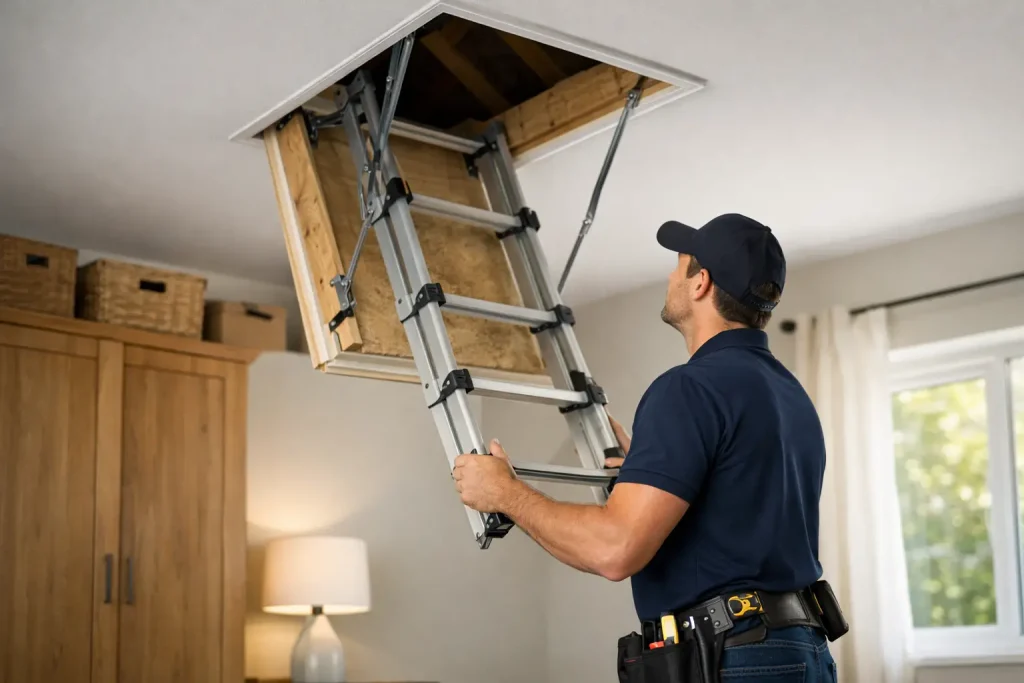
When a loft is awkward to reach, most households stop using it properly. Boxes pile up in spare rooms, seasonal items stay in the way, and what should be useful storage becomes wasted space overhead. Good Oxford loft access solutions fix that problem in a practical way, making the loft safer to reach, easier to use and more worthwhile all year round.
For most homeowners, the issue is not just getting into the loft. It is whether the whole setup works sensibly once you are there. A narrow hatch, a shaky ladder or compressed insulation can turn a simple storage area into a nuisance. The right solution needs to balance access, safety, storage and energy efficiency rather than treating each part as a separate job.
What good loft access should actually achieve
A proper loft access setup should do three things well. It should let you reach the space safely, give you somewhere stable to store belongings, and help the house retain heat instead of letting it escape through the ceiling.
That is why the best results usually come from looking at the loft as a complete system. A new hatch on its own may improve entry, but if the boarding crushes insulation beneath it, you lose performance where it matters. In the same way, extra insulation helps with heat retention, but it becomes less useful if the loft remains difficult to access and people avoid using it.
For families, busy working households and long-term property owners, the best approach is usually one that makes daily life simpler. You want to put things away without dragging a stepladder across the landing, and you want confidence that the loft is safe to use whenever you need it.
Oxford loft access solutions for modern homes
Many newer homes come with lofts that are technically available but not truly usable. The hatch may be small, access may feel awkward, and the insulation depth may leave little room for practical boarding. That often leads to a familiar problem: homeowners have storage potential above them but no safe, sensible way to benefit from it.
This is where specialist Oxford loft access solutions make a real difference. Rather than forcing storage boards directly onto insulation, a raised system keeps the boarding above it. That matters because compressed insulation cannot perform as intended. In new-build properties especially, using NHBC approved loft legs helps protect the insulation layer while maintaining a suitable platform for storage.
That detail is easy to overlook, but it has real consequences. If a loft is boarded incorrectly in a newer property, it can create issues for thermal performance and may affect the validity of the NHBC 10-year guarantee. For homeowners, that is not a minor technical point. It is part of protecting the value of the home and making sure improvements are done properly from the start.
Choosing the right hatch and ladder
Not every loft needs the same type of access. The right choice depends on the property, the available landing space, ceiling height and how often the loft will be used.
A wider hatch can make a big difference, especially if you are storing larger household items such as suitcases, decorations or archived paperwork. The benefit is not just convenience. It reduces awkward lifting and lowers the chance of knocks and slips when moving things in and out.
The ladder matters just as much. A loft ladder should feel stable underfoot and easy to operate, with a design that suits the home rather than fights against it. Some households need a compact option where space is tight. Others benefit from a sturdier folding or sliding ladder where regular access is expected. There is no single best answer for every property, which is why a survey matters.
A professional assessment can also spot smaller but important details, such as whether the hatch position is practical, whether the opening is safe for the way the loft is used, and whether lighting should be improved at the same time. Those decisions are easier and more cost-effective when planned together.
Why insulation and access should be planned together
Rising energy bills have made loft insulation far more than a background improvement. It now sits near the top of the list for homeowners who want a house that feels warmer and costs less to run.
The challenge is that loft insulation and loft access affect one another. If insulation is topped up without considering access, it can leave the loft harder to use. If boarding is installed badly, it can undo the benefit of the insulation beneath. The strongest result comes from combining both aims from the outset.
That means preserving the full depth of the insulation while creating a raised boarded area where storage is needed. It also means checking that the hatch and ladder arrangement still works safely once insulation levels have been improved. A loft should not become warmer at the cost of becoming impractical.
For many households, this joined-up approach is what turns the loft into a genuinely useful part of the home. You gain cleaner storage, better organisation and improved thermal performance at the same time.
The value of specialist installation
Loft work can look straightforward from below, but the details matter. Joist spacing, insulation depth, hatch sizing and loading all affect the final result. A general approach can miss those points. A specialist approach is designed around them.
That usually shows up in the quality of the recommendation as much as the installation itself. Honest advice is not about pushing the biggest package. Sometimes a homeowner needs a larger hatch, ladder and partial boarding. In other cases, the priority is insulation and a more modest storage area. It depends on the property and on how the loft will actually be used.
A specialist service should also make the process simple. Clear communication, a written quote and fully insured work give homeowners confidence before the job begins. Just as importantly, tidy completion matters. Loft access work happens in lived-in homes, often on the landing or near bedrooms, so people want the job done carefully and with respect for the property.
That is one reason local family-run firms are often valued so highly. Homeowners are not looking for complicated sales talk. They want straightforward recommendations, punctual service and workmanship done properly.
What homeowners in and around Oxford should look for
If you are comparing providers, the most useful question is not simply what they can install. It is whether they understand how to make the loft work better as a whole.
A good survey should cover the condition of the existing hatch, the suitability of the ladder, insulation levels, available storage area and any constraints of the property. It should also be clear about what is and is not appropriate. Some lofts can accommodate generous boarded storage. Others are better suited to a more limited arrangement that protects ventilation and insulation performance.
Written quotations are especially helpful here. They allow you to see exactly what is included and compare options sensibly rather than relying on vague verbal estimates. That transparency matters when you are making an investment in your home.
It also helps to choose a company that works regularly with homes in Oxford and nearby areas, because property styles vary and local experience often leads to better practical recommendations. Older houses, newer developments and family homes built in phases can all present slightly different loft access challenges.
A better loft should make everyday life easier
The best loft access improvements are not flashy. They simply remove friction from daily life. You stop balancing on steps to push boxes through a small opening. You stop wasting cupboard space downstairs on items that could be stored overhead. You also gain the reassurance that your loft is insulated properly and accessed safely.
That is why so many homeowners see loft work as a sensible home improvement rather than a luxury. It creates usable storage without taking living space away from the rest of the house, and when handled properly, it can support lower heat loss too.
At Loft Accessories, that practical mindset is central to the work. The aim is not to overcomplicate a straightforward need, but to provide safe access, dependable storage and improved insulation through honest advice and reliable installation.
If your loft is currently difficult to reach, underused or costing you in lost storage and wasted heat, the right solution is usually simpler than people expect. A well-planned loft should feel like part of the home, not an awkward space you avoid.