
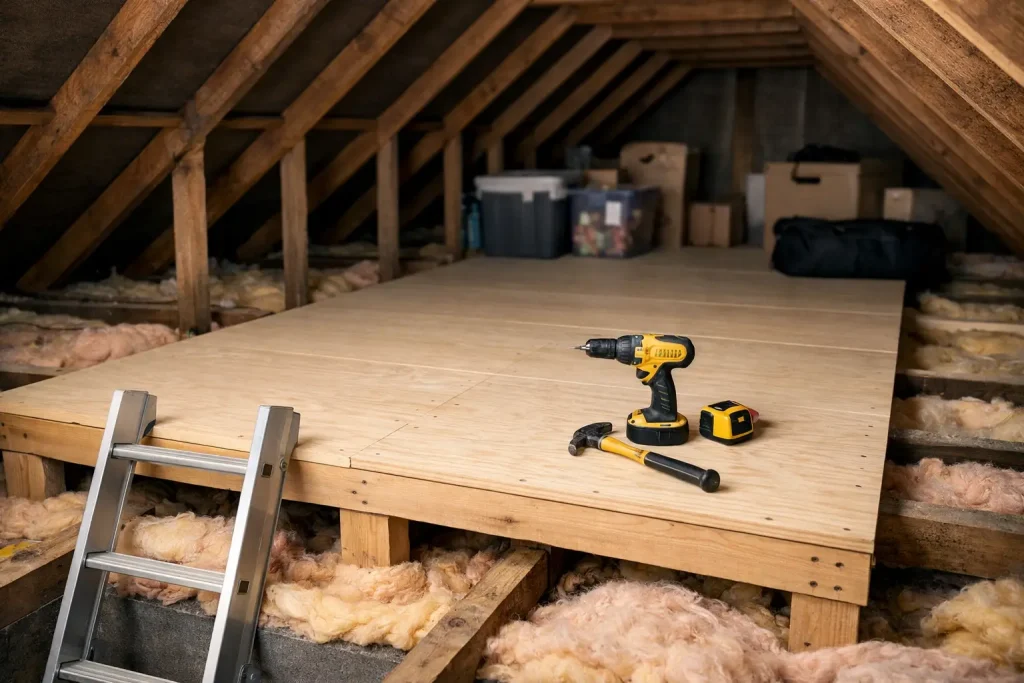
A lot of homeowners only start asking whether raised loft boarding is necessary after they have already noticed a problem – crushed insulation, awkward storage, or a loft that feels less usable than it should. It is a fair question, because not every loft needs exactly the same solution. But in many modern homes, and in plenty of older ones too, boarding directly onto the joists can create more issues than it solves.
Raised loft boarding is designed to sit above the insulation rather than pressing down into it. That one detail makes a real difference. It helps preserve the insulation’s performance, creates a safer and more stable storage area, and supports the long-term efficiency of the property.
Is raised loft boarding necessary in every home?
Not always. The honest answer is that it depends on the loft’s structure, the depth of insulation already in place, and how you plan to use the space.
If your loft has very little insulation and the boards can sit without compressing anything important, raised boarding may not be essential. That said, current insulation standards are much thicker than they used to be. In many homes, especially newer properties, the insulation depth rises above the ceiling joists. If standard boards are fitted straight on top, the insulation gets squashed.
Once insulation is compressed, it cannot trap heat as effectively. That means the loft floor may look tidier, but your home can lose warmth more easily and your heating system has to work harder. So while raised loft boarding is not a legal requirement in every case, it is often the right approach if you want proper storage without undermining energy efficiency.
Why standard loft boarding can cause problems
At first glance, boarding straight onto the joists can seem like the simple option. The issue is what happens underneath.
Most loft insulation works by trapping pockets of air. When it is flattened, those air pockets are reduced, and the thermal performance drops. This can have a direct effect on comfort in the rooms below, especially during colder months when heat loss through the roof becomes more noticeable.
There is also a practical concern. If boards are installed over compressed insulation, you may gain a storage platform, but not necessarily a well-designed one. The loft can still feel awkward to use if the boarding is uneven, poorly supported, or fitted without proper thought for access and load distribution.
In newer homes, there is an additional point to consider. Some properties are covered by NHBC warranties, and certain methods of loft boarding can affect compliance if they interfere with the intended insulation design. That is one reason specialist systems such as NHBC approved loft legs are often used where appropriate.
When raised loft boarding is usually the better option
Homes with modern insulation levels
If your loft insulation sits higher than the joists, raised loft boarding is usually the sensible choice. It allows the insulation to remain at its intended depth while still creating usable storage above.
This is increasingly common. Energy standards have improved over the years, and many homeowners have had extra insulation added to help reduce bills. That is good for efficiency, but it means the old approach of boarding directly to the joists no longer suits the space.
New-build properties
In newer homes, care matters even more. These properties are often built with specific insulation requirements, and the loft needs to be boarded in a way that protects both performance and warranty conditions. Raised systems help achieve that by keeping the boards clear of the insulation layer.
For homeowners who want straightforward storage without compromising the home, this is often the safest route.
Homes where energy bills are a concern
If one of your main goals is to cut heat loss, raised boarding is worth serious consideration. Compressing insulation for the sake of storage can work against that goal. A properly raised system helps you make use of the loft without sacrificing the insulation you are relying on to keep the house warmer.
That balance matters, especially for family homes where storage and running costs are both ongoing concerns.
Is raised loft boarding necessary if you only want light storage?
Even for light storage, it can still be necessary.
People often assume that if they are only storing suitcases, decorations, or boxes of paperwork, the method of boarding does not matter much. In reality, the issue is less about what you store and more about what happens to the insulation below the boards. Light use can still flatten insulation if the boards have been laid directly over it.
The better question is not just how much weight the loft will carry, but whether the storage platform has been designed around the insulation and the structure properly. A lighter storage requirement may mean you do not need to board the entire loft, but it does not automatically mean raised boarding can be skipped.
The benefits go beyond storage
Raised loft boarding is often discussed as a storage upgrade, but the benefits are broader than that.
It helps protect the thermal efficiency of the home, which can support lower energy bills over time. It can also make the loft easier and safer to use, particularly when paired with proper access, a suitable hatch, and secure loft ladders. Instead of treating the loft as an awkward void, it becomes an organised and accessible part of the house.
There is a property value angle too. Buyers tend to appreciate practical improvements that make daily life easier. A clean, professionally boarded loft with good insulation and safe access feels like a useful asset rather than an unfinished afterthought.
What about older houses?
Older houses are not all the same, and that is exactly why a one-size-fits-all answer does not work.
Some have shallow joists, patchy insulation, or layout quirks that need careful assessment. Others may have had insulation topped up over the years without any real plan for storage. In these cases, raised loft boarding is often the neatest way to bring order to the space while improving how the loft performs.
There can be trade-offs. In some lofts, the roof shape limits head height, so raising the boarding slightly may reduce standing room further. Even then, the gain in proper storage and preserved insulation is often worth it. What matters is choosing a system that fits the property rather than forcing a generic solution.
Why professional assessment matters
A loft can look simple from the hatch, but the right boarding approach depends on several factors working together. Joist depth, insulation thickness, access, ventilation, and the intended use of the space all need to be considered properly.
That is why homeowners usually benefit from a clear survey and written quote before any work begins. It keeps the process straightforward and helps avoid the kind of short-term fix that leads to long-term frustration.
A specialist will also be able to advise whether raised loft boarding is necessary for your specific property, rather than giving a blanket yes or no. Sometimes only part of the loft needs boarding. Sometimes insulation should be improved first. Sometimes access is the real issue, and boarding alone will not solve it.
For families in and around Milton Keynes, that kind of honest advice tends to be far more useful than being sold the biggest job possible.
Is raised loft boarding necessary for long-term value?
In many cases, yes.
If you want storage that is safe, sensible, and compatible with modern insulation standards, raised loft boarding is often the better investment. It avoids the false economy of gaining a boarded area while reducing the effectiveness of the insulation beneath it.
The upfront cost may be higher than basic boarding, but the value is in getting the job done properly. You protect the insulation, create practical storage, and reduce the risk of needing corrective work later on. For most homeowners, that is money better spent.
The best loft improvements are the ones that make life easier without creating hidden problems. If your insulation sits above the joists, if your home is newer, or if energy efficiency matters to you, raised loft boarding is usually not an extra – it is the sensible foundation for using the space well.
If you are unsure, the most useful next step is not to guess. It is to have the loft assessed properly, understand what your home needs, and choose a solution that gives you safe storage, reliable performance, and peace of mind for years to come.