
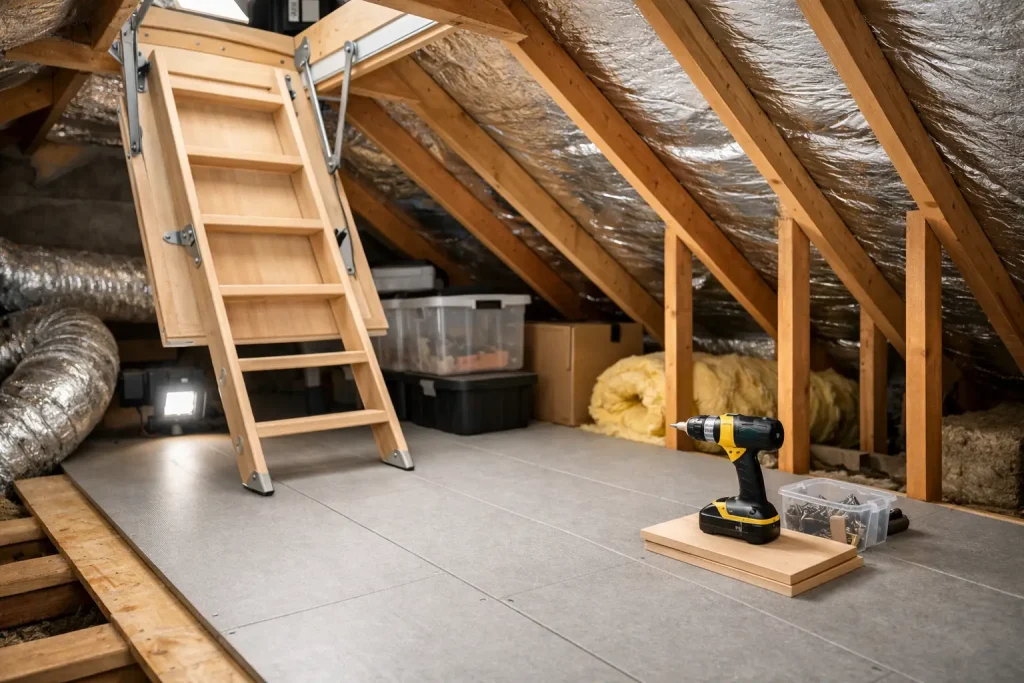
If you have moved into a newer home and looked up at the loft thinking it would make perfect storage space, there is one detail worth getting right from the start. NHBC approved loft boarding is not just about laying boards and creating somewhere to keep suitcases and Christmas decorations. In many new-build properties, the way the loft is boarded can affect insulation performance and, in some cases, the validity of your NHBC warranty.
That catches many homeowners out. The loft looks like wasted space, but standard boarding methods can compress thick insulation, reduce energy efficiency and create problems you did not expect. A proper raised system avoids that and gives you a safer, more practical storage area without compromising the design of the home.
What NHBC approved loft boarding actually means
In simple terms, NHBC approved loft boarding refers to a boarding system suitable for use in homes covered by the NHBC Buildmark warranty, where the boarding is installed in a way that does not squash the insulation beneath it. In newer homes, loft insulation is usually much deeper than it used to be because building standards have changed. That insulation depth helps reduce heat loss, but it also means the loft joists alone are often not tall enough to support boards directly above the insulation.
If boards are fixed straight onto the joists, the insulation gets compressed. Once that happens, it cannot do its job as effectively. The result can be higher heating bills, colder rooms below and a loft space that works against the energy performance your home was designed to achieve.
The approved approach is to raise the boarding above the insulation using specialist supports, often called loft legs. This creates a gap so the insulation keeps its full depth and effectiveness while still allowing a solid decked area for storage.
Why newer homes need a different approach
Older properties and newer properties are not the same when it comes to loft storage. In many modern homes, the insulation depth is designed to meet current regulations, which is good news for warmth and energy efficiency. The trade-off is that the loft is less forgiving if storage is added the wrong way.
That is why nhbc approved loft boarding matters most in newer houses. It is a practical solution to a modern problem. You want the extra storage, but you do not want to flatten the very insulation that helps keep the house efficient.
There is also the issue of warranty protection. Homeowners are often understandably cautious about doing anything that could affect their 10-year NHBC cover. While every property should be assessed on its own merits, using an appropriate raised loft boarding system is the sensible route if you want to keep your home protected and avoid unnecessary risk.
The problem with compressed insulation
Insulation works by trapping air and slowing the movement of heat. When it is compressed under boards, that trapped air is reduced. The insulation may still be there physically, but it is no longer performing as intended.
This is one of those hidden problems that can cost you over time. You may not notice anything dramatic straight away, but reduced thermal performance can contribute to heat loss and make your home less efficient. For households already feeling the pressure of rising energy bills, that is not a small issue.
Why raised loft boarding makes sense
A raised system creates a secure platform above the insulation rather than through it. That means you can use the loft for sensible household storage while allowing the insulation to retain its depth. It is a straightforward idea, but it makes a real difference to the long-term performance of the space.
For many homeowners, it also brings peace of mind. Instead of wondering whether the loft has been boarded in a way that could cause future issues, you know it has been installed properly for the type of property you own.
Is all loft boarding suitable for NHBC homes?
Not necessarily. This is where clear advice matters.
Some loft boarding systems are designed specifically for new-build homes with deeper insulation and warranty considerations. Others may be perfectly adequate in different settings but are not the right fit for a property where insulation depth and NHBC cover need to be taken into account.
That is why a proper survey is so useful. The loft should be checked for insulation levels, joist condition, access, available head height and how much boarded storage is realistically sensible. Not every loft should be boarded wall to wall, and not every household needs the same amount of storage. A trustworthy recommendation should match the property, not push a one-size-fits-all solution.
What to expect from a professional installation
A good nhbc approved loft boarding installation starts with assessment, not assumptions. The loft space needs to be measured properly and the existing insulation checked. Access matters too. There is little value in creating useful storage if getting into the loft remains awkward or unsafe.
In many cases, homeowners choose to combine boarding with improved loft access, such as a safer ladder and a better hatch arrangement. That can make day-to-day use much easier, especially for busy families who just want practical storage that works.
The installation itself should leave you with a stable raised deck, neat finishing and a clear understanding of how much weight the area is intended to hold. This is storage space, not a room for heavy loads. Honest advice includes being clear about what the boarded area is for and how to use it sensibly.
Just as important is the standard of service around the job. Homeowners generally want the same things – a clear written quote, punctual arrival, tidy workmanship and the reassurance that the work is insured. Specialist loft companies tend to understand these priorities well because loft access work takes place inside lived-in homes, not on an isolated building site.
The benefits go beyond storage
Most people first ask about loft boarding because they need more space. That is perfectly reasonable, but the right system can support more than simple decluttering.
When boarding is raised above the insulation rather than compressing it, your loft remains part of the home’s thermal strategy. That helps protect energy efficiency, which in turn supports comfort and can help control heating costs. It is not a dramatic makeover. It is a practical improvement that makes better use of space while respecting how the property is meant to perform.
There is also the matter of keeping belongings in a cleaner, more organised area. Stored items are easier to place safely on a proper boarded platform than across exposed joists and insulation. For families trying to free up cupboards, spare rooms and airing cupboards, that extra usable space can make everyday life feel less cluttered.
Choosing the right specialist
Loft boarding for a newer property is one of those jobs where specialist knowledge really counts. The details matter. The boarding needs to work with the home’s insulation, structure and warranty considerations, not against them.
That is why many homeowners prefer a company that focuses specifically on loft boarding, insulation and access rather than treating it as a sideline. A specialist is more likely to explain the options clearly, recommend only what is suitable and install the system neatly and safely.
If you are comparing quotes, look beyond the headline price. Ask whether the boarding will be raised above the insulation, whether the materials used are appropriate for NHBC homes, and whether the quote is detailed enough to show exactly what is included. Clear answers are usually a good sign. Vague ones rarely are.
For homeowners in Milton Keynes and surrounding areas, working with a local family-run specialist can also make the whole process feel simpler. You are not looking for a hard sell. You are looking for honest advice, reliable installation and the confidence that the work will be done properly.
When NHBC approved loft boarding is the right choice
If your home is a new-build or still within its NHBC warranty period, raised loft boarding is usually the sensible option. It gives you a usable storage area while helping to preserve insulation performance and avoid unnecessary concerns about warranty compliance.
Even if your main priority is simply creating somewhere for lighter household items, the method still matters. The cheapest short-term answer is not always the best long-term one, especially if it leaves you with poorer insulation or questions about whether the work was suitable for the property.
A loft should make life easier, not create hidden problems above your ceiling. Done properly, it becomes a safe, tidy and efficient storage space that works with your home rather than against it.
If you are considering loft boarding in a newer property, the best starting point is a straightforward assessment of the space, the insulation and the access. Once those basics are understood, the right solution usually becomes clear.