
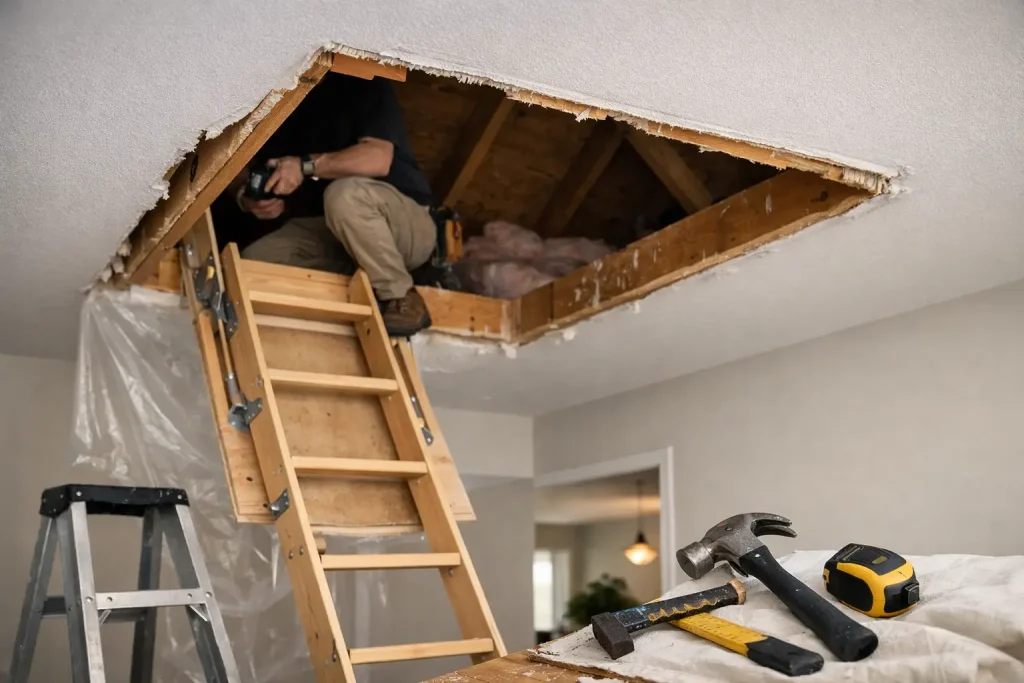
If you are struggling to get boxes through a small ceiling hatch, or simply avoid using the loft because access feels awkward, it may be time to widen the loft hatch opening. For many homeowners, the issue is not the loft itself. It is the opening. A hatch that is too narrow or poorly positioned can turn useful storage into wasted space, and in some homes it also makes safe access much harder than it needs to be.
A larger opening can make a real difference, but it is not a job to approach casually. The right solution depends on the structure around the hatch, the type of ladder being fitted, the amount of insulation in the loft, and how you plan to use the space going forward. Done properly, it creates easier access, safer footing and a more practical storage area. Done poorly, it can create mess, damage ceilings or leave you with a hatch that still does not work as it should.
Why homeowners widen loft hatch openings
Most original loft hatches were designed with basic access in mind, not regular use. In older properties, the hatch may be little more than a narrow cut-out with a loose panel. In newer homes, the opening can still be surprisingly small, especially once extra insulation has been added above the ceiling line.
That becomes a problem when you want to store bulky items, fit a proper loft ladder or use the loft more than once or twice a year. A cramped opening slows everything down and often makes access feel less secure. Carrying boxes up or down through a tight hatch is inconvenient at best and risky at worst.
Widening the opening can make day-to-day use much more straightforward. It can allow for a better ladder system, improve head and shoulder clearance as you climb through, and make the loft feel like a practical part of the home rather than an awkward afterthought.
When widening the loft hatch makes sense
There are a few clear signs that a larger opening is worth considering. One is when the current hatch will not accommodate a safe, easy-to-use loft ladder. Another is when the opening is so small that storing anything beyond a few light items becomes frustrating.
It also makes sense if the hatch position or size is limiting a wider loft improvement. If you are adding raised boarding, top-up insulation or a new insulated hatch, there is little benefit in upgrading the loft while leaving access difficult. Good access is what makes the space usable.
That said, bigger is not always better. The aim is not to create the largest opening possible. The aim is to create the right opening for the property, the structure and the way the loft will be used. In some homes, a modest enlargement is enough. In others, a full relocation or redesign of the hatch area may be the better answer.
What needs checking before you widen the loft hatch opening
This is where experience matters. A loft hatch sits within the ceiling structure, so changing its size is never just about cutting a larger hole. The surrounding joists, the direction they run in, nearby pipework or cables, and the ceiling finish all need checking first.
In many cases, the opening can be enlarged neatly within the existing layout. In others, the position of the joists limits what can be done without additional structural work. There may also be issues around clearance for a folding ladder, especially on the landing below, where door swings and headroom can affect the final design.
Insulation is another important part of the picture. If the loft has been upgraded properly, the hatch should not become a weak point where warm air escapes. Any new hatch needs to be well insulated and draught-sealed so that improved access does not come at the cost of higher heat loss.
A professional survey should cover all of this clearly, with straightforward advice on what is possible and what is worth doing.
The difference a properly sized hatch can make
The benefit is not just convenience. A well-planned loft hatch can improve safety, protect the ceiling finish and make the whole loft setup feel more solid and dependable.
For families using the loft for seasonal storage, it makes lifting and moving items less awkward. For older homeowners, easier access can be the deciding factor in whether the loft is practical at all. And for anyone investing in boarding or insulation, it helps the whole installation work as intended.
There is also a visual benefit. A professionally fitted hatch looks cleaner, closes properly and tends to sit far better within the ceiling than an older panel or a poorly altered opening. That matters in hallways and landings where the hatch is in plain sight every day.
Can every hatch be enlarged?
Not always. This is one of those areas where honest advice matters more than a quick yes.
Some hatches are straightforward to widen because the ceiling structure allows it and there is good clearance below. Others are restricted by joist layout, limited space on the landing, nearby services or the risk of making the access point less practical rather than more so.
For example, a larger hatch is only useful if there is room for the ladder to operate safely and for you to step through comfortably. If the new opening creates problems with doors, walls or circulation space below, then another solution may be more sensible.
In some homes, relocating the hatch slightly gives a better result than simply widening the existing one. In others, the best improvement may be a better-insulated hatch and ladder fitted within the current footprint. It depends on the property and on what you want the loft to do for you.
Cost, disruption and what to expect
Homeowners often assume widening a loft hatch will be highly disruptive. In reality, when it is handled by a specialist, the process is usually far more controlled than people expect.
The main work involves adapting the opening, making good the surrounding ceiling area, fitting the new hatch and, if required, installing a compatible ladder. Dust control and tidy working matter here because the hatch is typically in a central part of the home. A careful installer will protect the area properly and leave the space clean and usable.
Cost varies depending on the ceiling structure, the size of the change, the hatch and ladder specification, and whether any extra making-good is needed. The cheapest option is not always the best value, particularly if it leaves you with poor insulation, a flimsy frame or awkward ladder operation.
A written quote helps because it shows exactly what is included. That gives you a proper basis for comparison and avoids the uncertainty that often comes with vague pricing.
Why specialist fitting matters
Loft access is one of those jobs that looks simple from below and proves far more involved once the ceiling is opened up. Getting the opening size right is only part of it. The frame needs to be secure, the hatch needs to close neatly, the insulation value needs to be maintained and the ladder, if fitted, needs to operate safely every time.
This is where a loft specialist offers real value. Rather than treating the hatch as a standalone job, they look at how access, storage and insulation work together. That usually leads to a better outcome for the homeowner because the loft becomes easier to use, warmer below and safer overall.
At Loft Accessories, that joined-up approach is a big part of what customers value. Clear recommendations, honest written quotes and tidy installation give people confidence that the work is being done properly, not patched together.
Is widening your loft hatch the right next step?
If your loft feels awkward to reach, difficult to use or simply not worth the hassle, the hatch is often the place to start. A better opening can change how the whole space works. But the best result comes from choosing a solution that suits your home, rather than forcing a standard size where it does not belong.
A good survey should leave you with a clear answer, not a sales pitch. If widening the hatch is the right move, you should know why. If another option would serve you better, that should be explained just as plainly.
The loft is there to make life easier, not more awkward. When access is planned properly, that unused space starts earning its keep.